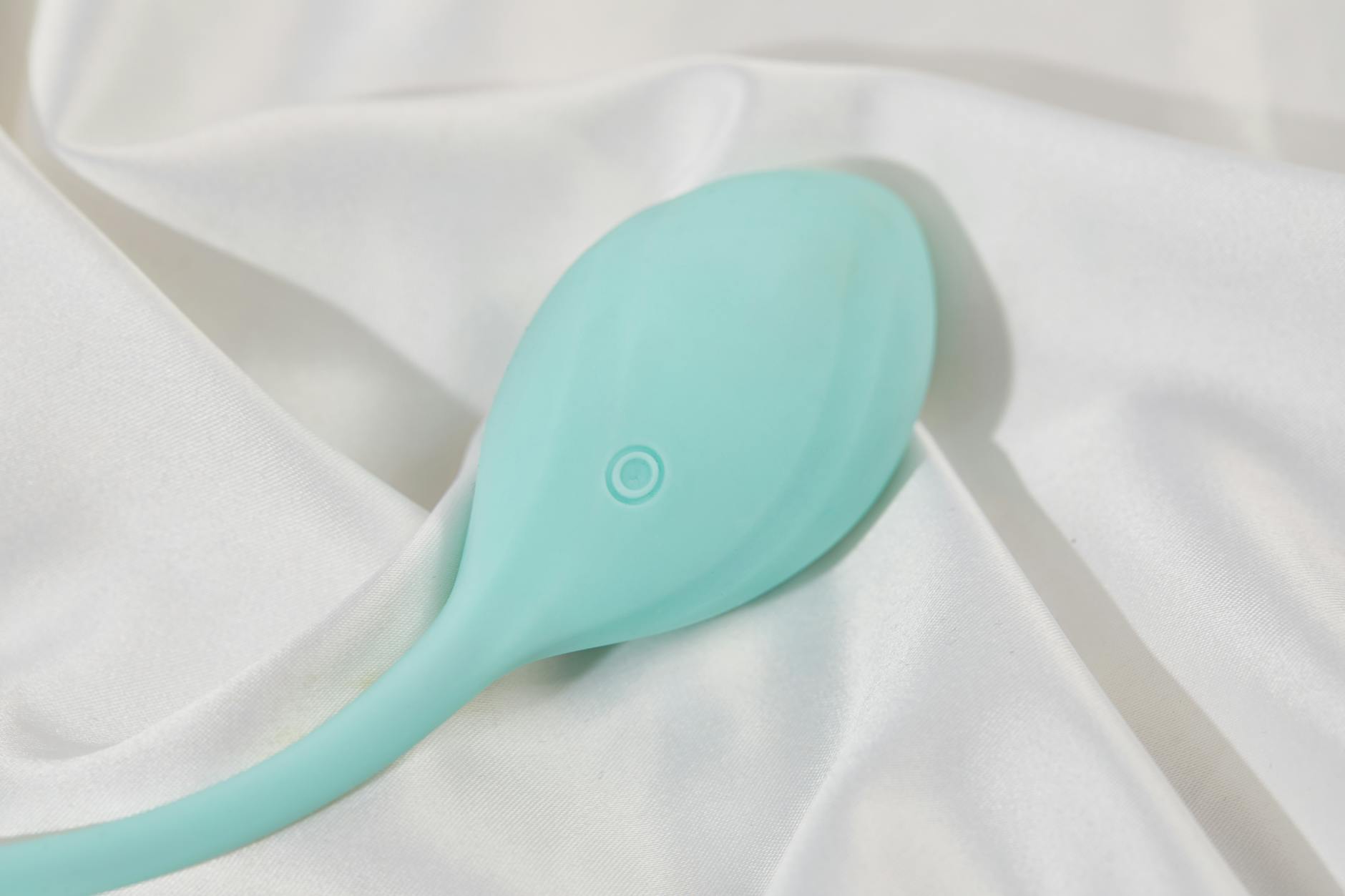
Here's what everyone gets wrong about pleasure after 40
Your body didn't stop wanting pleasure at 40. But something shifted. The tissue is less forgiving. Lubrication doesn't come as quickly or generously. Sensation feels different in ways that are hard to explain to someone younger, or even to yourself. And because no one talks about this honestly, you end up wondering if you broke something that used to work fine.
You didn't. Your body is just asking for a different approach. And honestly, that's when lemon vibrators become wildly useful in ways they weren't before.
What actually changes in your body after 40
Estrogen levels start their slow decline around perimenopause (which can begin in your 30s, though it typically peaks in your 40s). Less estrogen means tissue gets thinner, which sounds minor until you're actually experiencing it. Vaginal tissue loses collagen and elasticity. The vaginal opening becomes more narrow. Lubrication requires more sustained arousal to produce. Blood flow to the clitoris takes longer to build.
None of this means you can't have orgasms. It means the path to orgasm has changed. And a lemon clitoral vibrator is specifically engineered to address this exact problem.
Here's the part that matters: clitoral vibrators work on the nerve endings in your clitoris, not on lubrication or tissue elasticity. Your clitoral nerves don't care about estrogen levels. They respond exactly as they always have.
Why lemon vibrators work better for post-40 bodies
Let's break down the mechanics. A lemon vibrator uses air-suction technology, not traditional vibration. This matters more than you'd think after 40.
Traditional vibrators require consistent direct contact and friction. On thinner, more sensitive tissue, that can feel abrasive or even painful if you're not sufficiently aroused. A lemon vibrator uses gentle pulsing suction instead. It stimulates the nerve cluster around your clitoris without demanding the same level of direct pressure or sustained contact. The sensation is more diffuse, more forgiving, and honestly, for many people, more intense than traditional vibration.
Second, lemon vibrators heat up naturally from body warmth. Warmth increases blood flow to the clitoris. More blood flow means faster arousal and more pronounced sensation. You're not working against your body anymore. You're working with its actual physical response.
Third, the intensity settings on a quality lemon vibrator like the one from Hello Nancy allow you to start lower and build gradually. Slower arousal is not a weakness after 40. It's the reality. And a device that meets you where you actually are is infinitely more useful than one designed for 25-year-old responsiveness.
The warm-up strategy that actually works
You already know this intellectually, but here's permission to actually do it: warming up matters more now than it ever has.
Start with foreplay that feels genuinely good to you. This might be external stimulation with your hands, or a partner's hands or mouth, or just extended time thinking about something that turns you on. Don't rush to the vibrator thinking it'll activate you instantly. Your nervous system doesn't work that way anymore, and that's fine.
Once you feel initial arousal, introduce the lemon vibrator at its lowest setting. Pattern one on a quality clitoral vibrator is genuinely gentle. You're not trying to trigger an instant orgasm. You're trying to maintain and deepen the arousal that your warm-up started.
Many people find they need 10 to 15 minutes with the vibrator, not five. That's not slow. That's normal after 40. And when the orgasm comes, it's often more complex and nuanced than earlier versions of it. Not less intense. Different.
Using lube intentionally, not as a backup
Here's the shift in perspective: lube isn't a sign that something's wrong. After 40, lube is just part of the setup, like turning on music or finding a comfortable position.
Use a water-based lube even though your body will produce some on its own. A thin layer around your clitoris and the area where the lemon vibrator makes contact will reduce any friction and increase the feeling of the suction. Silicone-based lubes feel richer and last longer, but they damage silicone toys. Stick with water-based.
If you're using the vibrator internally or vaginally at all, lube becomes even more important. The vaginal tissue is less forgiving. A generous amount of lube is not excess. It's respect for your body's actual capacity.
How to adjust technique for sensitive tissue
After 40, your body might not tolerate the same pressure or speed it did before. This is not a failure. This is information.
Start with shorter sessions. A 15 minute session with the lemon vibrator is plenty. Build up to longer sessions if you want them, but you don't have to. Your nervous system might actually prefer shorter, more frequent check-ins with pleasure rather than long marathon sessions.
If any pattern or intensity causes discomfort, move to a lower setting immediately. Pain is not a barrier to push through. Pain is your body saying stop, and you should listen. There are plenty of settings and patterns to explore that feel good. Find those instead.
Alternate between patterns throughout a session rather than staying on one. This keeps sensation fresh and prevents the tissue from getting overwhelmed by constant identical stimulation.
Managing expectations about orgasm itself
Here's something no one warns you about: orgasms after 40 can feel different in their intensity or sensation, and that can feel alarming the first time it happens.
Some people report that orgasms become more localized to the clitoris rather than radiating through the whole body. Others say they're more subtle but somehow more satisfying. Still others find they're actually more intense, but in a concentrated way rather than a sprawling one.
None of these is wrong. Your nervous system is responding to your actual body's condition right now. That's the goal. Not to recreate what a 30 year old's orgasm feels like, but to have the richest possible experience for who you are at 40, or 50, or 60.
Many of my clients report that after getting over the initial adjustment period, they discover pleasure dimensions they'd never experienced before. Less distraction. More certainty about what they actually want. Less pressure to perform. That often translates to more genuinely satisfying sex overall.
When to bring a partner into this
If you're partnered, using a lemon vibrator during partnered sex requires a conversation. Not a heavy one. Just something like: "My body's responding differently lately, and I want to explore what feels good now. I'd like to bring the vibrator in sometimes."
A partner who cares about your pleasure will want to understand what helps. A partner who gets defensive is giving you information about whether they're equipped to support your needs right now. That's useful information even if it's uncomfortable.
You can integrate a clitoral vibrator into partnered sex easily. Use it during foreplay. Use it while being penetrated. Use it after penetration while your partner holds you. There's no rule. There's just your actual experience and what feels good.
The bigger shift happening
Using a lemon vibrator after 40 is not about compensating for what's been lost. It's about upgrading your approach to match your actual body.
Your body after 40 knows things it didn't know at 25. It knows what it wants. It doesn't have time for mediocre sensation. And often, when you give it the right tools, it delivers pleasure that feels more earned, more grounded, more genuinely yours than anything that came before.
FAQ: Common questions about lemon vibrators after 40
Will a lemon vibrator feel different on my clitoris now that I'm older?
Not necessarily. Your clitoral nerves don't age the way vaginal tissue does. What changes is usually the approach, not the sensation. You might need more warm-up time, and you might prefer lower intensity settings, but many people find that clitoral vibrators feel sharper and more satisfying after 40 because you know your body better and you're less self-conscious about taking the time to enjoy them.
Can I use a lemon vibrator if I'm experiencing menopause symptoms?
Yes. In fact, many people find lemon vibrators especially helpful during menopause because they don't rely on vaginal lubrication the way penetrative sex does. The suction technology works independently of your body's natural lubrication. If you're dealing with vaginal dryness, this is actually an advantage. Just use external lubricant as needed and start at lower intensity settings.
How often should I be using a lemon vibrator at my age?
There's no rule. Some people use one several times a week. Others use it monthly. It depends entirely on your desire and what your body needs. There's no optimal frequency. There's just what feels good for you right now. If you're noticing that you want more or less frequent pleasure, that's useful information about your actual state, not a sign you're doing something wrong.
Will my partner think I need a vibrator because I'm getting older?
Some partners will. And if they do, that's information about how they view aging bodies and pleasure, not about whether the vibrator is a good idea. Your pleasure after 40 is not less worthy than your pleasure at 25. You deserve tools that work with your actual body. If your partner struggles with that, that's a conversation worth having, but it's not a reason to stop exploring what feels good.
Is it normal to need more lube after 40?
Completely normal. Estrogen levels decline, which affects lubrication production. This isn't a sign something's broken. It's a normal physical change. Using lube is just adapting to your actual body's condition. It's practical, not a failure.
Can I use a lemon vibrator if I have vaginal atrophy or genitourinary syndrome?
You can, especially because suction-based vibrators avoid the friction that can be irritating with thinned tissue. But if you're experiencing pain, discomfort, or significant symptoms, talk to a gynecologist first. Topical estrogen creams or other treatments might help, and your doctor can help you understand what's happening and what's safe. A vibrator is a tool for pleasure, not a treatment for a medical condition, though it can absolutely be part of a broader approach to maintaining pleasure during physiological changes.
Resources and next steps
If you're curious about how your body's changes affect partnered pleasure, the post on how a lemon vibrator changes orgasm intensity with a partner breaks down what to expect when sharing this experience.
For a deeper dive into how to introduce this to a partner if you haven't already, how to introduce a lemon vibrator to your partner covers the conversation itself.
And if you're noticing that your sensitivity or response has shifted more significantly, why lemon clitoral vibrators work better for sensitive tissue explains the mechanics in more detail.
Your pleasure after 40 isn't diminished. It's just asking for honesty about what your body actually needs right now. A quality lemon vibrator from Hello Nancy meets you where you are, not where you used to be. That's the entire point.