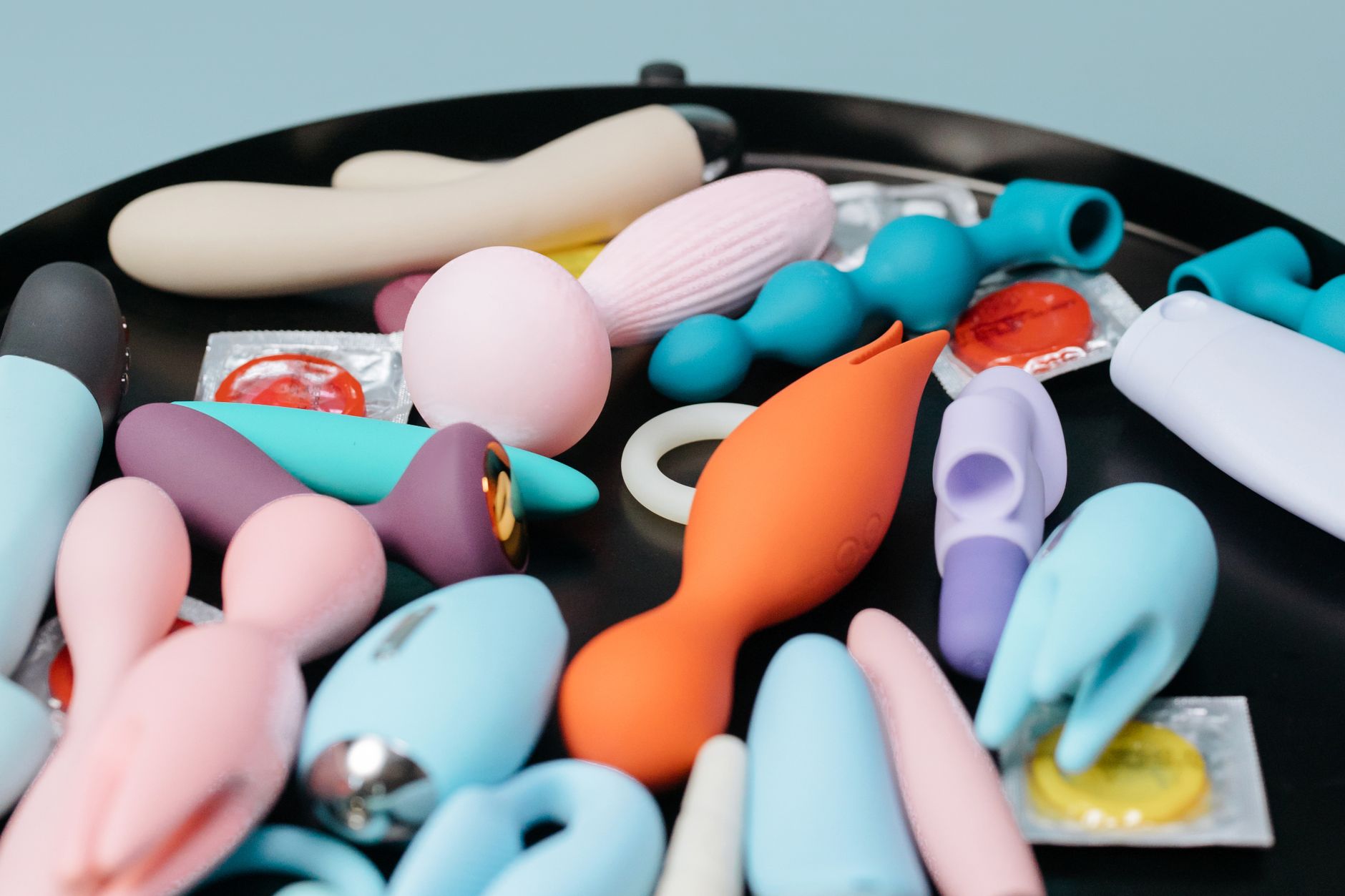
How to Introduce a Lemon Vibrator to Your Partner (Without the Awkward Talk)
Here's what I hear most often from people considering this conversation: "I'm worried he'll think I'm not satisfied." Or, "What if she thinks I'm asking for something kinky?" Or, simply, "I have no idea how to even bring it up."
Let's be real. The conversation feels huge. But the actual talk is often anticlimactic in the best possible way. People worry about rejection or offense. What actually happens is that most partners light up when they realize this is about shared pleasure, not criticism.
I've worked with hundreds of couples navigating this exact moment. The pattern is consistent: the anxiety beforehand is always bigger than the conversation itself. Once you know the frame to use, it gets simple.
Why now feels like the right time to ask
You don't need permission to bring a lemon clitoral vibrator into your partnership. But there's a difference between doing something without asking and doing it together. One builds resentment. The other builds connection.
The reason to have this conversation isn't because you're asking for approval. It's because shared pleasure is the whole point. Your partner wanting to explore this with you, and understanding why, changes everything about the experience.
There's also something deeply intimate about saying, "I want to try this, and I want you here for it." It's vulnerable in a way that actually strengthens the bond.
The frame that makes all the difference
Forget the apologetic approach ("I'm sorry, but I've been thinking..."). You're not apologizing for wanting better orgasms. You're inviting your partner into something good.
The most effective frame is curiosity, not criticism. This shifts the whole energy.
Instead of: "I don't think I'm satisfied" → "I want to explore what feels good to me, and I want you involved."
Instead of: "Can we try something?" (which sounds tentative) → "I've been thinking about trying something together."
Instead of: "You're not enough" → "You + this = something I want to experience with you."
The second version in each pair doesn't blame anyone. It positions the vibrator as an addition, not a replacement. And it puts your partner on the team.
When to have the conversation (and when not to)
Timing is everything. Don't bring it up during sex, right before sex, or mid-argument. You need both people calm, present, and able to actually think.
Good moments: Sunday afternoon when you're both relaxed. A walk. After dinner. Anywhere you'd normally have a real conversation. Bad moments: when someone's stressed about work, when you're both rushed, when there's existing tension about intimacy.
You might also choose to do this over text if direct eye contact feels too loaded. That's okay. Some people process better with a little distance. "Hey, I've been wanting to talk about something I'd like to try together" opens the door without demanding an immediate response.
If your partner responds with "Tell me more," you're golden. If they need time to think about it, that's normal too. The worst thing you can do is push for an answer in the moment. Give space.
What actually happens when you say it out loud
Most partners respond with one of three things: curiosity, enthusiasm, or a request for more information. Genuine rejection is rarer than people expect.
If they ask why, here's the truth: "I read that a clitoral vibrator like the Lem can help me figure out what really works for my body. I want to explore that. And I want you to be part of it." That's it. No elaborate justification needed.
If they seem hesitant, ask what's making them uncomfortable. Sometimes it's a misconception ("Will it replace me?"). Sometimes it's embarrassment. Sometimes they just need a minute to adjust to the idea. All of these are workable.
If they're enthusiastic, great. But also notice: enthusiasm doesn't mean you need to perform in any particular way. Them being interested doesn't obligate you to make it a big production. You're still in control of how and when this happens.
The part people don't expect: what to actually do with it together
Here's where many couples get stuck. You've had the conversation. Now what? Do you use it together immediately? Do you try it alone first?
My suggestion: try it alone first. Not because your partner shouldn't be involved, but because you need to know what it feels like. You need to understand the patterns, the intensity levels, what works for your body. That's research. That's knowledge you then bring back to partnered sex.
Once you know how it works, you can introduce it into your partnership. That might look like: you using it while your partner is inside you. You using it while your partner watches. Your partner using it on you. All of these are different and worth exploring.
The key is that you're doing it together because you want to, not because you're performing for them. The moment you're performing, the pleasure drops. The moment it's collaborative, it intensifies.
What to do if they say no
Sometimes a partner says they're not comfortable with it. This matters and deserves real listening.
Ask: "What's the concern?" Listen. Don't defend immediately.
Common concerns and what's actually true:
"I'll feel replaced." Not if you frame it correctly. A vibrator is a tool for your pleasure. It doesn't compete with their hands, their presence, their body. Knowing this rationally is one thing. Your partner needs to feel it. That takes reassurance and time.
"It's too weird for me." Fair. But also: try it once before you decide. Sometimes the theoretical version feels weirder than the actual experience.
"I don't want to see it." Okay. You can use it privately. This is a boundary you respect.
"I feel judged for not making you come." This is the deepest one. This often means your partner has internalized that their worth is tied to your orgasm. This conversation needs to happen separately from the vibrator conversation. Your pleasure isn't their responsibility. Their pleasure in you experiencing pleasure is separate from their ability to produce your orgasm.
If a partner is consistently unwilling to engage with your pleasure, that's a larger relationship issue that a vibrator won't fix.
Making the purchase together (optional but powerful)
Some couples find it useful to actually shop together. Browse Hello Nancy. Talk about what appeals to you. Make it collaborative. There's something about choosing it together that normalizes the whole thing.
The Lem is a popular choice for couples partly because it's designed beautifully and works incredibly well. When your partner sees the design, reads about the engineering, understands how it works, it stops feeling like a threat and starts feeling like a tool you both want to explore.
You don't have to do this. But if your partner is hesitant, it can help.
After you've introduced it: what changes
Most couples report that introducing a clitoral vibrator together actually improves their intimacy. Not because the vibrator is magic, but because the conversation itself was intimate. You named something you wanted. Your partner listened. You did it together.
That's a very different dynamic than quietly ordering something and hoping they don't notice.
The best part: many partners become genuinely interested in exploring lemon vibrators and other tools together. What started as "I hope this doesn't cause a fight" becomes "What else can we try?" The openness feeds itself.
One more thing: if you're nervous, that's information. But it's not necessarily a sign you shouldn't do this. Vulnerability is supposed to feel a bit scary. That's how you know it matters. The fact that you want to do this with your partner, and want their buy-in, is already you doing the relationship part right.
FAQ: Your questions about introducing a vibrator to your partner
What if my partner asks where the idea came from?
Be honest. "I've been reading about how vibrators can help me explore my pleasure." "A friend mentioned hers and I got curious." "I just started thinking about what would feel good." You don't need to over-explain. The answer should be truthful and brief. Most partners don't need a story. They just want to understand you're not doing this because you're unhappy with them.
Is it normal to be nervous about this conversation?
Completely. This is vulnerability. You're asking for something. You're also trusting your partner to not react poorly. That takes courage. The nerves don't mean anything's wrong. They usually mean something matters to you.
How do I know if my partner will think it's a rejection of them?
You don't, until you talk. But here's what actually happens: if your partner loves you, and you frame it as an addition to your shared pleasure rather than a replacement, most people get it. Some take longer than others. Some have their own stuff to work through. But rejection of the vibrator itself is usually not about you. It's about their own discomfort, usually rooted in insecurity or conditioning.
Should I ask permission or just tell them I want to try it?
Neither. Frame it as a conversation, not a request. "I want to try using a lemon clitoral vibrator, and I'd like to do this with you. I wanted to talk about it first." This respects their input without making them the gatekeeper of your pleasure. Your body belongs to you. But the partnership aspect benefits from honesty.
What if they want to use it on me but I'd rather use it myself?
Tell them. "I think I want to start by exploring it myself, to figure out what feels good. Then maybe we can figure out how we both like it." Your partner doesn't get to own the experience. You're in charge. Their job is to be supportive and curious.
How soon after the conversation should we actually use it together?
There's no timeline. Some couples use it within days. Others take weeks. Some people try it solo for a while, then introduce it to partnered sex months later. The right pace is whatever you both feel comfortable with. Pressure kills pleasure. So does rushing.
Is it weird to use a lemon vibrator if we're in a long-term relationship?
No. Actually, long-term couples often benefit most from introducing new things. The novelty, the conversation, the shared curiosity—it can reignite something. Plus, after years together, you know each other. You can be more honest. The vulnerability becomes easier, not harder.
What if my partner thinks I'm not satisfied with our sex life?
That's on you to address directly. "I want to be clear: I love our sex life. I also want to explore my own pleasure more fully. This is about me getting to know my body better, not about what's missing between us." You can even ask: "Is there anything you've been curious about trying?" It opens the conversation both ways.
The real reason this matters
At the core, introducing a vibrator to your partner is about one thing: honesty. You're saying, "This is something I want. I want you to be part of it." That's intimacy. That's what keeps long-term partnerships alive.
The vibrator is just the vehicle. The real conversation is about your pleasure mattering, about your curiosity being welcome, about your partner being someone you can be vulnerable with. Those are the things that deepen relationships.
So have the conversation. Be honest. Listen to what your partner says. And remember: their initial reaction is not the final word. People need time to process. But most people, when given the chance, want their partner to feel good. That's the default. Go from there.