
Why Lemon Clitoral Vibrators Work Better for Sensitive Tissue
Let's start with the uncomfortable truth: not every vibrator works for every body. If you've ever felt overstimulated, numb, or sore after using a traditional vibrator, you're not alone. And it's usually not about your body being "broken." It's about pressure.
Most clitoral vibrators work by direct mechanical vibration. They buzz against your skin at somewhere between 5,000 and 10,000 Hz. That's a lot of repetitive force on a small, densely innervated area. For people with sensitive tissue, that feels less like pleasure and more like someone aggressively drumming on your shin.
Lemon clitoral vibrators work differently. They use air-pulse suction technology. Instead of vibrating at you, they gently pulse against the clitoral area, creating a sensation more like a rhythm than a hammer. The biomechanics matter here. Understanding why makes the difference between reaching for the right tool or grimacing through the wrong one.
How traditional vibrators stimulate (and why they hurt)
A standard vibrator creates stimulation through rapid oscillation. Think of it like pressing a buzzer button over and over, but the button is your clitoris and the frequency is 7,000 times per second. For some people, that's euphoric. For others, especially those with sensitive tissue, high-frequency vibration can feel abrasive or create numbness.
The clitoris has roughly 8,000 nerve endings. It's incredibly sensitive by design. But sensitive doesn't mean it likes high-impact stimulation. Think of it like listening to music: you wouldn't press your ear against a speaker cone and expect it to feel good, even if the song is beautiful. The delivery method matters as much as the stimulus itself.
Another problem: traditional vibrators concentrate all their energy on a single point. There's no rhythm, no pulsing pattern variation. You're getting the same frequency, the same intensity, the same sensation repeatedly. After a few minutes, your nerve receptors get tired. They stop responding. This is called sensory adaptation, and it's why some people find themselves chasing faster and stronger vibrations, searching for a sensation that keeps fading.
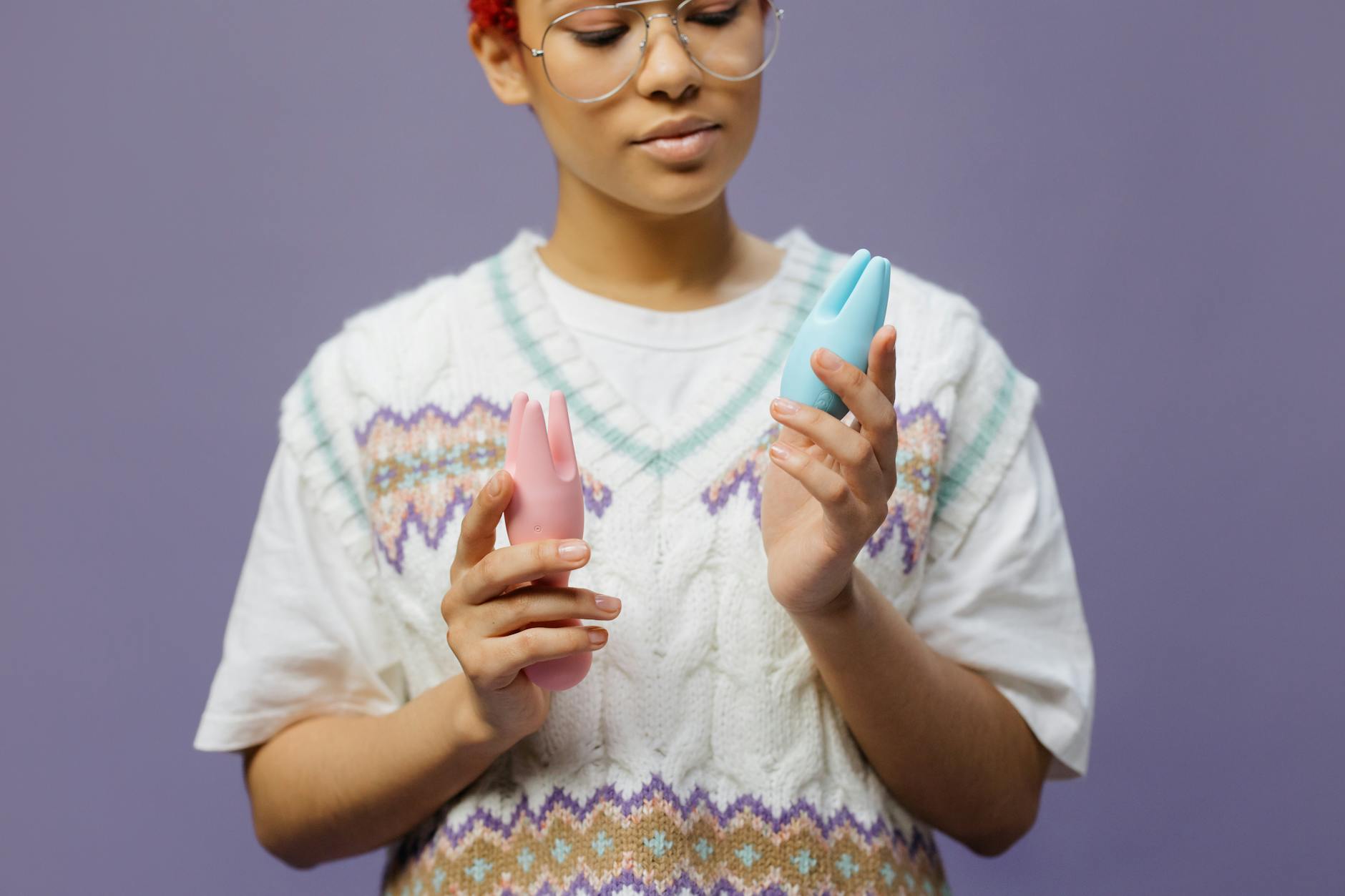
Photo by cottonbro studio on Pexels
How air-pulse suction actually stimulates
Lemon vibrators use a different mechanism entirely. Instead of vibrating, they create rhythmic suction pulses that gently stimulate the clitoral area. Think of it like a soft kissing sensation that pulses in patterns rather than a drumming sensation that repeats at a fixed frequency.
When a lemon clitoral vibrator activates, it creates a gentle seal around the clitoral area and then rapidly builds and releases pressure. This creates stimulation through air-pulse patterns, not mechanical vibration. The key difference: suction distributes the stimulation across a broader area, not just one point. There's less direct pressure on sensitive tissue. The sensation is more enveloping, less percussive.
The patterns matter too. Lemon vibrators usually offer multiple pulse modes. Your nervous system responds better to variation. One pattern might feel like a series of gentle taps, another like a soft rhythm, another like waves. Because the stimulation changes, your receptors don't adapt as quickly. You stay engaged instead of going numb.
This is why people who've struggled with traditional vibrators often experience a genuine revelation with air-pulse designs. It's not placebo. The biomechanics are actually different.
Which tissues benefit most from suction
If you experience any of the following, suction-based clitoral vibrators are worth trying: rawness or soreness after using traditional vibrators, numbness during or after stimulation, overstimulation that makes you want to stop mid-session, difficulty building or maintaining arousal with buzzing vibrators, or discomfort from direct pressure on the clitoris itself.
Sensitivity can be temporary or persistent. Temporary sensitivity often arrives during certain phases of your cycle, after hormonal shifts, from medication side effects, or because of skin conditions like dermatitis. Persistent sensitivity sometimes relates to nerve damage, chronic pain conditions, or just how your nervous system is wired. Either way, a tool that doesn't assault your tissue is a better match.
Another group that benefits: anyone returning to pleasure after a period of avoidance or trauma. If you've been away from your body, or if your body has been in a holding pattern, direct vibration can feel jarring or triggering. Suction is less aggressive. It invites. It doesn't demand.
Starting with a lemon vibrator if you're sensitive
Even with a gentler device, pacing matters. If you're exploring air-pulse stimulation for the first time, start at the lowest intensity. Most lemon vibrators offer 3-5 intensity levels. Spend five minutes at level one. Notice what the sensation actually feels like without noise or expectation. Some people find that suction at the lowest level is already enough to build arousal over 10-15 minutes.
Timing your exploration helps too. Your tissue sensitivity changes throughout your cycle. The luteal phase (after ovulation) often brings more sensitivity. The follicular phase (before ovulation) is often the sweet spot for trying new things. If you're menstruating or in the luteal phase and want to explore, that's fine, but expect that you might need even lower intensity or shorter sessions.
One more practical detail: lubrication. Even though suction doesn't require the same friction-management as traditional vibrators, a little water-based lube around the area helps create a better seal and reduces any skin-to-skin friction. You're not lubricating for penetration or intense stimulation. You're reducing resistance. A little goes a long way.
The mental piece (yes, it matters)
When you've had bad experiences with pleasure, your nervous system learns to brace. You approach your body expecting friction, expecting numbness, expecting it to hurt or fail. That anticipatory tension actually makes sensitivity worse. Your pelvic floor tightens. Your breathing gets shallow. Everything gets more reactive.
Using a gentler device gives your nervous system permission to relax. There's nothing to defend against. The sensation is inviting, not assaultive. And that psychological safety actually reduces physical sensitivity. Your body stops holding itself rigid. Arousal becomes possible again.
If you're moving from traditional vibrators to air-pulse ones, give yourself grace with the transition. You might need a few sessions to trust that gentler stimulation is enough. You might feel like you need to "help" by adding fingers or more intensity. Resist that. The point is to let your tissue experience something different. That learning takes time.
When to see someone about persistent sensitivity
If you experience pain during arousal or stimulation that doesn't improve with gentler devices, slower pacing, or lubrication, that's worth exploring with a healthcare provider. Conditions like vulvodynia, dermatitis, or hormonal imbalances can show up as sensitivity that no technique fixes. A gynecologist or sexual health specialist can help identify what's actually happening.
The same goes if sensitivity appeared suddenly after it wasn't an issue before. That shift sometimes signals something treatable, like a skin condition, a hormone fluctuation, or a medication side effect. Don't assume your body just changed. Sometimes it's telling you something worth listening to.
Why lemon vibrators specifically
Lemon clitoral vibrators were designed with this exact problem in mind. The suction-based technology reduces pressure on delicate tissue while the pulse patterns keep your nervous system engaged. If you're shopping for your first lemon vibrator or testing whether air-pulse technology actually works for you, starting with a reliable design matters. Something like the Lem offers multiple intensities and patterns, giving you real variation to explore.
The point isn't that lemon vibrators are the only option. It's that if sensitivity has pushed you away from pleasure, a different mechanism can genuinely change the experience. Your tissue isn't broken. It just needed a different approach.
FAQ: Sensitive tissue and lemon clitoral vibrators
Q: Can I use a regular vibrator if I'm sensitive, just on a lower setting?
A: Sometimes, but usually it's still the same problem at a lower volume. Traditional vibrators work through direct mechanical vibration. Turning down the intensity makes it less intense, but the mechanism is unchanged. It's like turning down the volume on an aggressive song. It's still aggressive, just quieter. Air-pulse suction is a genuinely different mechanism, not just a dimmer version of the same thing.
Q: How long does it take to adjust to a lemon clitoral vibrator?
A: Most people feel a difference in the first session, but actual comfort and trust take 3-5 sessions. Your nervous system needs time to learn that this sensation is safe. Don't judge the experience after one use. Give yourself at least a week of exploration.
Q: Is numbness during stimulation normal, or is something wrong?
A: Some numbness is normal if you're using high intensity for a long time. But if numbness happens quickly or with gentle stimulation, that often signals sensory adaptation or overstimulation. It's your body's way of protecting itself. That's when switching to air-pulse or longer warm-up periods helps.
Q: Can hormonal changes affect how sensitive I am to vibration?
A: Absolutely. Estrogen levels, progesterone, and testosterone all affect tissue thickness and nerve sensitivity. You might feel completely different across your cycle. The week before your period is usually peak sensitivity. If you're exploring a new vibrator, pick a time in your cycle when you're typically less sensitive.
Q: What's the difference between a lemon vibrator and other air-pulse vibrators?
A: All air-pulse devices work on the same principle, but design details matter. Lemon vibrators are engineered specifically for that suction sensation. They offer multiple pulse patterns, reliable intensity gradations, and are built for longevity. When you're investing in a tool for sensitive pleasure, quality design makes a real difference in whether it actually solves the problem.
Q: If I have vulvodynia or another pain condition, will a lemon vibrator help?
A: It might reduce discomfort compared to traditional vibrators, but it's not a treatment. If you have a diagnosed pain condition, work with a pelvic floor physical therapist or sexual health specialist. They can help you figure out what role (if any) a gentler vibrator plays in your healing while you address the underlying issue.
Your pleasure deserves a tool that actually fits your body, not one you have to accommodate. If traditional vibrators have left you feeling numb, sore, or frustrated, sensitivity isn't your problem. The match between your tissue and the device is. Exploring different mechanisms, like the air-pulse technology in lemon clitoral vibrators, often reveals that your body was never the issue. You just needed to find the right approach.
If you're ready to explore a gentler option, or if you want more guidance on choosing the right device for your sensitivity level, we're here to help. Reach out at /contact with any questions about what might work best for you. Your pleasure is worth getting right.