Let's start with what's actually happening
If you have anxiety or PTSD, your body has learned to protect itself. That's not weakness. That's your nervous system doing exactly what it's supposed to do. But when arousal triggers those same alarm pathways, pleasure becomes complicated. Sensation that should feel good starts to feel threatening instead.
This is where a lemon vibrator, used intentionally, can actually help rewire your relationship with touch. Not by ignoring the fear. By slowly teaching your body that pleasure and safety can coexist.
Why touch feels different after trauma
Trauma and chronic anxiety change the threshold for what your nervous system perceives as danger. A partner's hand, a vibration, even your own touch can register as a threat because the amygdala (your brain's alarm system) has been trained to stay hypervigilant. You're not imagining the difficulty. Your body is responding to real neural patterns.
There's also dissociation to consider. Many people with PTSD or significant anxiety feel disconnected from their body as a protective mechanism. You might numb out during moments that are supposed to feel good, or feel yourself pulling away just when you want to stay present. That's your nervous system trying to keep you safe by shutting you down.
Here's what matters: this is reversible. It takes patience and the right approach. And a lemon vibrator's specific design actually works better for this than traditional toys because it lets you control intensity and pacing more precisely.
Why the lemon sucker design helps
Air-suction technology (which is what lemon vibrators use) creates a different sensation than direct vibration. Instead of buzzing against sensitive tissue, it creates a rhythmic pressure that many people find less triggering. Why? Because the sensation is contained and predictable. There's less of that sharp, surprising quality that can spike anxiety.
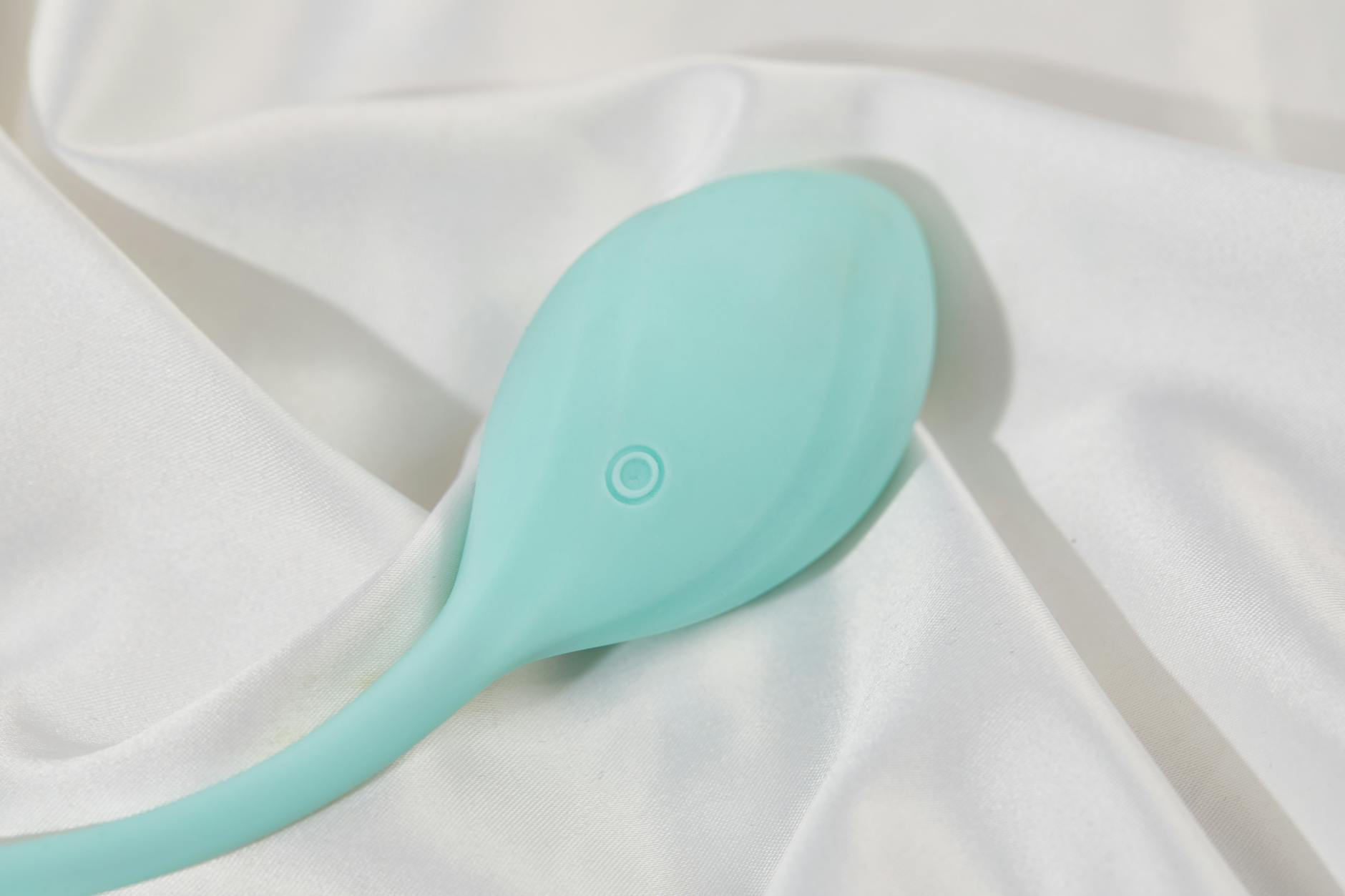
You also have much finer control over intensity. With a traditional vibrator, you're often choosing between "off" and "very stimulating." With a lemon clitoral vibrator like the Lem, you can start at pattern 1 (barely perceptible) and work incrementally upward. That matters when you're teaching your body that sensation doesn't automatically equal danger.
The shape also matters. The Lem's rounded head is designed not to require positioning or pressure adjustment. You're not gripping, tensing, or bracing. That reduces the physical vigilance that often keeps anxiety high.
Building tolerance slowly
The first step isn't jumping to pleasure. It's building what therapists call "window of tolerance." This is the zone where your nervous system feels safe and capable of receiving information.
Start here: just hold the lemon vibrator. Don't turn it on. Let your hand and nervous system get used to its weight, texture, and presence. Do this for a few days if you need to. There's no rush. You're not behind.
Next: turn it on outside your body. Feel it in your palm. On your arm. You're giving your brain data that this device is not a threat. This step alone can take weeks. That's normal.
Then: try it on your inner thigh, nowhere near the clitoris. The goal isn't arousal yet. It's just sensation without perceived threat. Some people find this step easier because there's less expectation attached to the thigh than to erogenous zones.
Only when that feels genuinely comfortable (you're not white-knuckling it, you're not holding your breath) do you move closer. And when you do, start at the lowest setting. Your body will tell you if it needs to go slower.
Grounding techniques that pair with use
Many trauma-informed therapists recommend anchoring yourself before and during self-pleasure if you have PTSD or severe anxiety. This means using your five senses to stay present in your body and the current moment.
Before: Notice five things you can see, four you can hear, three you can feel (blanket, temperature, floor beneath you), two you can smell, one you can taste. This is the 5-4-3-2-1 technique. It sounds simple because it is. It works because it interrupts the anxiety loop.
During: If you start to dissociate or feel disconnected, pause. Don't power through. Press your feet into the floor. Feel the weight of your body in the bed or chair. Name the objects around you aloud if that helps. Your nervous system doesn't need you to cum. It needs you to stay present.
After: Don't immediately roll over and check your phone. Sit with yourself for a few minutes. Feel your breath. Notice that you're okay. This teaches your body that pleasure doesn't lead to collapse or danger.
The partner conversation (if you have one)
If you're in a relationship, your partner probably wants to help but doesn't know how. Here's what matters most: separate the device from the problem. Your anxiety or PTSD isn't your fault. It's also not your partner's job to fix it.
What they can do: respect your pace. If you say slow down, they slow down. If you say stop, everything stops. No negotiation. That safety is what builds trust back into the physical relationship.
You might also explain that you might need to stop in the middle and not continue. That's not rejection of them. It's you honoring your nervous system's limits. A partner who understands this is gold.
Your pleasure matters. And it matters on your timeline, not anyone else's.
When to involve a therapist
If you're working with trauma, having professional support alongside this physical work is valuable. A therapist trained in trauma-informed sexuality (or at minimum, one who understands nervous system regulation) can help you understand your specific triggers and build a plan that fits your history.
They can also help with something that's easy to miss on your own: shame. Many people with anxiety or PTSD internalize the idea that their response is broken or defective. A good therapist reminds you that your body is wise. It's protecting you. The goal isn't to override it. It's to gradually expand the window where you feel safe.
If intrusive thoughts spike when you're using a lemon vibrator, or if you feel genuinely unsafe at any point, that's information. You might need to try a different approach, a different device, or different timing. Trust that data. Your nervous system knows.
The long view
Reclaiming pleasure after anxiety or trauma isn't linear. Some days the lemon vibrator will feel wonderful. Other days, everything will feel too much. Both are okay. Progress isn't about perfect consistency. It's about gradually, over months, noticing that touch feels slightly less scary. That arousal doesn't trigger a panic response. That your body can hold pleasure and safety at the same time.
This is slow work. But it's some of the most important work you can do for yourself. You deserve to feel good in your body again.
FAQ
Can I use a lemon vibrator if I have active PTSD symptoms?
Yes, but with intention. If you're in acute crisis or your symptoms are severe, start with grounding work first. A lemon clitoral vibrator isn't a treatment for PTSD. It's a tool that can help you rebuild embodied pleasure once you have some baseline stability. Work with a therapist to know what that baseline looks like for you.
What if the vibration itself triggers me?
Then you might need a different tool. Not everyone with trauma responds well to vibration. Some people prefer non-vibrating toys, or focus on breathing and manual touch before introducing any device. The goal is pleasure, not forcing yourself to tolerate something that genuinely destabilizes you. There are many paths.
How do I know if I'm dissociating during use?
Common signs: you suddenly can't feel the vibrator even though it's on, your mind feels blank or far away, you're watching yourself from outside your body, time feels weird or jumps. If you notice this, pause. Come back to the grounding technique. Dissociation isn't failure. It's your nervous system hitting pause. The next time, you might try shorter sessions or earlier in the day when you have more capacity.
Is it normal to feel guilt or shame after using a lemon vibrator if I have PTSD?
Yes, and it's worth exploring with a therapist. Sometimes guilt after pleasure is a trauma response learned from earlier in life. Sometimes it's internalized messaging about what you "should" want or do. Neither is true. Your body, your rules. If shame is consistently blocking you, professional support can help identify where it's coming from.
Can a lemon vibrator help if I've lost interest in sex due to anxiety medication?
Maybe. Many antidepressants and anti-anxiety medications can lower libido or make orgasm harder to reach. A lemon vibrator's precision can sometimes help, especially if you use it as part of a broader approach that includes talking with your prescriber. Some people find that lower intensity and longer sessions work better. But medication-related changes sometimes need to be addressed with your doctor first. Don't assume the vibrator is the solution.
Should I tell my partner I'm using a lemon vibrator for anxiety management?
That depends on your relationship. If you're looking to rebuild physical intimacy together, yes. Transparency helps. If this is solo exploration and you want privacy, you get to have that. The key is that it's honest. You're not hiding shame. You're just respecting your own space.
What comes next
Using a lemon vibrator with anxiety or PTSD is a slow conversation between you and your body. There's no rush. Some days you'll feel nothing. Some days you'll feel everything. Both are data, not failure.
If you want to learn more about rebuilding intimacy after trauma or managing anxiety in relationships, check out how to use a lemon vibrator with a partner when recovering from trauma. And if anxiety is also affecting your broader relationship, how to rebuild intimacy after infidelity with a partner covers some similar nervous system work.
Your nervous system is trying to protect you. The goal isn't to fight it. It's to gradually teach it that pleasure and safety belong together.
Questions? Reach out to Hello Nancy. We're here.