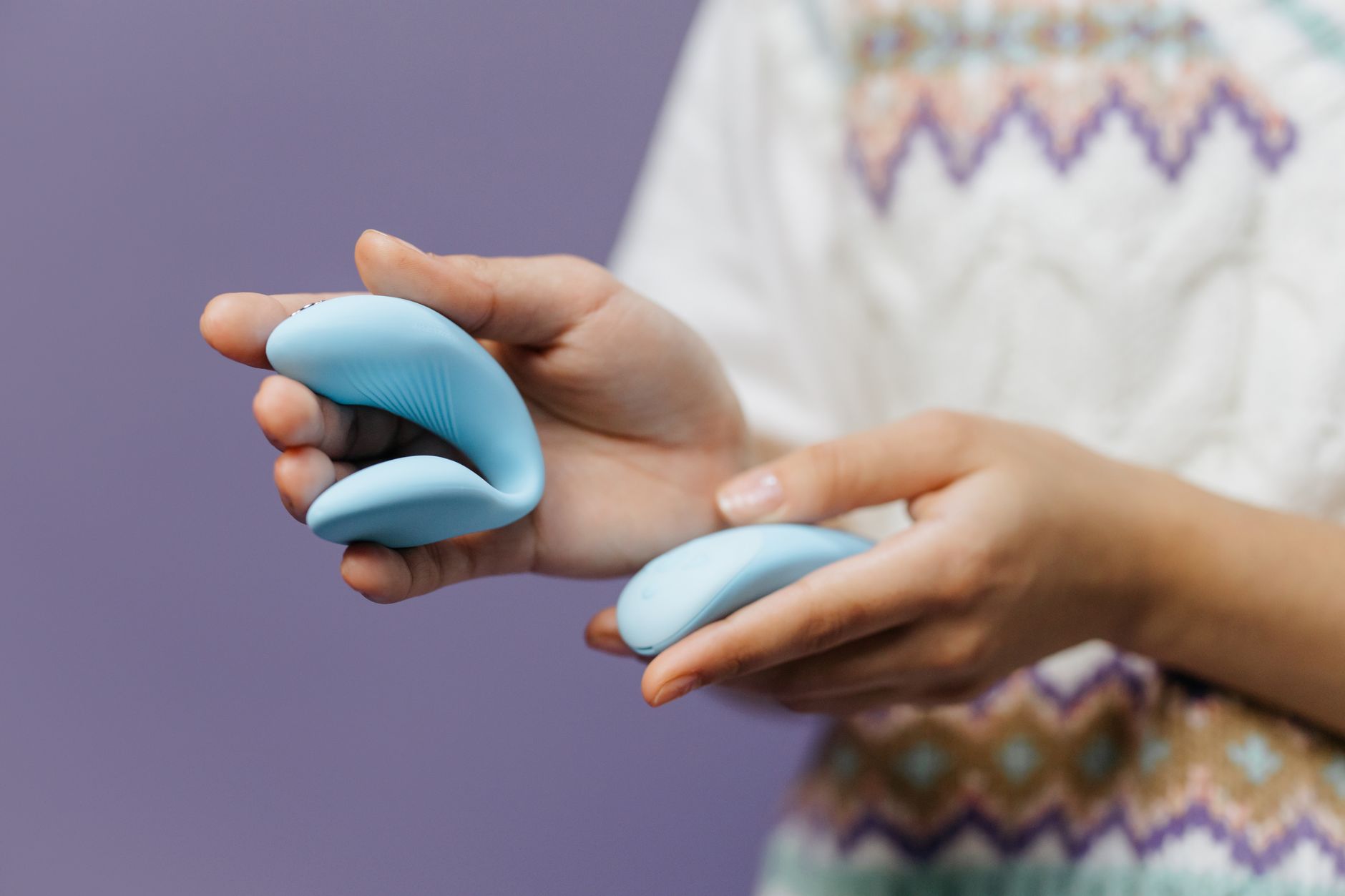
How to Use a Lemon Vibrator When Medication Lowers Your Libido
Let's start with the obvious part: your medication is working. The antidepressant keeping you stable, the birth control preventing pregnancy, the beta blocker managing your blood pressure. These drugs are doing exactly what they're supposed to do. The problem is they're also doing something else. They're making it nearly impossible to feel turned on.
This is not in your head. This is not "just stress." This is a documented, common, and brutally frustrating side effect that nobody warns you about until you're already taking the pill. And here's the thing: you don't have to choose between mental health and sexual pleasure. There's a third option. It starts with understanding what medication actually does to desire, and then rebuilding sensation through a different pathway.
Why medication tanks libido in the first place
Three main culprits. SSRIs (like sertraline, fluoxetine, paroxetine) flood your brain with serotonin, which is great for mood but terrible for the neurochemicals driving sexual desire. Dopamine and norepinephrine, the chemicals that create anticipatory pleasure and arousal, get overwhelmed. Your brain gets a "all is well" signal and drops the urgency of seeking pleasure. Birth control hormones suppress testosterone production, and testosterone isn't just for people with penises. It's a major driver of desire in everyone. Blood pressure medications, antihistamines, and some antipsychotics interrupt the signal chain between your nervous system and your genitals. The message gets lost somewhere between your brain saying "I want this" and your body actually responding.
What makes it worse: doctors often don't mention this during the conversation about side effects. You're told about nausea, weight gain, insomnia. Not the sexual flattening. So when it happens, it feels like failure. Like something is wrong with you, not with the medication.
It's not.
The neurological path around medication-induced desire loss
Here's the strategic part. If the typical arousal pathway (desire triggering physiological response) is blocked by medication, you can build pleasure through a different neurological door. This is where external clitoral stimulation, and specifically air-pulse technology like the Lem vibrator, becomes genuinely useful.
When you use a lemon clitoral vibrator, you're not waiting for desire to arrive first. You're creating localized physical sensation that your nervous system registers regardless of whether your brain is in "want sex" mode. The suction stimulates nerve endings directly. This sends a signal up the spinal cord and into the brain that says "pleasure is happening now." Over time, repeated exposure to this sensation can actually rebuild the neural pathways your medication dampened.
Research on sexual dysfunction from antidepressants shows that mechanical or external stimulation can bypass the neurotransmitter block. Your body can feel pleasure even when your brain chemistry is off. The Lem's air-pulse mechanism is particularly effective because it distributes sensation across a wider area of the clitoris, creating a chain reaction of arousal that doesn't depend on spontaneous desire kicking in first.
Start smaller than you think
When libido is flattened by medication, starting with your usual intensity level won't work. Your nervous system isn't primed. There's no anticipatory arousal. So you're not building from a foundation. You're building from zero.
Begin with one of the Lem's lower settings. Pattern one or two. Spend 15 to 20 minutes just letting your body receive sensation without any goal attached. Not "I need to orgasm." Not "I need to feel something." Just "I'm going to let this device do what it does and observe what happens." This removes the pressure that often accompanies medication-induced numbness. When desire is already low, adding performance pressure makes it worse.
Many people find that after 10 to 15 minutes on a low setting, something shifts. Not always an orgasm. Sometimes just a faint responsiveness. A slight tightening. A tiny spark that wasn't there before. That spark matters. It's evidence that your body is still capable, and that matters psychologically.
Build a ritual, not just a session
One of the cruelest tricks of medication-induced desire loss is that it flattens spontaneous arousal. You can't just "get in the mood" the way you used to. So instead of chasing spontaneity, build predictability.
Use your lemon clitoral vibrator at the same time each day or week. Maybe Sunday morning. Maybe right before bed on Wednesday. The specificity matters because it removes the decision-making component. Your nervous system and body start to anticipate. Even though your brain isn't generating desire, your body can learn to prep for pleasure through habit. This is Pavlovian, sure. But it works.
During these sessions, avoid multitasking or distraction. No phone. No "I'll just do this quickly." Give yourself 20 to 30 minutes where pleasure is the only agenda. This sends a neurological signal that pleasure is important enough to protect. It's not selfish. It's not "checking a box." It's creating space for your body to remember how to respond.
The role of lubrication when medication has dampened natural response
Medication-induced desire loss often comes with medication-induced dryness. Your body isn't producing lubricant because the arousal cascade never started. A good water-based lubricant becomes essential, not optional.
But here's the tactical part: use lubricant before you start. Don't wait to see if natural lubrication appears, because it might not. Applying lube in advance removes friction that would otherwise make stimulation feel uncomfortable or ineffective. Uncomfortable sensation teaches your nervous system to brace against the toy, not relax into it. Smooth, frictionless sensation allows your body to receive without defending.
Reapply as needed. The goal is to make contact feel pleasant, not clinical or obligatory.
If a partner is involved
Many people on medication that tanks libido are in relationships. And relationships add a layer of complexity. Your partner might feel rejected. You might feel guilty. The bedroom becomes a space of tension instead of potential.
One useful move: involve your partner in the process, but not by having them "help" you use your lemon vibrator. Instead, talk to them about what's actually happening. "My medication has flattened my desire, and I'm rebuilding pleasure through a different route. This is me taking care of this, not me avoiding intimacy." Then set a boundary around timing. "I'm doing this Monday and Thursday mornings. That's my time for this." This creates predictability for both of you.
If your partner wants to be involved, they could be in the room, or you could incorporate the vibrator into partnered sex in ways that feel natural. But the goal isn't to fix the relationship through the toy. The goal is to rebuild your own capacity for pleasure, which will then ripple into the relationship over time.
When to talk to your prescriber
Your medication is keeping you stable or healthy. That matters more than sexual side effects, most of the time. But "most of the time" isn't always. If your libido has completely vanished and it's affecting your quality of life or relationship significantly, that's a legitimate reason to have a conversation with your doctor.
Don't frame it as "this isn't working." Frame it as "this side effect is impacting my wellbeing, and I want to explore options." Sometimes a dose adjustment helps. Sometimes switching to a different medication in the same class resolves it. Sometimes adding a second medication to counteract the sexual side effect makes sense. Sometimes the answer is "no, this is the best option for you." But you won't know unless you ask.
Using a lemon clitoral vibrator while you're on medication doesn't mean you're avoiding the medication conversation. It means you're taking active steps to reclaim pleasure while managing your health.
The long game
Rebuild doesn't happen in a week. Your nervous system learned to dampen desire over months. It learns to rebuild over weeks or months too. Consistency matters more than intensity. Showing up twice a week with a low setting on your Lem matters more than one intense marathon session every six weeks.
Some people find that after three or four months of regular use, spontaneous desire starts returning. Not always to baseline. But enough that the flattening feels less total. The world looks slightly more interesting. Your partner starts seeming slightly more attractive. Pleasure starts feeling possible again, not just mechanical.
That shift is slow. It's also real. And it's worth the patience.
Frequently Asked Questions
Can a lemon vibrator actually help restore desire when antidepressants have killed it?
Not by creating desire directly. But external clitoral stimulation can rebuild the neural pathways that antidepressants dampen. Your body can respond to physical sensation even when your brain isn't generating spontaneous desire. Over time, repeated exposure to pleasure can help your nervous system re-learn responsiveness. It's not a cure for the medication side effect, but it's a workaround that often works.
How long does it take to feel pleasure again after medication has flattened libido?
This varies wildly. Some people notice shifts within three weeks. Others need two or three months of regular use before they feel clear improvement. The consistency matters more than the timeline. Using your lemon clitoral vibrator twice weekly for 20 minutes is more effective than sporadic intense sessions.
Should I stop taking my antidepressant because it's killing my libido?
No. Sexual side effects are real and legitimate, but stopping an antidepressant without talking to your doctor is risky. Instead, have a conversation with your prescriber about whether dose adjustment, medication switching, or adding a second medication to counteract the side effect might help. Your mental health comes first. Then you work on rebuilding pleasure within that framework.
Can I use a lemon vibrator if I'm also using lubricant?
Absolutely. Water-based lubricant is compatible with silicone toys like the Lem. Apply lube before you start, and reapply as needed. Lubricant removes friction and makes stimulation feel more pleasant when your body isn't producing natural lubrication due to medication.
Is it normal that I feel nothing the first few times I use a clitoral vibrator?
Yes. Especially if medication has flattened sensation. Your nervous system is dampened. It takes time and repeated exposure for that dampening to lift. Start with lower settings, extend the session time, and commit to at least five to eight sessions before you decide whether it's working. Many people have a breakthrough moment around session five or six.
What if using a vibrator feels clinical or obligatory instead of pleasurable?
That's often a sign you're pushing too hard. Remove the goal of "I should feel something" and replace it with "I'm going to let this happen for 20 minutes." Reduce intensity. Add better lubricant. Put on music that feels good to you. Create a space that feels like permission, not punishment. Pleasure rebuilt from medication-induced numbness feels slow and small at first. That's normal. Small is the starting point.
Can I talk to my partner about this without it becoming awkward?
Yes, and the conversation matters more than you think. Say something like "My medication has made desire harder to access, so I'm rebuilding it through a tool that works with my nervous system. This isn't about you. It's me taking care of me." Most partners respond with relief, because they understand the medication side effect is real and that you're taking action. For more on how to introduce toys with a partner, read how to use a lemon vibrator with a partner when you're nervous about introducing toys.
Final thought
Medication-induced desire loss is one of the cruelest side effects because it's silent. It doesn't hurt. It just makes pleasure feel impossible. But impossible is different from actual. Your body still has the capacity for sensation. Your nervous system can still learn. A lemon clitoral vibrator and a commitment to consistency can rebuild pathways that medication has dampened. It takes time. It takes patience. But it works.
If this resonates and you want to explore further options, reach out to us. We're here to help.