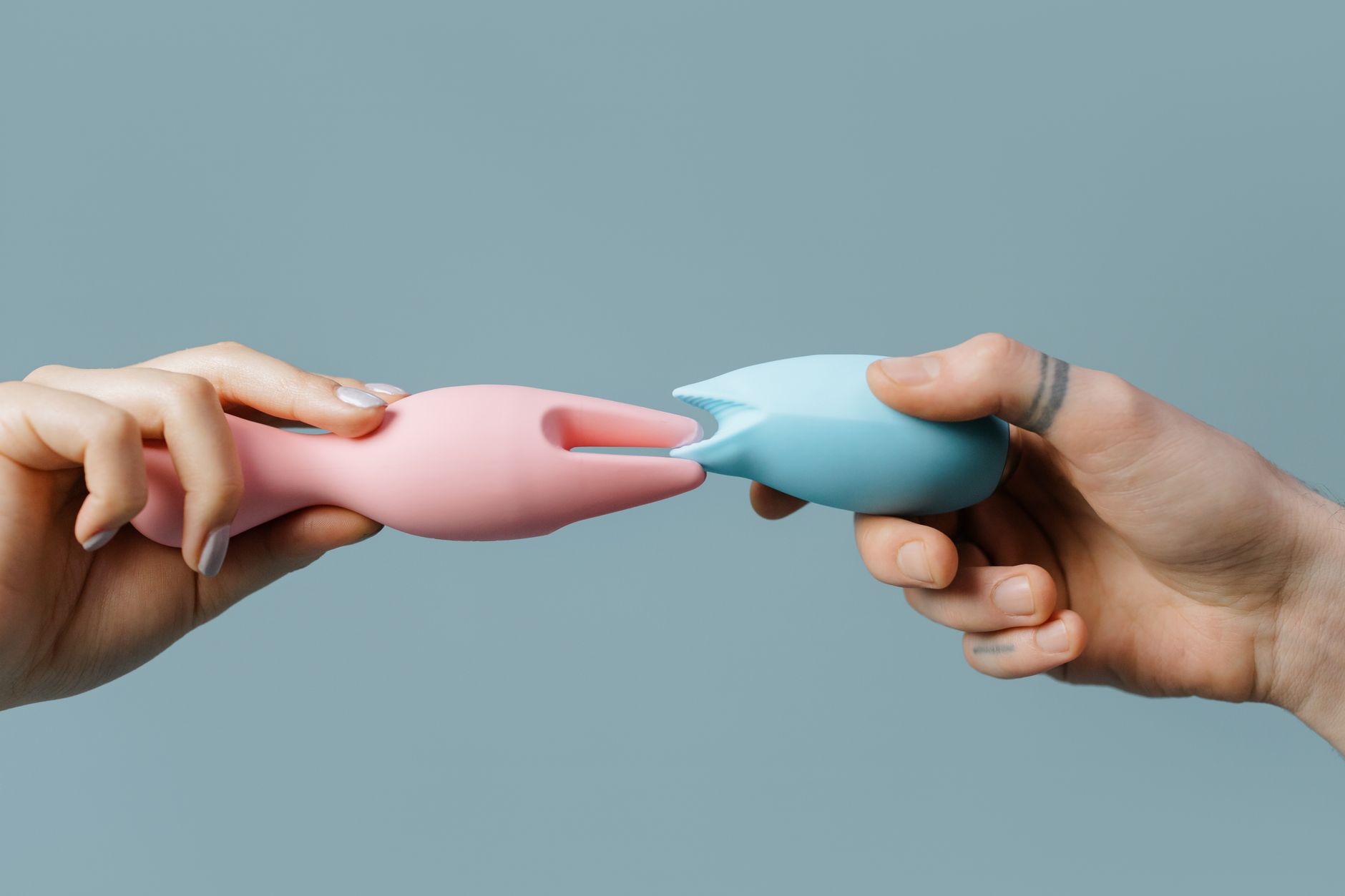
Here's the thing about toy anxiety
You're not nervous about the object. You're nervous about what introducing it means. Will your partner think you're unsatisfied? Will they feel replaced? Will the conversation kill the mood entirely? These are real questions, and they deserve real answers, not platitudes.
I've worked with couples for decades, and the pattern is consistent: the person thinking about bringing a lemon vibrator into their partnership spends weeks (sometimes months) building it up as a potential relationship crisis. When they finally mention it, the partner's actual response is somewhere between "Oh, okay" and "I've been hoping you'd be open to that."
The gap between the anxiety and the reality is where this guide lives.
Why the timing conversation matters more than the toy itself
Introducing any lemon sexual toy or clitoral vibrator isn't about the device. It's about demonstrating that you can talk about pleasure without shame, without blaming your partner, and without treating sex like a problem that needs fixing.
That requires choosing the moment carefully. Not during sex, not mid-argument, not when either of you is tired or distracted. The best time is calm, private, and removed from the bedroom. I typically suggest a quiet evening at home with tea or wine, when you have space to actually listen to each other.
The worst time is right before sex, when your partner can't hear anything except their own thoughts spiraling. The second-worst is during intimacy, when introducing the vibrator reads as either criticism or desperation instead of exploration.
The conversation structure that actually works
Start with curiosity about your own pleasure, not dissatisfaction with theirs. The language matters here.
"I've been thinking about exploring my body in different ways, and I'm interested in trying a lemon clitoral vibrator. I'd love to know how you feel about that." This is grounded and collaborative.
Versus: "I need something different because what we're doing isn't working." This triggers defensiveness, and now you're in a fight instead of a conversation.
Say it once, then pause. Let your partner actually process. Most people need 30 seconds of silence to shift from surprise to thought. Don't fill the gap with more explanation or justification. That signals you expect pushback.
Listen to whatever comes next without defending. If they say "That's weird," your job isn't to convince them it's not weird. Your job is to ask what that word actually means to them. Sometimes "weird" means "unfamiliar." Sometimes it means "I'm scared I won't be enough." These are different conversations.
What actually concerns partners (and how to address it)
I've heard the same three fears from people uncomfortable with their partner introducing a vibrator:
1. "Am I not enough?" This is the big one. Address it directly. "You are absolutely enough. This is about deepening what we have, not replacing anything. I want you here while I explore this. That matters to me." And then mean it. If you're planning to use the vibrator solo only and never with your partner, that's a separate choice (totally valid), but it reads differently.
2. "Will you prefer it to me?" or "Will I be jealous?" Some partners worry they can't compete with a device. Reframe it: "A vibrator doesn't have hands or a voice or the ability to hold me after. It does one thing, and it does it well. That's the whole point." You can also acknowledge their feelings without letting those feelings make your decisions. "It's okay if this feels strange at first. It might get easier as we use it together."
3. "Does this mean you're not attracted to me anymore?" This one usually surfaces if there's already tension in the relationship. A vibrator won't fix that. But if the relationship is solid, this is easier to address: "My attraction to you hasn't changed. My curiosity about my own pleasure has grown. Those are separate things."
How to actually use a lemon vibrator with your partner
There are several entry points, depending on where you both are emotionally.
Option one: Solo exploration, then sharing. You use the lemon vibrator alone a few times, get comfortable with it, know what feels good. Then invite your partner to watch or join. This removes the pressure of figuring it out together in real time, and it lets your partner see that you're not struggling or uncomfortable. You're enjoying it, and there's no drama.
Option two: Guided exploration. Your partner is present from the start. You show them the vibrator, explain what it does, then use it while they're close to you. They're not doing anything. They're just witnessing. This builds intimacy and removes the "I'm replacing you" narrative because they're literally right there.
Option three: Partner-assisted. Your partner holds the vibrator, or you guide their hand while they hold it. This is vulnerable and collaborative. It requires real communication ("a little higher," "slower") and it makes the experience genuinely shared.
Option four: Integrated into partnered sex. Once you're both comfortable, the vibrator becomes part of your regular intimacy. Some partners love using a lemon clitoral vibrator during partnered sex because it lets you access pleasure that their touch alone might not hit. There's no competition here. The stimulation comes from both of you, and the orgasm is shared.
None of these is "the right way." The right way is whatever you both consent to and enjoy.
The practical setup that matters
If you're using the vibrator with a partner present, a few things make the experience less awkward:
Charge it beforehand. Nothing kills the mood like "Oh, wait, let me plug this in." A fully charged lemon vibrator (like the Lem, which runs on a rechargeable battery) is ready to go without performance anxiety.
Have lubricant nearby. A water-based lube helps the vibrator glide and feels better on skin. Keep it within arm's reach so you're not breaking the moment to hunt for it.
Start with clothes on. Or partially on. You don't need to jump straight to full nudity. Many couples find it easier to talk through the first use when the stakes feel slightly lower. You can always remove layers as you get more comfortable.
Set a low expectation for the first time. You're not trying to have an amazing orgasm. You're trying to have a conversation with your body in front of your partner without shame. That's the win.
When your partner says no (or "not yet")
Sometimes the answer is no. Not "not right now." Not "let me think about it." No.
You have a choice to make. If using a lemon vibrator is something you need for your own pleasure, you can use it solo. That's a boundary that matters. If your partner categorically refuses toys in the relationship ever, you need to decide if that's a dealbreaker.
I've worked with couples where one partner's discomfort with toys was tied to deeper issues: religious upbringing, past sexual trauma, or control dynamics. Those are conversations for a couples therapist, not for this guide. But I'll say this clearly: your pleasure matters. Your partner's comfort matters. But your pleasure matters more than their discomfort.
There's a middle ground in most cases, though. A partner who's nervous might become curious once they see that using a lemon sexual toy doesn't threaten the relationship. Patience, honesty, and time shift things.
The conversation after the first time
Once you've actually used the vibrator together (or alone and told your partner about it), check in. Not during sex. The next morning, over coffee, without expectation.
"How did that feel for you?" is different from "Do you want to do that again?" The first one invites reflection. The second one asks for a commitment. Let them sit with the experience before you ask for anything.
They might say "That was hot," and you've opened a new chapter. They might say "I'm still not sure," and you're back to patience. Either way, you've shown that pleasure is something you can talk about without resentment. That's the real shift.
Introducing a clitoral vibrator isn't about the object. It's about proving that this relationship can hold conversations about desire, curiosity, and the body without judgment. That's the intimacy that matters.
FAQ: What People Actually Ask
Should I tell my partner about the vibrator before or after I buy it?
Before is better. Buying it first without mentioning it can feel secretive, even if you didn't mean it that way. Having the conversation first shows respect and gives your partner agency. If they're resistant, you haven't already sunk money into something that's now a source of tension.
What if my partner wants to use the vibrator instead of me?
This is actually pretty common and totally fine. Some partners love the idea of using a lemon vibrator on you because it feels interactive and involved. You can take turns, or they can focus on it while you relax. There's no hierarchy here. The vibrator is a tool, and you both get to enjoy it.
Is it weird to introduce a vibrator if we've been together for years?
Not weird. Actually pretty normal. Long-term couples often introduce toys to combat boredom or to explore new parts of pleasure they haven't accessed before. The longer you've been together, the safer it often is to have this conversation because you've built trust. Years together means you have foundation to stand on.
What if introducing a vibrator makes my partner feel insecure?
Some insecurity is normal and understandable. Address it directly and without dismissing it. "I understand why this feels threatening. I want you to know that nothing about my love for you has changed. Let's figure out how to make this feel good for both of us." Then actually do that. If the insecurity is deep, couples therapy might help. But don't abandon your own pleasure to manage someone else's feelings forever.
Can we use a lemon vibrator during partnered sex?
Absolutely. Many couples find that adding a clitoral vibrator during penetrative sex intensifies sensation for the person with a vulva. It's not a replacement for anything. It's an addition that can make the experience richer for everyone involved.
What if I'm the one nervous about using it, not my partner?
Then you get to decide at your own pace. You don't owe your partner a vibrator experience on their timeline. If they're interested and you're hesitant, use the vibrator alone first. Build familiarity. Let your body teach you that it's safe and good. Only bring your partner in when you're ready, not before.
The real shift
The moment you stop thinking of introducing a lemon vibrator as a risk and start thinking of it as an act of intimacy, everything changes. You're not threatening your relationship. You're expanding it.
Your pleasure deserves this conversation. Your partnership can hold it. Let's start there.
If the conversation feels impossible on your own, that might be worth exploring with a couples therapist. Reach out to Hello Nancy's Lemon if you need guidance on finding the right support, or check out our broader blog for more conversations about pleasure, partnership, and communication.