Let's start with the real problem
Your partner doesn't want a lemon vibrator in the bedroom. They've said it directly, or you've sensed it in the silence. Maybe they think toys mean they're not enough. Maybe they associate vibrators with solo play, not couples. Maybe they're just uncomfortable with the idea. Whatever the reason, now you're caught between your own desire and their boundary. That's the gap we're solving here.
First, let me be clear: their hesitation is not unusual. It's also not a permanent veto. Most partner resistance to clitoral vibrators isn't about the toy. It's about what they think the toy means.
Why partners resist, and what's actually going on
Resistance to lemon vibrators typically falls into three buckets.
"I'm not enough." Your partner worries that if you need a vibrator, they've failed at sex. This is the most common one and the easiest to address because it's completely untrue. A lemon clitoral vibrator isn't a replacement. It's a tool that does one specific thing: deliver sustained suction stimulation to the clitoris. No partner can replicate that sensation with their hands or mouth, no matter how skilled. You're not upgrading; you're expanding.
"Toys feel clinical." Some people grew up in environments where sexuality was shame-wrapped or medicalized. A vibrator can feel like the opposite of intimacy. They picture something cold, mechanical, disconnected from the warmth of another body. The lemon vibrator's softness and the suction sensation often reframe this. It feels less industrial and more sensual than traditional vibrators. But they won't know that until they see it.
"I won't know how to use it." Partners worry they'll feel incompetent. How do you incorporate a tool you've never held? Where does it go? When does it happen? This is a logistics fear, not a pleasure fear, but it's blocking everything.
Understanding which bucket your partner is in changes everything about how you approach this.
The conversation framework that actually works
Don't spring it on them. Don't introduce it mid-sex. Don't make it a gift that implies they should just get on board.
Have this conversation when you're both calm, clothed, and not in the bedroom. Here's the structure:
Step 1: Lead with your desire, not the tool. "I've been thinking about what would help me feel more sensation during sex. I want to explore that with you, and I'd like your help figuring out how." You're not saying "I want a vibrator." You're saying "I want more pleasure, and I want you involved."
Step 2: Invite them in as a problem-solver. "I know this might feel weird at first. I'm not sure about it either. But I'd like to research it together and talk through any concerns you have." This shifts them from target to partner. You're not doing something to them; you're solving something together.
Step 3: Listen for the actual fear. Let them name it. "Does this feel like something's missing?" or "Are you worried about where this fits?" The specificity matters. Once you know the fear, you can address it directly instead of defending a position they didn't attack.
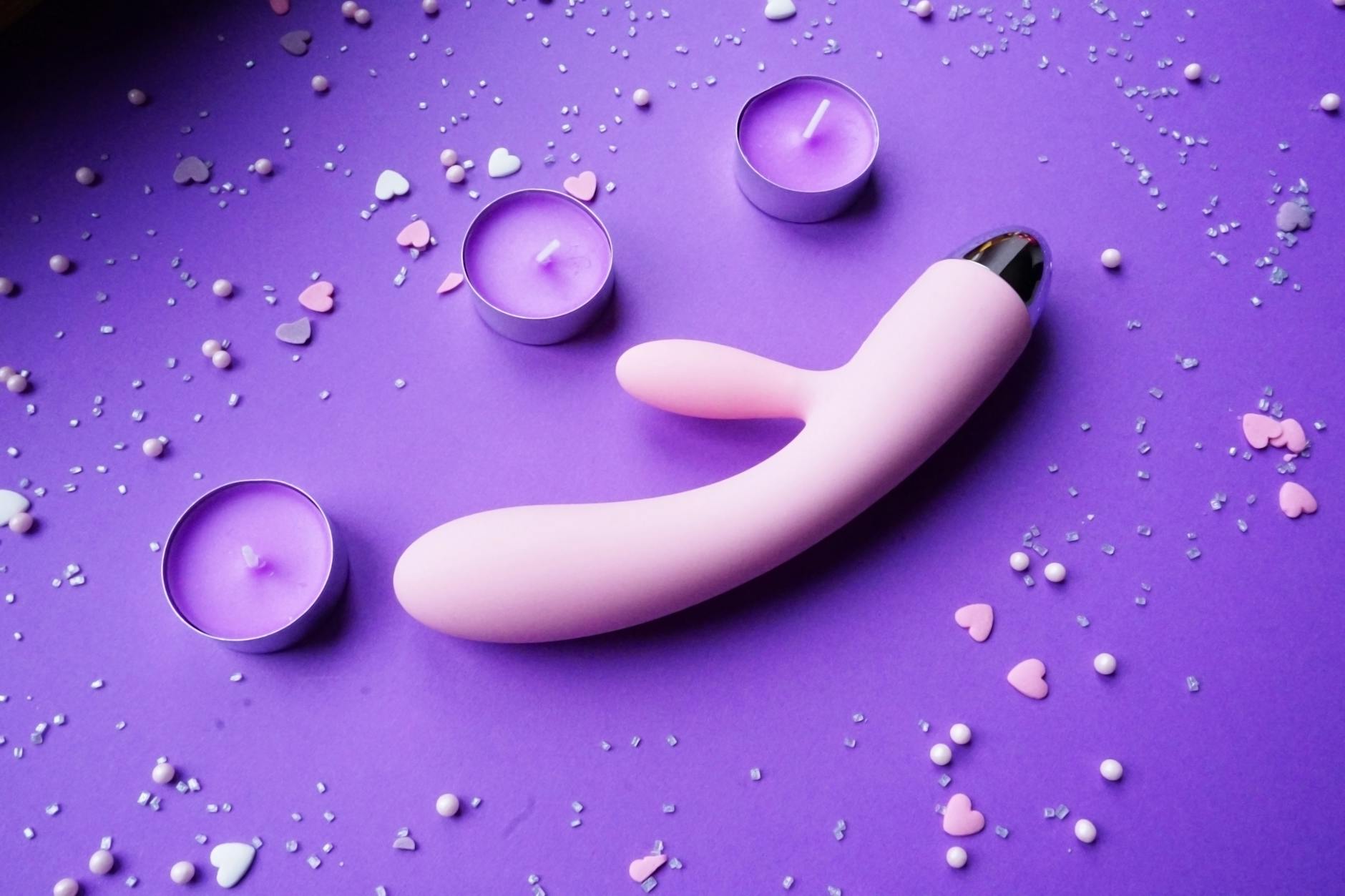
Step 4: Share information without selling. Show them the lemon vibrator. Let them hold it if they want. Explain what it does: it creates a gentle suction sensation on the clitoris. It's not a replacement for any part of sex. It's an addition that most people use for 5-10 minutes as part of foreplay or partnered sex. Nothing changes about how you connect with them. Everything changes about how your body responds.
Step 5: Set a boundary on the timeline. "I'm not going to push you. But I'm also not going to pretend I don't want this. Can we revisit this conversation in two weeks?" No pressure, but also no erasure. Your desire matters too.
When resistance is actually fear disguised as logic
Sometimes partners will argue from reasons that aren't real reasons. "Vibrators numb you," or "It's not natural," or "I read they're bad for you."
These statements almost always root back to one of the three buckets above. The logic is a shield. Your job is not to debate the facts, but to acknowledge the feeling underneath.
"You're worried it's going to change how I experience pleasure permanently" is different than debunking a myth. One gets to the heart. One creates defensiveness.
When your partner names the actual concern, you can actually address it. "That makes sense. Here's what the research shows." Or "I get why you'd worry that. What would help you feel more secure about this?"
How to use a lemon vibrator with a hesitant partner
If they've agreed to try, here's how to make the first time work.
Start without them watching. Many partners feel less threatened if they can hear it working, touch it, or see it in your hands, but not watch you use it in the moment. That first privacy reduces spectator anxiety. Knowing you're having pleasure without the pressure of their observation often softens their resistance faster than anything else.
Use it during foreplay, not as the main event. A lemon clitoral vibrator works beautifully for 5-10 minutes of stimulation before partnered sex. Frame it that way: "This helps me get closer to the edge, and then we can take it from there." They stay central. The vibrator is the warm-up.
Invite them to hold it. Once they're comfortable, handing them the lemon vibrator and guiding their hand can shift the entire dynamic. Suddenly they're not excluded. They're participating. They have control. That changes everything about how it feels for both of you.
**Narrate what's happening." "That feels incredible," or "Right there," or "I love this with you" keeps the intimacy alive. You're not disappearing into the sensation. You're sharing it with them.
The longer play: rebuilding trust around pleasure
If your partner's resistance runs deep, one conversation won't fix it. But consistent, honest communication can rewire how they think about pleasure expansion over time.
When they see that adding a lemon vibrator didn't diminish your desire for them. When they realize that orgasms feel better and sex feels shorter because you're getting there faster. When they notice that you're more relaxed, more responsive, more playful. That's when belief shifts.
You might also suggest that how to talk about lemon vibrators with your partner becomes an ongoing conversation, not a one-time ask. Check in every few months. Ask what's working. Ask what's still uncomfortable. Some partners warm up gradually. Some need to see the difference in your body's response before they stop worrying they're not enough.
When to accept "no" and when to keep the conversation alive
If after genuine discussion and time, your partner says they don't want a lemon vibrator in shared sexual space, you have a choice to make. You can respect that boundary fully, which looks like using it only during solo play. You can use solo play as a way to eventually shift their comfort level. Or you can decide this is a bigger compatibility issue.
I won't pretend there's a clean answer. But I will say this: your pleasure matters. Their comfort matters. Neither one cancels the other out. If your needs are fundamentally misaligned and they won't budge, that's information. Act on it.
For most couples, though, resistance softens once the fear is named and addressed. A lemon vibrator isn't a threat to your relationship. It's often the tool that gives you both permission to want more.
People also ask
What if my partner thinks I'm using a vibrator to replace them?
This is the central worry, and you address it by being radically honest. "I'm not replacing you. I'm adding something my body needs. You're still the person I want to be with." Then prove it through action. Involve them. Use the vibrator together. Show them that your connection deepens, not weakens, when both of you get what you need.
Can a lemon vibrator actually make my partner more comfortable with toys?
Yes, often. The lemon vibrator's suction sensation and soft texture feel less clinical than traditional vibrators. Partners who were resistant often become curious once they experience how different it feels. Letting them hold it, touch it, and feel the sensation on their own hand sometimes shifts their entire perspective.
How do I introduce a lemon vibrator without making my partner feel like I'm criticizing their sexual performance?
Frame it as a discovery, not a solution to a problem. "I want to explore something new" lands differently than "You're not giving me what I need." You're also inviting them into the exploration, not doing it behind their back. Transparency and inclusion soften almost every partner's resistance.
What if we try it once and my partner hates it?
That's information, not a rejection of you. Ask what didn't work. Was it the sensation? The intrusion into their sexual space? The feeling of being replaced? Understanding the specific thing that bothered them matters more than whether they liked it. Sometimes one adjustment (less time, different positioning, more communication) changes everything.
Should I hide my lemon vibrator if my partner isn't on board yet?
Not from them. Hiding it creates shame and secrecy. Keep it in a drawer you're not ashamed of. If they find it, you have a conversation, not a crisis. Secrecy implies you're doing something wrong. You're not. You're taking care of your own pleasure.
Can we use a lemon vibrator even if my partner has never used toys before?
Absolutely. Many partners' first experience with any vibrator is the lemon. Its design is gentler and more intuitive than traditional toys. If your partner is willing to try something, a lemon clitoral vibrator is often the best entry point because it feels less aggressive and more sensual. Sometimes that difference is enough to shift their entire attitude toward clitoral vibrators in general.
The bottom line
Your partner's hesitation isn't the final word on this. It's the beginning of a conversation. Resistance to lemon vibrators almost always roots back to fear. A fear that they're not enough. A fear that pleasure should look a certain way. A fear of the unknown.
Your job is not to convince them they're wrong. Your job is to understand what they're actually scared of, and then, together, rebuild how they think about pleasure expansion.
If you want to explore this further, how to introduce a lemon vibrator to your partner breaks down the mechanics of the conversation in even more detail. And if you're looking for ways to keep communication going, how to talk about lemon vibrators with your partner gives you frameworks for ongoing check-ins.
Most couples who move through this actually come out stronger. The conversation itself becomes a place where deeper honesty happens. And the lemon vibrator becomes something you both enjoy.
That's the best-case scenario. But it starts with naming what's real.