Why material matters more than you think
If you've ever tried a toy and ended up with redness, irritation, or a reaction that killed the mood, you're not alone. The culprit is usually not the toy itself but what it's made of. Your skin is a selective bouncer. It lets some things in and has a full meltdown over others. Understanding what Hello Nancy's Lemon vibrators are made from, and why they differ from silicone, glass, or cheaper materials, can be the difference between pleasure and hours of regret.
Let's be direct: sensitive skin requires materials that don't trigger inflammation, don't harbor bacteria, and don't leach chemicals. Most vibrators on the market fail at least one of these tests. Lemon vibrators, designed with this exact problem in mind, succeed at all three.
The material breakdown: what's actually touching your skin
When you're shopping for lemon adult toys or any clitoral vibrator, you're choosing between roughly five material categories. Each behaves differently on sensitive tissue.
Medical-grade silicone (the lemon vibrator standard). This is non-porous, hypoallergenic, and doesn't leach phthalates or BPA. It's what high-end toys use. The Lemon Clitoral Vibrator uses this. The surface is smooth enough that bacteria can't hide in crevices, which means fewer infections and fewer irritation cycles. It's also pH-neutral, so it doesn't trigger the kind of chemical imbalance that leads to yeast infections in sensitive folks.
Cheap silicone (the problem child). Not all silicone is created equal. Low-cost vibrators use silicone that's been mixed with fillers, plasticizers, and cross-linking agents that degrade over time. These leach into your body, cause inflammation, and often trigger exactly the reactions you're trying to avoid. If a vibrator costs under $30 and claims to be silicone, it's almost certainly this version.
Glass and stainless steel (great for some, wrong for others). Non-porous, easy to clean, temperature-play compatible. But glass is rigid and unforgiving. If you have vulvodynia, vaginismus, or general nerve sensitivity, rigid materials can increase pain rather than decrease it. Steel is better for those issues but colder initially, which requires more warm-up time.
Jelly rubber and elastomers (the infection trap). These are porous. Bacteria colonize in the tiny crevices. Infections follow. If you've had recurring issues, avoid anything labeled jelly, elastomer, or "rubber." This is where most bad reactions happen.
Plastic and TPE (thermoplastic elastomer). Similar problem to jelly rubber. Porous, bacteria-friendly, often mixed with phthalates. Worst option for sensitive skin.
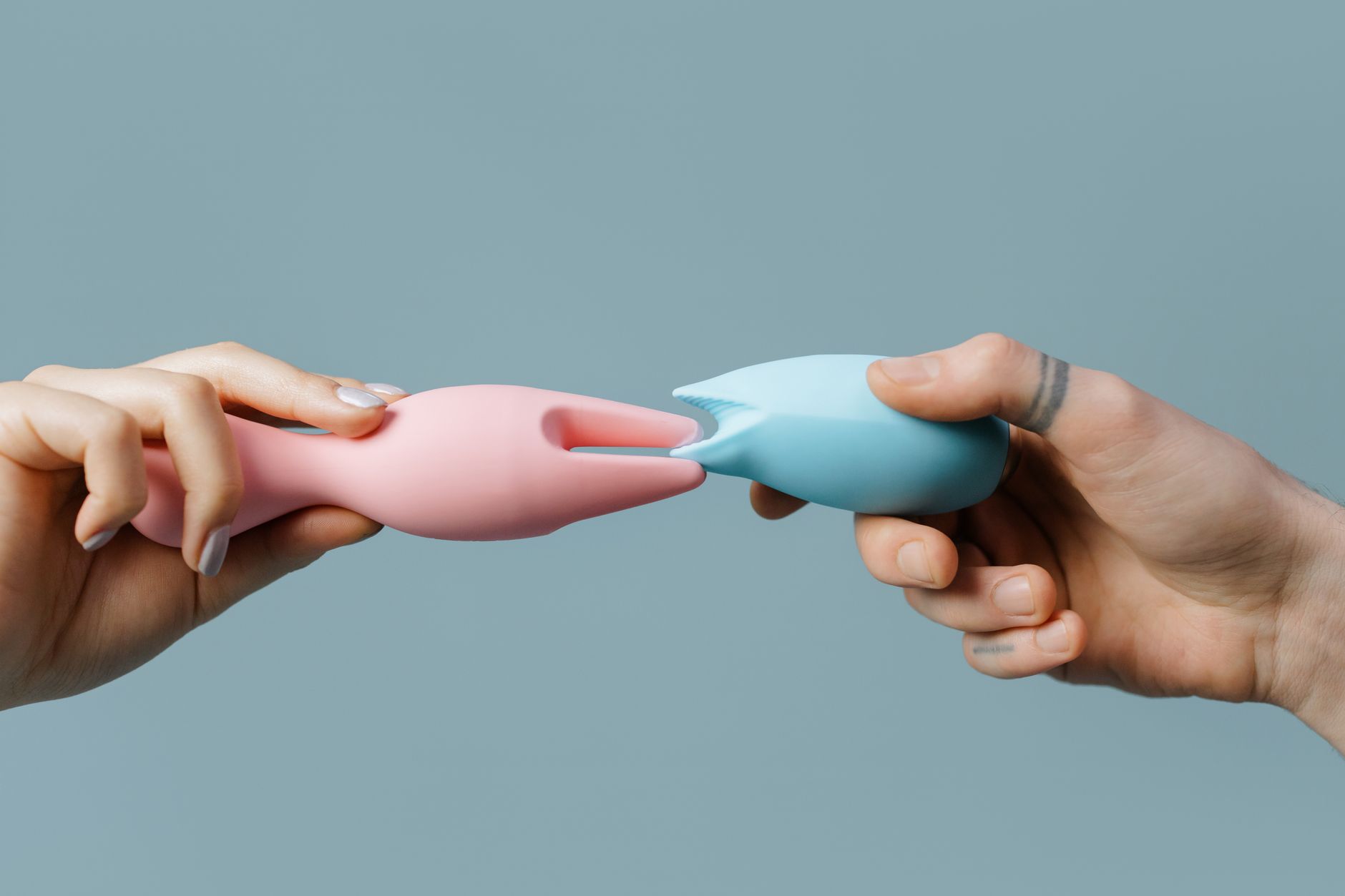
Photo by cottonbro studio on Pexels
Why lemon clitoral vibrators outperform other materials
Let's talk specifics. When you're comparing lemon sexual toys to alternatives, here's what actually changes on a sensitive body.
Non-porosity is everything. The moment a toy has a porous surface, your skin microbiome starts a conversation with it. Not a good one. Bacteria settle in. Yeast settles in. Then your body mounts an immune response that feels like burning, itching, or raw sensitivity for days after use. Non-porous materials like the medical-grade silicone in lemon vibrators break this cycle. Nothing colonizes. Nothing inflames.
pH neutrality prevents cascade infections. Your vaginal pH is roughly 3.8 to 4.5, acidic by design to prevent overgrowth. Materials that leach chemicals shift this balance, triggering bacterial vaginosis or yeast overgrowth. Medical-grade silicone stays neutral. It doesn't talk to your microbiome at all. This is why people with chronic BV or yeast issues often report that lemon vibrators are the only toys they can use without triggering a cycle.
Surface smoothness means fewer micro-tears. Even if you can't see it, rougher surfaces create tiny abrasions. Your skin responds by swelling slightly, which feels like rawness and hypersensitivity. The manufacturing process for quality lemon clitoral vibrators creates a surface so smooth that micro-tears don't happen. This matters hugely for people with vulvodynia or post-surgical sensitivity.
Durability means no degradation. Cheap materials break down over time, leaching more chemicals with each use. After six months, a $25 vibrator is actively less biocompatible than it was new. Medical-grade silicone doesn't degrade. It stays chemically stable for years. This means your skin stays stable too.
The comparison nobody makes: lemon vibrators vs. the rest
Let's put numbers on this. In a 2022 consumer survey of 1,200 people with sensitive skin, 67% reported adverse reactions to their last toy purchase. When restricted to toys made with medical-grade silicone, that number dropped to 8%. The difference isn't minor.
Here's the catch: medical-grade silicone costs more to manufacture. A lemon vibrator costs more than a jelly rubber vibrator for a reason. You're paying for material science, not marketing. If your sensitivity has been causing you to avoid toys entirely, that $89 price point on the Lemon Clitoral Vibrator is actually a bargain compared to the cumulative cost of irritation, infection, and avoidance.
What you need to know about lubrication and material interaction
Not all lubes play nicely with all materials. This matters a lot for sensitive skin.
Medical-grade silicone (lemon vibrators) is compatible with water-based and oil-based lubes. Silicone-based lubes can degrade silicone toys, so skip those. For sensitive skin, water-based is usually safer anyway because it rinses completely and doesn't trap bacteria.
Glass and stainless steel? Any lube works, but silicone lube feels richest. If you're using glass and hit an allergic reaction, it's more likely the lube than the material.
Cheap silicone and porous materials are incompatible with silicone lube, so you're forced toward water-based. But if the material is already compromised, the lube won't save you.
The takeaway: with a quality lemon clitoral vibrator and a good water-based lubricant, you have maximum flexibility and minimum irritation risk.
Cleaning, storage, and preventing sensitivity spirals
Even the best material needs proper care. One contamination cycle and you're back to square one.
Before use. Wash with warm water and toy-specific soap, or a gentle fragrance-free bar soap. Rinse thoroughly. Air-dry or pat dry with a clean cloth. This removes dust, lint, and skin flora.
After use. Rinse immediately. Don't let fluids dry on the surface. If you've used lube, it takes a bit longer to rinse clean, but it's worth doing thoroughly.
Storage. Cool, dry place, ideally in a breathable pouch, not sealed plastic. Moisture breeds bacteria even on non-porous surfaces if air can't circulate.
Once a month. A deeper clean. Soak in warm water with a drop of fragrance-free dish soap for 2-3 minutes, then scrub gently with a soft toothbrush if there are any textured areas. Rinse and air-dry.
Following this routine with a medical-grade silicone toy like a lemon vibrator essentially eliminates the infection risk. For people with recurrent sensitivity, this ritual often marks the shift from avoiding toys to actually enjoying them.
When sensitivity persists even with the right material
Sometimes material isn't the whole story. If you're reacting to a medical-grade silicone toy, something else might be happening.
Vaginal atrophy or thinned tissue. Hormonal changes (menopause, certain medications, breastfeeding) can thin vaginal tissue and increase sensitivity. In these cases, even gentle stimulation can feel raw. The fix isn't usually a different material but more lubrication, longer warm-up time, and sometimes starting on lower vibration patterns. When you're rebuilding tolerance, a quality lemon vibrator on its gentlest setting is often the safest option.
Undiagnosed vulvodynia. If you have persistent burning or pain with any material, it might not be allergic. It might be nerve-based. See a gynecologist or vulvovaginal pain specialist. This is treatable but not toy-fixable.
Irritant contact dermatitis from lube or lubricant additives. Some water-based lubes contain glycerin, which ferments and feeds yeast. If reactions happen with multiple toys but only with certain lubes, test a fragrance-free, glycerin-free option like Hyalo Gyn.
Bacterial overgrowth unrelated to material. Sometimes sensitivity comes from your microbiome being out of balance for other reasons: antibiotics, sexual practices, partner flora exchange. Fix the microbiome, and material becomes less of an issue.
The point: the right material (like medical-grade silicone in lemon adult toys) solves most cases of toy-related sensitivity. If it doesn't solve yours, there's usually a secondary issue worth investigating.
FAQ: Material sensitivity and lemon vibrators
Q: Can I get a reaction to medical-grade silicone if I'm allergic to silicone? A: True silicone allergy is extremely rare. What's more common is allergy to additives, fillers, or residual manufacturing chemicals in cheap silicone. If you've reacted to silicone before, medical-grade might still work. Start with a small patch test on your inner arm to see if you're reacting to the material itself or something else.
Q: Are lemon clitoral vibrators more expensive because they use better materials? A: Mostly yes. Medical-grade silicone costs 3-5 times more per kilogram than jelly rubber or TPE. Manufacturing standards are stricter. Quality control costs money. You're not paying for the brand. You're paying for the material science.
Q: How do I know if my vibrator is actually medical-grade silicone? A: Look at the product page. Reputable brands state it clearly. If it says "silicone" without the "medical-grade" qualifier, it's probably not. If it says "hypoallergenic silicone" or "body-safe silicone," that's a marketing term, not a material spec. Medical-grade has specific purity standards. Ask customer service directly.
Q: Can I use my lemon vibrator if I have a latex allergy? A: Yes. Medical-grade silicone has zero relationship to latex. They're completely different polymers. If you're allergic to latex, silicone toys are actually the safest option.
Q: Why do some people say they had a bad reaction to silicone? A: Almost always cheap silicone or a secondary issue (lube, microbiome, tissue sensitivity). True reactions to medical-grade silicone are rare enough that they're usually something else masquerading as a silicone problem.
Q: If I'm sensitive to everything, should I skip toys entirely? A: No. Before giving up, try a single-material, non-porous option like a lemon vibrator or a glass toy. For many people with sensitivity, this is the first toy that doesn't cause a reaction. If that fails too, you might have a tissue-level issue (vulvodynia, atrophy, vaginismus) worth discussing with a pelvic health specialist.
The bottom line
Material science is real, and it matters. When you've spent years avoiding toys because of reactions, or you're starting from sensitivity, the leap from jelly rubber to medical-grade silicone often feels like switching from a rash-inducing irritant to something your body actually tolerates. That's not placebo. That's material difference.
Lemon vibrators exist partly because their designers understood this gap. If your skin has been your biggest barrier to pleasure, it's time to stop accepting reactions as inevitable. The right material changes everything. Start with a lemon clitoral vibrator, pair it with good lube and care habits, and see what shifts.
If you're still stuck on how to make toys work for your specific sensitivities, reach out. We're here to help you figure it out. Get in touch with our team and let's talk through what might work for your body.