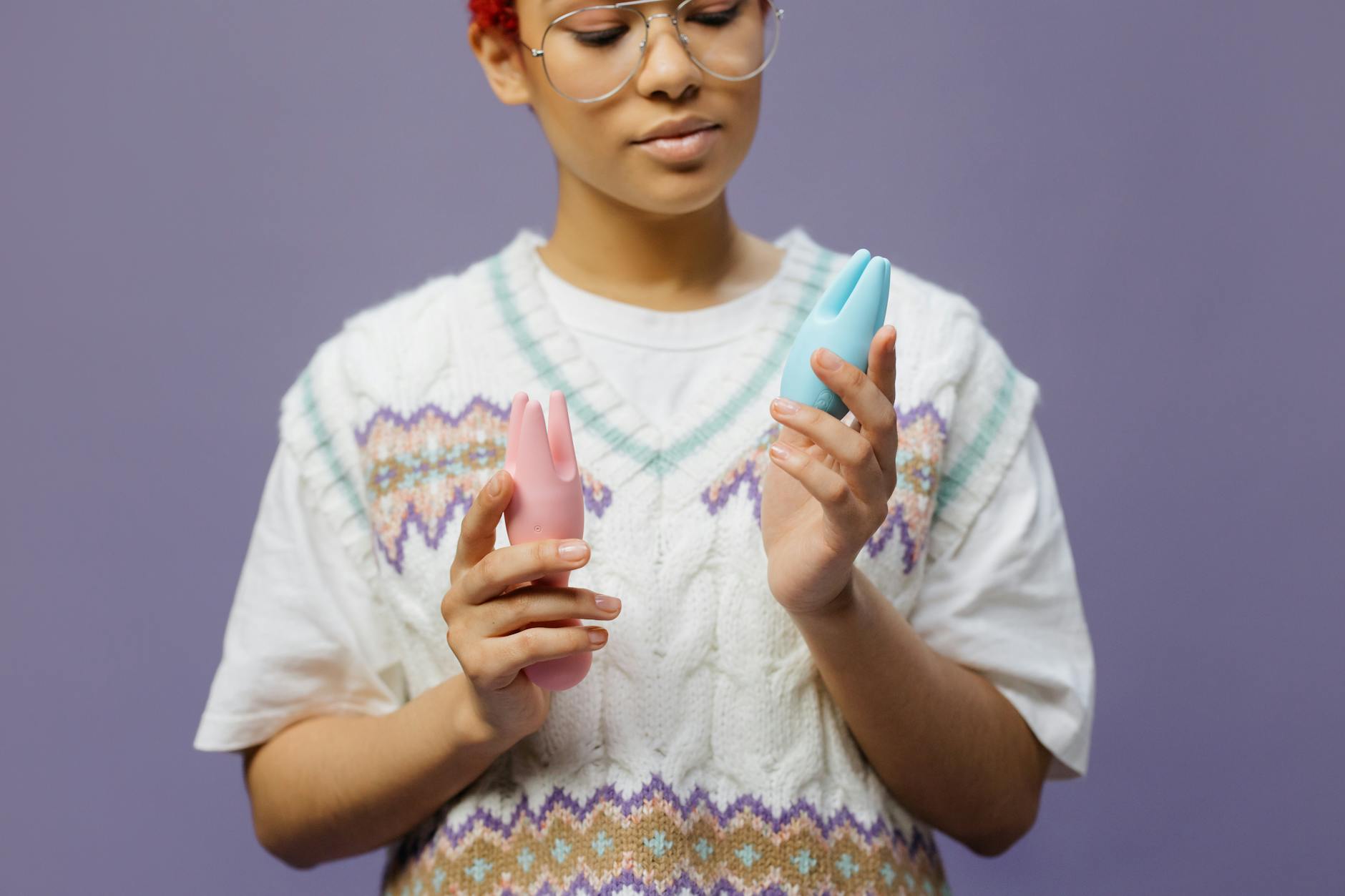
Let's talk about what you're actually nervous about
You want to bring a lemon clitoral vibrator into the bedroom. But the conversation feels loaded. Will it hurt your partner's feelings? Make them feel inadequate? Seem like rejection? Those fears are real, and they're keeping you stuck. Here's the thing: the awkwardness lives entirely in the setup. Once you reframe what's happening, the conversation gets easy.
Why couples avoid this conversation
Most people think the topic is "vibrators." It isn't. The real conversation is about desire, adequacy, and whether you feel safe asking for what you want. That's heavy. No wonder it feels risky.
But here's what research on long-term couples actually shows. Partners who can talk about pleasure openly report higher sexual satisfaction, deeper trust, and more consistent intimacy overall. Not because vibrators are magic. Because they practiced having the hard conversation.
When you introduce a lemon vibrator well, you're not saying "this will fix me." You're saying "I want to explore this with you, and I trust you enough to ask." That's vulnerable. It's also the foundation of actual closeness.
The reframe that changes everything
Stop thinking of this as a problem to solve together. Think of it as something new you both want to try. The difference is huge.
"I want us to experiment with something" feels collaborative. "I need to use this because I can't finish" feels like a crisis. Same toy. Totally different emotional texture.
When you approach it as exploration, your partner's role shifts from "helper" to "co-explorer." They're not fixing you. They're discovering something with you. That's hot. That's also true.
When to bring it up (timing matters more than you think)
Do not have this conversation in bed. Do not have it right before or after sex. Do not lead with it when either of you is stressed, tired, or defensive about something else.
Have it somewhere neutral. A car ride works. A walk works. After a good meal, when you're both relaxed and present. The goal is calm focus, not ambush.
If you're in a long-term relationship, the conversation takes 10 minutes. You don't need to schedule a "we need to talk" summit. That builds tension for no reason. Just ease into it naturally: "Hey, I've been thinking about trying something new in bed." Done. You've opened the door.
The three-part script that actually works
Here's what I tell couples in my practice. This isn't verbatim dialogue. It's the structure that defuses defensiveness.
Part One: Why you want this. "I've been curious about exploring something new, and I want to try it with you. This isn't about what's not working. It's about what could feel even better."
Notice what that does. It centers desire (exploration), not inadequacy. It includes them explicitly.
Part Two: What you're picturing. "I'm thinking about trying a lemon clitoral vibrator. I've read that some people find them really different from other toys because of the suction feeling. I want to see if it works for me, and I'd love for you to be involved in that."
You're being specific and honest. You're also not making it about them. You're curious about your own body. They happen to be welcome.
Part Three: The ask. "What do you think? Do you have questions, or does anything about that feel weird to you?"
Stop talking. Let them actually respond. Most partners' first reaction is relief ("Oh, you're not leaving me") or curiosity. Some will have questions. Answer them straight. Don't apologize for wanting more pleasure.
What partners actually worry about (and how to address it)
They're thinking one of five things.
"Am I not enough?" Answer: "I love what we have. This is about exploring more of what feels good, not because anything's wrong."
"Does this mean you're bored?" Answer: "No. It means I want to experiment together. That's something I want with you, specifically."
"Will you compare me to a toy?" Answer: "It's different, not better. It feels nothing like your hand or mouth. I want both."
"Is this going to be weird?" Answer: "Maybe at first. Most new things are. But if we do it together, it stops being weird pretty fast."
"What if I don't like watching?" Answer: "Then we'll figure out what works. Maybe you stay involved differently. Or we try something else. This is collaborative."
Each of these worries deserves a straight answer, not reassurance theater. Be honest. Be specific.
How to introduce the actual toy
Don't just show up with a lemon vibrator and expect them to be excited. Do the conversation first. Give them time to sit with it. Then, when the moment feels right, show them.
Let them hold it. Let them ask questions. "This part is the suction mechanism. It doesn't vibrate the same way other toys do. It's gentler in some ways, more intense in others."
You're demystifying it. You're also showing that you're not embarrassed. That matters more than you think.
The first time together (do it right)
Set aside real time. Not rushed morning sex or a quickie. An actual block where you can both relax and focus.
Start with foreplay you both already enjoy. Build arousal the way you normally would. Then introduce the lemon clitoral vibrator. Not as the main event. As an addition.
Your partner's job isn't to disappear. They can touch you elsewhere. Kiss you. Watch. Be present. The vibrator isn't a replacement for them. It's another sensation in the mix.
Talk during it. "This feels good." "Try this setting." "I like when you do that at the same time." That's not sexy in the way romance novels frame it. It's actually way sexier, because you're communicating in real time and adjusting together.
What if they say no
Some partners will. That's information. It doesn't mean the relationship is over. It means you need a different conversation.
"Okay. What would make this feel less scary?" Or: "Is this a not-right-now, or a never?" Or: "What would you prefer instead?"
You might find that they need more time. They might have specific concerns you can actually address. Or they might be genuinely uncomfortable, and you need to decide what that means for you.
But most of the time, when partners say no, it's because the conversation felt threatening. Go back to the reframe. Make it collaborative. Ask what they need to feel safe. Often, that's just "let's do this slowly" or "talk me through it first."
After the first time
Don't pretend it didn't happen. And don't over-analyze it.
The next day, say something like: "That was really good. I felt close to you." Keep it simple. You're normalizing it by treating it as just another part of your physical relationship.
If it felt awkward, acknowledge that too. "That was weird at first, but I'm glad we did it." Weirdness doesn't mean failure. It just means you're trying something new. That takes a minute to get comfortable with, and that's fine.
The long game
Once you've had the conversation and tried it once, it stops being this huge thing. It becomes just another tool in your intimate toolkit. You might use a lemon clitoral vibrator sometimes. You might not. The point is you both know it's an option, and you know how to ask for what you want.
That's what actually strengthens couples. Not the toy. The fact that you could say something vulnerable and your partner listened. That you could ask for pleasure and it didn't break things. That you could explore together.
If you're stuck on the phrasing, remember this: you're not asking permission. You're inviting your partner into something you want to experience. Frame it that way, and you've already won half the battle.
FAQ: Things couples actually ask
What if my partner wants to pick out the lemon vibrator instead of me?
That's great. Let them. Some people feel more ownership of something when they choose it. You might even shop together, which turns the whole thing into foreplay.
Is it weird to use a lemon clitoral vibrator if we're trying to conceive?
No. The Lem vibrator and similar toys are external. They won't affect fertility. If you have specific health concerns, your doctor can advise, but pleasure during the fertile window is actually healthy.
How long should I wait before bringing up a second toy or adding something more intense?
Wait until the first thing feels completely normal. That's usually a few weeks to a couple months of regular use. Then the conversation gets even easier because you've already proven you can talk about it.
What if my partner gets jealous that the toy makes me orgasm faster?
This is common, and it's worth addressing directly. Explain that a lemon vibrator stimulates your nerves differently than hands or a mouth can. It's not about him. It's about physics. You want both experiences. Then show him. Sometimes seeing that the vibrator + his touch feels better than either alone shifts the whole dynamic.
**Can we use a lemon vibrator if my partner and I have mismatched desire?
Absolutely. One of the best uses is when one partner wants sex and the other isn't quite there yet. The lower-desire partner can use a vibrator to catch up, or they can use it solo while the other partner is present but not driving the action. It takes pressure off both of you.
Should I tell my friends we're using a lemon vibrator?
Only if you want to. This is between you and your partner. That said, many couples find that talking about it with close friends normalizes it even more. "We tried the vibrator thing and it was surprisingly good" is a conversation that happens all the time in groups of women over 35. You're not alone in this.
The last thing you need to know
The conversation you're scared of having is actually the hottest part. Because it means you're both saying yes to vulnerability. Yes to wanting more. Yes to each other. That's intimacy before anything even happens. Own it.