
Let's be real about the first-toy conversation
You've been with your new partner for a few months. Things are good. Sex is good. And somewhere in your mind, you're thinking about that lemon vibrator sitting in your nightstand drawer, or maybe you're thinking about getting one. The question isn't whether you want it. The question is whether bringing it up will kill the mood, make them feel inadequate, or turn into some awkward argument about what it means.
Here's what I see in my practice: the conversation itself is rarely the problem. The problem is not having a conversation at all. Surprise toy introductions, hint-dropping, or assuming your partner will just be fine with it creates way more tension than simply talking about it first.
Why the timing matters more than the words
Don't introduce toys during sex. I know that sounds obvious, but you'd be surprised how many people try. You're in the moment, they're already vulnerable, and suddenly there's a vibrator. That's not a conversation. That's a plot twist. Your partner's brain can't actually process information when they're aroused. They can only react.
The best time to talk about toys is clothed, calm, and outside the bedroom. Think dinner conversation, or even a text exchange if you're more comfortable that way. Some couples do it over a drink. Some do it in a car (less eye contact, apparently helps). The environment doesn't matter as much as the principle: you're having a conversation, not springing a surprise.
Why bring it up at all if you're enjoying sex together? Because introducing a toy intentionally, with consent and enthusiasm from both partners, is fundamentally different from introducing it as a surprise or as a hint about what's missing. The first one is collaborative. The second one feels like criticism.
The conversation starter that actually works
You don't need to make it a big deal. Here's the shape that tends to land well:
"I've been thinking about trying a vibrator together. Not because anything's wrong. I just know I tend to take longer to come, and using a lemon vibrator would help me get there without you having to do anything differently. I think it could be fun for both of us. What do you think?"
Notice what's in there: you're naming the tool, you're explaining the practical benefit (not "I need this to come" but "this helps me come faster"), you're explicitly saying nothing's wrong, and you're asking for their actual opinion instead of just informing them.
Listen to what comes back. If they say "that sounds great," you're moving forward. If they say "I feel weird about it," that's information. Ask them what makes it weird. Is it about their own insecurities? Is it about not understanding what you're asking? Is it that they want to have more input on which toy, or how it gets used?
These are all solvable problems. The only unsolvable problem is not knowing what the actual objection is.
What new partners often worry about (and what actually matters)
Three things come up repeatedly.
First, they worry it means they're not enough. Your response: "You're plenty. This is about my body, not your adequacy." And mean it. You're not bringing a toy into your relationship because your partner is lacking. You're bringing one because your body works a certain way. The lemon clitoral vibrator is a tool, like lube or a pillow under your hips. It's not a judgment.
Second, they worry about where it fits into sex together. This one's actually practical, and you can solve it by suggesting how. "I was thinking maybe you could use it on me while we're together," or "I could use it on myself while you're inside me," or "it might be fun to explore with it between us sometimes." Specificity dissolves weirdness. Vagueness breeds anxiety.
Third, they worry they should have thought of it first. This is ego stuff, and it's real. Your job here is to reframe: "I like that you care. I also like taking the lead sometimes on what we try. It makes me feel like you trust me." Most of the time, that lands.
How to introduce the actual toy
Once you've had the conversation and they've said yes, show them the lemon vibrator before you use it. Let them hold it. Let them feel how it works. Let them understand what it does. A lot of anxiety comes from mystery. The second someone realizes a clitoral vibrator is just a small handheld suction toy that feels pleasant, the strangeness often evaporates.
When you use it together for the first time, keep it simple. You're not trying to have the most intense orgasm of your life. You're trying to show your partner that this is normal, comfortable, and something you enjoy. If you come easily with it, great. If you don't, that's also fine. First-time jitters affect pleasure regardless of toys.
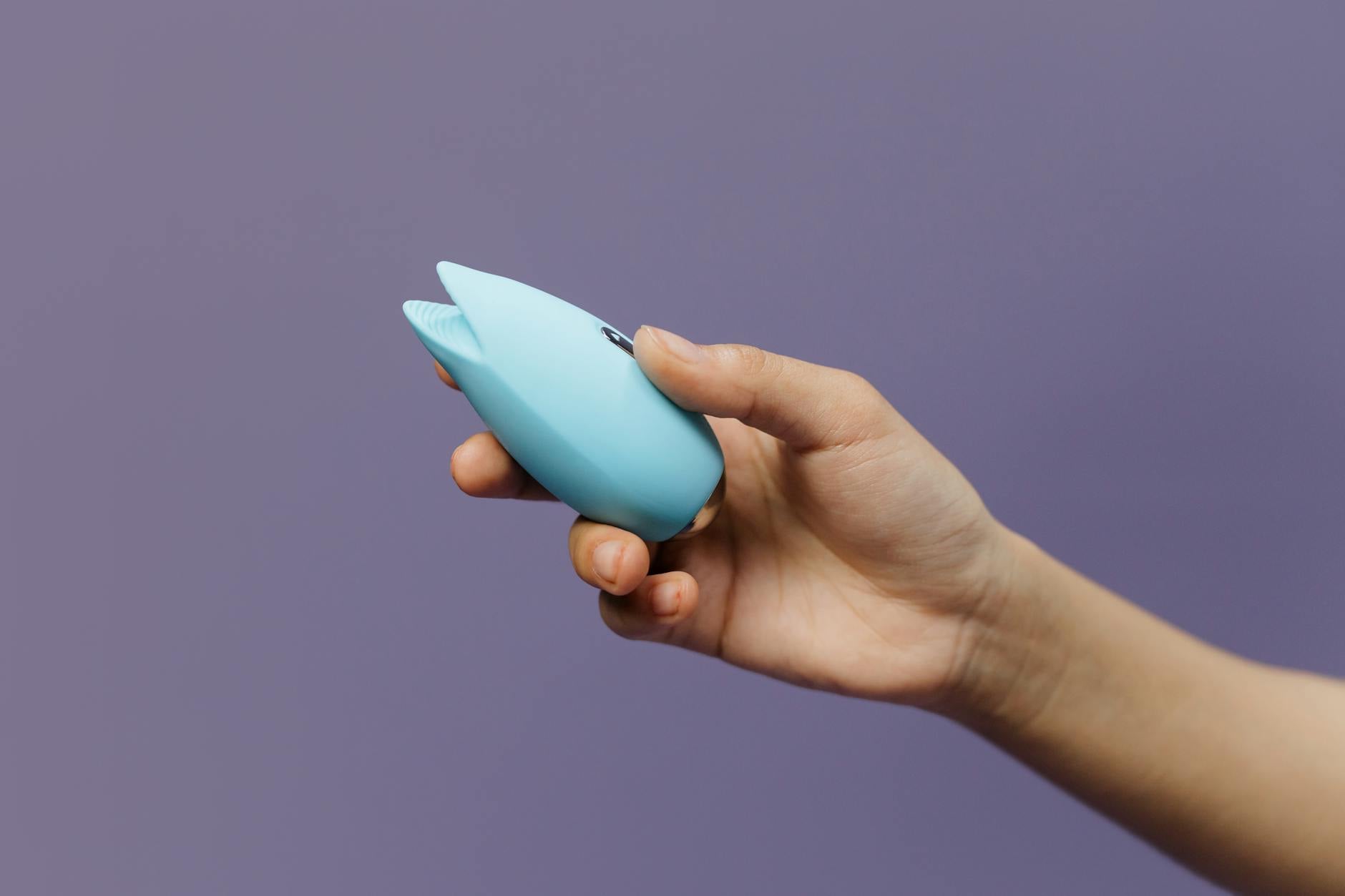
Photo by cottonbro studio on Pexels
The stuff that actually strengthens the connection
Here's what I see happen when couples introduce toys intentionally: they stop treating pleasure as something that happens to them and start treating it as something they build together. That shift matters. It's the difference between sex as a thing you do and sex as a collaborative project you both care about.
When your partner watches you use a lemon vibrator and sees you genuinely enjoy it, something changes in how they think about your pleasure. They're not worrying about whether they're doing enough. They're watching you light up. That's hot, and it's also deeply connecting.
The other thing that happens: you stop hiding. You're not sneaking the toy out when they're not home. You're not keeping it secret. That transparency actually relaxes the entire dynamic. Secrecy creates distance. Openness creates the opposite.
What to do if they say no
If they're not interested in using toys together, that's their boundary, and it's worth respecting. But it doesn't mean you can't use toys solo. Those are different conversations.
What you want to avoid is pressure. "Come on, just try it" teaches your partner that their comfort doesn't matter. Instead, try understanding. "I respect that. What would make this feel less weird?" Maybe they need more time. Maybe they want to do more research together. Maybe they need to understand that you'll still use it alone, and they need to be okay with that.
If someone isn't comfortable with vibrators at all, that's real incompatibility information for a new relationship. Not a dealbreaker necessarily, but information worth sitting with.
The first time together
Keep expectations low. You're exploring, not performing. Use plenty of lube. You might want to use the toy on yourself while they touch you elsewhere. You might want them to hold the clitoral vibrator while you guide them. There's no script here.
What matters: both of you feel safe, neither of you feels watched or judged, and you both know you can pause or stop if something feels off. Nervous laughter is normal. So is needing to start and stop a few times. So is one of you getting distracted or it just not working that night. That's all data, not failure.
After you finish, talk about it if you want to. "That felt good," or "I liked that you were paying attention to me," or "I want to try it differently next time." Simple, direct. Some couples don't debrief. They just move on. Both are fine.
Making it a normal part of your dynamic
Once you've used the lemon vibrator once or twice together, it stops being a thing. It becomes a tool. Like how lube isn't weird after the first time you use it together. You reach for it when it makes sense, you don't when it doesn't.
In healthy new relationships, toys are just part of the landscape. Some sessions you use one. Some you don't. Sometimes they're the main event. Sometimes they're supporting players. The more you normalize it, the more it actually becomes normal.
This is also true for expanding what you explore together over time. If a lemon vibrator goes well, introducing other toys becomes easier too. The conversation gets shorter. The anxiety gets smaller. What felt daring at month three feels ordinary by month nine.
If you're the partner being introduced to toys
If your new partner brought this up with you, and you're reading this because you're trying to figure out how to feel about it: you get to have feelings. You also get to ask questions. There's no required enthusiasm level. There's just willingness to try something that matters to someone you care about.
Your partner isn't bringing this to you because you're failing. They're bringing it because they trust you enough to ask for what they want. That's actually a sign the relationship is working. Take that seriously.
The lemon vibrator isn't a replacement for you. It's an addition. It's your partner saying, "I want more pleasure in my body, and I want you here while I explore that." That's vulnerability, and it's worth honoring.
People also ask
Should I ask permission to use a toy with my new partner?
Yes. Full stop. Not because you need formal written consent before every instance, but because the first time deserves an actual conversation. After that, it becomes part of your negotiated dynamic. Some couples just reach for toys as needed. Some always check in. Both are fine as long as you both agreed to the pattern beforehand.
What if my new partner gets jealous of the vibrator?
That usually isn't actually about the vibrator. It's about what they think the vibrator represents: that they're not enough, or that you prefer it, or that you're choosing solo pleasure over connection with them. Address the fear underneath, not the toy itself. "I want this because I want more pleasure with you, not instead of you." And if they're still struggling, sometimes a conversation with a therapist or relationship coach helps them work through it.
Is it okay to use a clitoral vibrator during partnered sex?
Completely. A lot of partners actually like it because it means you're more likely to come, the orgasm tends to be more intense, and they get to watch. Some partners worry they should be doing all the stimulation, but that's a limiting belief. Your pleasure is collaborative. If a lemon vibrator gets you there, that's a win for both of you.
How do I bring this up if we haven't talked much about sex yet?
This conversation is actually a great opportunity to talk about sex. You're saying, "I want us to have a vibrant sex life together. Here's something I think could enhance it." That opens the door to other conversations too. What else do you both want? What are boundaries? This toy conversation is often the first real intimacy talk, and it sets the tone for honesty later.
What if we've been together a while and I'm just now bringing this up?
Perfectly fine. People's comfort levels and interests shift over time. You might be more secure in the relationship now. You might have realized you want more from your sex life. Just frame it that way: "Our relationship feels solid enough now that I want to explore this." That's not weird. That's how trust builds.
Should I buy the toy myself or pick it out together?
Both work. Some people like the surprise of a partner choosing something thoughtful. Some want to have input. If you're unsure, ask. "I was thinking of picking up a lemon vibrator. Do you want to choose it together, or would you like me to surprise you?" Again, the conversation itself matters more than the decision.
What comes next
Introducing a toy to a new partner isn't the big emotional event our culture makes it out to be. It's just a conversation and a willingness to explore together. The couples who handle it best are the ones who treat it like any other logistics discussion about sex: honest, a little bit playful, and grounded in the assumption that you both want similar things.
If you want support navigating conversations about pleasure in your relationship, or you're stuck somewhere in this process, reach out to us. That's what I'm here for.
Your new relationship deserves curiosity, honesty, and enthusiasm about pleasure. A lemon vibrator is just a tool to get you there.