
Here's the thing about orgasms shifting when someone's watching
Your body doesn't respond the same way alone versus with a partner present. That's not dysfunction. That's neurobiology. When there's another person in the room, your nervous system activates differently. The part of your brain that monitors safety, social perception, and performance gets louder. Meanwhile, the part that relaxes into pure sensation gets quieter.
Add in the fact that most partners have learned to stimulate you in ways that used to work brilliantly, and suddenly you're both confused about why the familiar touch doesn't land the same anymore. The pressure builds. The frustration creeps in. And then someone starts wondering if the spark is actually gone.
It's not. What's changed is the pathway to get there.
Why a lemon vibrator changes the dynamic
A lemon clitoral vibrator like the one from Hello Nancy's Lemon works because it introduces a third variable into the equation. You're no longer relying solely on your partner's touch to reach climax. You're not performing under the weight of their attention. Instead, you have a tool that delivers consistent, focused stimulation while your partner can participate in a completely different way.
Honestly, this is where couples rediscover each other. Because once you're using a lemon vibrator, your partner isn't responsible for your orgasm anymore. They're invited into it. That shift in responsibility often dissolves the tension that was building around sex in the first place.
The lem vibrator's suction mechanism is particularly useful here because it doesn't require a lot of mental bandwidth to enjoy. You're not managing pressure levels or angle. The sensation is almost hypnotic, which means your nervous system can actually downshift while your partner is present.
The conversation you need to have before you bring a toy into bed
Don't just show up with a lemon sexual toy in your hand. I know that sounds obvious, but I see this happen constantly. One partner surprises the other, and immediately the person on the receiving end of the surprise feels like they're being told they're not enough.
Here's what works instead.
Pick a moment when you're both calm and clothed. Not during foreplay, not when you're already in bed. Tell your partner something like, "I've noticed orgasms feel different when we're together, and I don't think it's about attraction. I think my nervous system just responds differently with someone watching. I found this tool that I want to try, and I'd love your help exploring it together."
That framing does three things. It depersonalizes the issue. It names the nervous system component. And it explicitly invites collaboration instead of creating a gap.
Your partner might have questions. Answer them honestly. If they're nervous that toys mean they're being replaced, that's a real concern and it deserves a real answer. The truth is that a lemon vibrator isn't a replacement for their touch. It's a doorway to a different kind of intimacy where both of you can relax.
How to actually introduce it the first time
Start solo first. I know that sounds counterintuitive if your goal is to use it together, but this matters. Spend two or three solo sessions with your lemon clitoral vibrator so you know what sensations work, what settings feel best, and how your body responds. You'll be relaxed about the tool itself, which means you can focus on your partner's presence instead of being self-conscious about the vibrator.
When you're ready to bring your partner in, frame it clearly. "I've been exploring this, and I want to try it with you here. I'd love if you touched me or just stayed close." Some partners want to hold you or stroke your hair. Some want to be inside you while you use the vibrator. Some want to watch and touch themselves. There's no single right version.
Start with the lemon vibrator on a lower setting. This isn't the moment to go full intensity. You're testing whether you can relax with your partner present while you're using it. That's the real work.
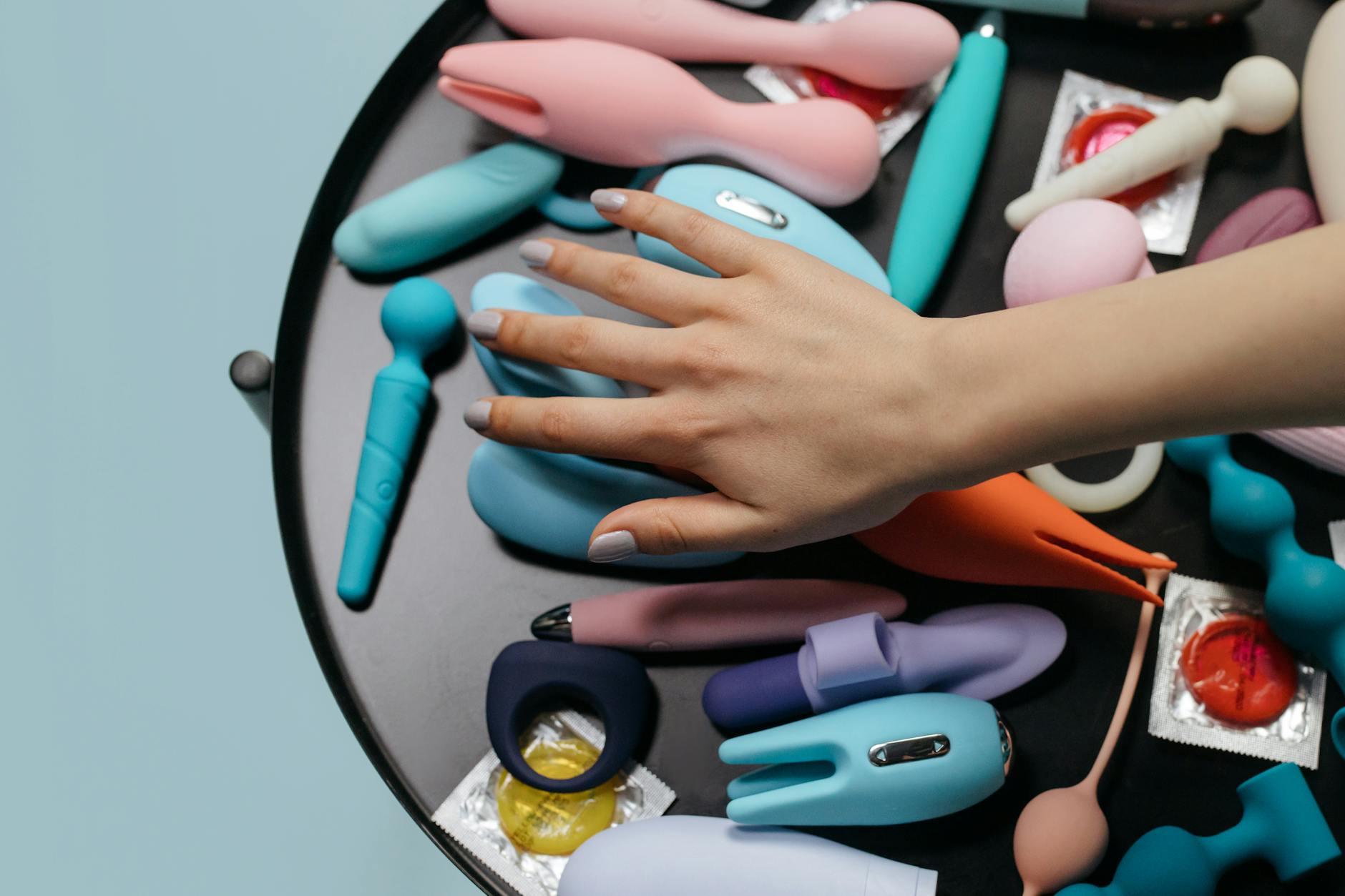 Photo by cottonbro studio on Pexels
What to expect from your nervous system during the first few tries
You might feel awkward. That's normal. You've spent years being touched by this person, and now there's a buzzing tool between you. Your brain might kick into performance mode. You might feel like you need to "put on a show" of pleasure that's authentic.
If that happens, pause. Tell your partner. "I'm getting in my head." Most partners actually feel relieved to hear that because they've been wondering if you're actually enjoying it.
What helps: your partner staying quiet. Not dead silent, but not narrating the experience either. Their presence, their breath, their hand on your back or thigh. That grounding contact tells your nervous system that you're safe and you're not alone.
It usually takes three to five sessions before the awkwardness dissolves and actual pleasure shows up. That's not a failure. That's the nervous system recalibrating.
When orgasms suddenly feel more intense
Many couples report that orgasms reached with a lemon vibrator while their partner is present feel deeper or longer than orgasms reached solo. There are a few reasons for this.
First, the clitoral stimulation from the vibrator is consistent and doesn't fatigue. Your partner can be fully present without managing the physical mechanics of stimulation. Second, the relief of not having to perform often paradoxically creates more arousal. And third, there's a particular kind of intimacy that comes from being seen while receiving pleasure that you're actively choosing for yourself.
If this happens, don't overthink it. Just let it reshape what "good sex" means for both of you. Sometimes the best orgasms come not from novelty but from finally removing the barrier between what your body wants and what your partner can actually provide.
Troubleshooting the scenarios that come up
Your partner feels left out even though they're touching you. Try having them hold the lem vibrator while you guide the angle. This makes them an active participant in your pleasure rather than a bystander. The sensation stays the same, but the psychology shifts entirely.
Your body still doesn't respond the way you want. This isn't about the vibrator. If you're not relaxing even with the tool, the nervous system activation is deeper than a new sensation can fix. That's when you might benefit from talking to a sex therapist or couples counselor who can help you understand what your body is protecting against.
Your partner wants to use the lemon vibrator on you, and you prefer doing it yourself. Say that. You're allowed to have a preference about pressure, speed, and angle. Your partner might find that you using it while they watch is actually more of a turn-on anyway.
You reach orgasm but your partner hasn't yet. This is fine. You don't have to climax in sync. Keep the vibrator involved. Use it on yourself again, or shift to whatever works for your partner. Orgasms don't have to be simultaneous to be satisfying.
The deeper shift that usually happens
After a few weeks of using a lemon clitoral vibrator together, most couples notice that nonsexual touch feels different too. Holding hands. Kissing. Hair stroking. There's less pressure baked into physical affection because you've both learned that pleasure doesn't depend on one person performing exactly right.
That relief often spills into conversation. You start talking about sex differently. You ask for what you actually want instead of defaulting to what used to work. You realize that your partner isn't responsible for your orgasm, which means you can stop resenting them when it doesn't happen, and start appreciating them for all the ways they do show up.
That's the real change. The vibrator is just the tool that made it possible.
People also ask
Should I tell my partner I want to use a vibrator before we buy one together?
Yes. The conversation comes first, always. You're not asking permission. You're naming what you've noticed and inviting collaboration. Most partners actually feel relieved to know there's a practical step you can take instead of just suffering through mismatched arousal.
Is it normal that I orgasm faster with a vibrator than without one?
Completely. Clitoral vibrators deliver targeted, consistent stimulation that most hands can't replicate. This isn't lazy or broken. It's just physiology. Your body is responding to efficient stimulation. You can still reach orgasm during partnered sex without the vibrator. A lemon vibrator just adds another option to your toolkit.
What if my partner thinks the vibrator means I'm not attracted to them anymore?
This is a real fear and it deserves a direct answer. You might say something like, "I'm attracted to you. And my nervous system responds differently when you're present. This tool helps me relax into pleasure even when I'm being watched. It's not a replacement for you. It's something we get to explore together."
Can we use a lemon vibrator if we're just starting to have sex again after a long break?
Yes. In fact, many couples find that reintroducing pleasure gradually with a tool is easier than trying to pick up where you left off with familiar touches. You might also benefit from reading about how to use a lemon vibrator when returning to sex after a long break for additional context specific to your situation.
How do I know if my partner is actually comfortable with this, or just going along with it?
Ask directly. Not during sex. When you're both calm, say, "I want to check in about how this feels for you." Listen to the actual answer, not the one you hope for. If your partner says they're uncomfortable, that's real data. You don't push. You either find a compromise together, or you accept that this particular exploration isn't for your relationship right now.
Does using a vibrator together change how we feel about each other long-term?
It can, but usually in positive ways. Couples who introduce toys together often report feeling closer because there's less performance pressure and more authentic communication about pleasure. The vibrator becomes a tool that helped you both relax, which deepens intimacy. That said, using a tool can't fix fundamental relationship problems. If there's resentment or disconnection that runs deeper than this, addressing that is the real work.
What matters most
Honestly, the success of using a lemon vibrator with your partner depends almost entirely on whether you both approach it with curiosity instead of pressure. There's no "right" way to do this. There's only what works for your particular nervous system and your particular relationship.
Start with conversation. Move slowly. Stay curious about what your body actually wants instead of what you think it should want. And remember that pleasure with a partner is built on permission and trust, not performance.
Your partner wants you to feel good. A lemon vibrator is just the thing that finally makes it possible. Everything else follows from that.