Here's what nobody tells you about clitoral pleasure and your cycle
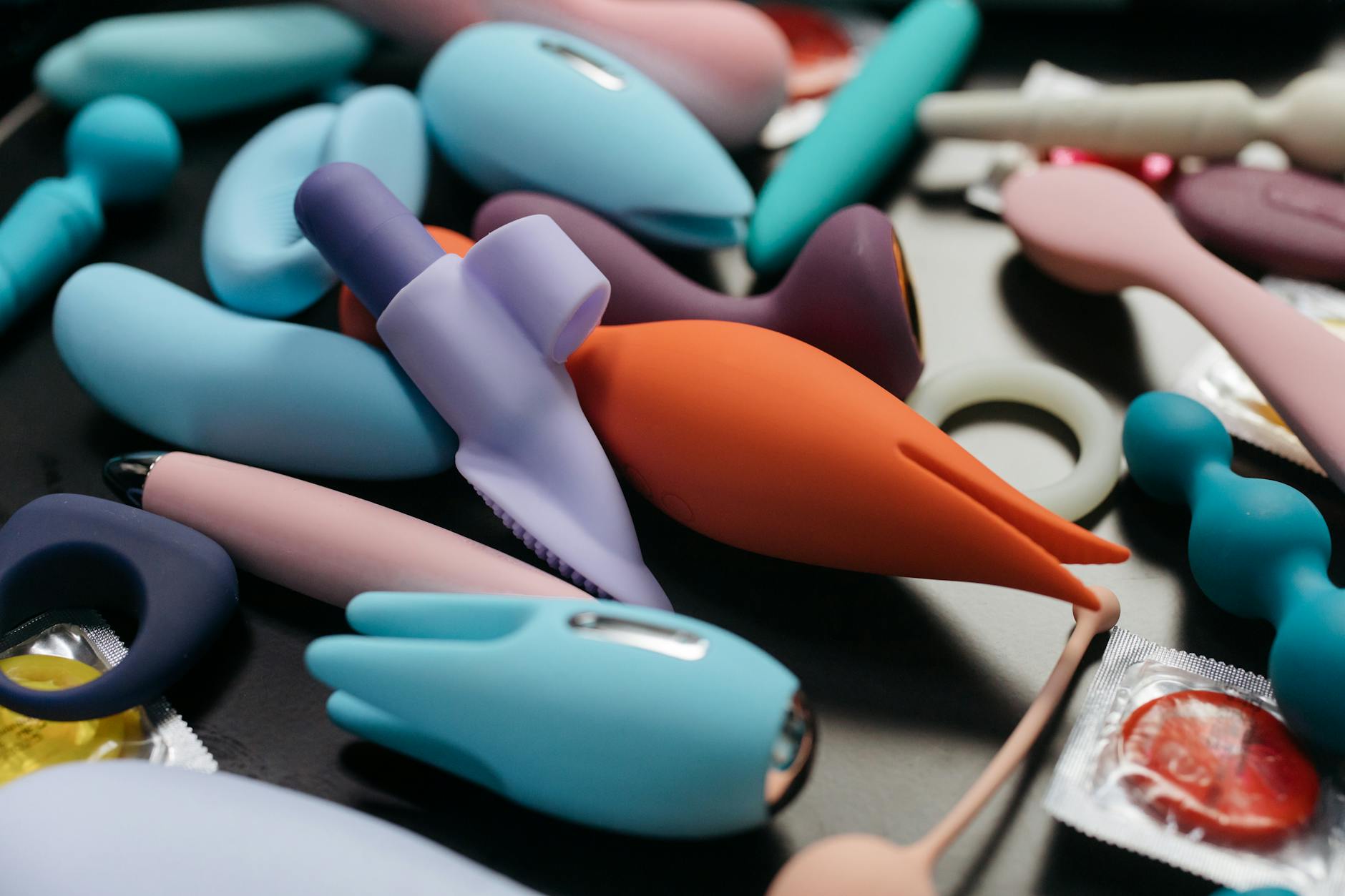
Your clitoris changes throughout your menstrual cycle. Not just in how quickly you warm up, but in actual sensitivity, engorgement, and the kind of stimulation that feels best. If you've ever noticed that your lemon vibrator feels amazing one week and oddly muted the next, you're not imagining it. Your body is literally different.
The frustrating part? Most sexual wellness advice ignores this entirely. You get a toy, you use it the same way every time, and then you blame yourself when the experience varies. What you should actually be doing is adapting your approach based on where you are in your cycle.
I've worked with hundreds of clients on this, and the shift from "my vibrator doesn't work" to "my vibrator works differently depending on my cycle" changes everything. Not just about pleasure, but about self-knowledge.
What hormones actually do to clitoral sensitivity
Your menstrual cycle runs roughly 28 days (yours might be 24 or 35 — both are normal). During the follicular phase, estrogen gradually rises. This increases blood flow to the clitoris, thickens the vaginal tissue, and increases overall sexual sensitivity. Your clitoris literally swells slightly.
Then ovulation happens. For about 48 hours, testosterone spikes alongside estrogen. This is when most people report the strongest sex drive and fastest arousal. Clitoral sensation is heightened. Orgasms often feel more intense.
After ovulation, progesterone rises and estrogen dips. During the luteal phase, sensitivity drops. This isn't bad. It's just different. The clitoris becomes less engorged. You might need more pressure or a longer warm-up. Orgasms often feel deeper and more centered rather than sharp and quick.
Then menstruation arrives, and you're back at the beginning of the follicular phase.
How to use your Lem across the follicular phase
During the first 10 days of your cycle (from the start of your period through about ovulation), estrogen is rising steadily. Your clitoris is becoming more sensitive, more engorged, more responsive.
This is when you can often use higher intensity levels on your lemon clitoral vibrator right away. Your tissues are more forgiving. Warm-up time might be shorter. Some people jump straight to levels 4 or 5 on their Lem without discomfort.
But sensitivity also means that what felt good last cycle might feel too intense now. You might need to start lower and experiment. The key during follicular is to notice what draws you in fastest, and lean into it.
Most people also experience less need for external lubricant during follicular. Your body is naturally producing more lubrication. A water-based lube still helps and feels good, but it's optional rather than essential.
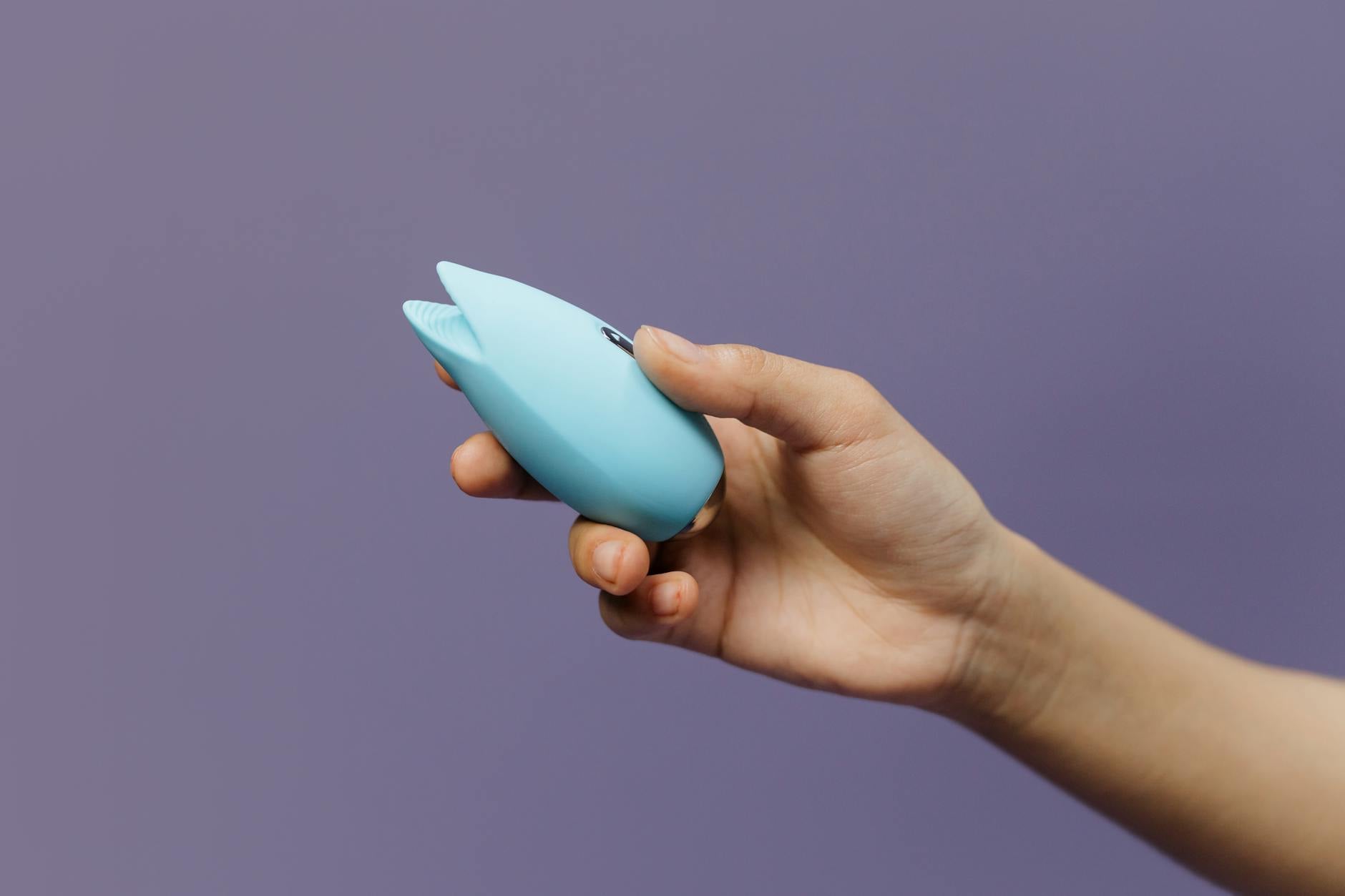
Photo by cottonbro studio on Pexels
The ovulation sweet spot
Ovulation typically happens around day 14 (though this varies). For about 48 hours before and after, both estrogen and testosterone are high. This is the window when most people report their strongest desire and quickest orgasms.
If you're tracking your cycle and planning solo pleasure sessions, ovulation is a logical time to experiment. You might try patterns or intensities you've been curious about. Your clitoris is maximally engorged and responsive. The Lem or any lemon clitoral vibrator will likely feel excellent across most settings.
This is also when you might orgasm faster or more easily. If you usually need 20 minutes, you might need 10. If you have trouble with orgasm, this is statistically your easiest window.
Worth noting: if you have a partner, many couples find that desire and arousal naturally sync up during this window too. If you want to introduce a lemon sucker or any adult toy into partnered sex, timing it to ovulation can actually make the conversation easier. You're both likely feeling more desire.
Adapting your approach in the luteal phase
After ovulation, progesterone rises. Estrogen dips. Blood flow to the clitoris decreases. Sensitivity drops by roughly 30 to 40 percent compared to your peak at ovulation.
This is when you might need to change your technique. Higher intensity levels on your Lem become more necessary. You might start at level 3 or 4 instead of 1 or 2. The slower, gentler approach that worked beautifully during follicular might feel too subtle now.
Warm-up time often lengthens. Where you could spark arousal in 5 minutes during ovulation, you might need 15 to 20 minutes during luteal. This isn't a problem. It's just information. Extend your session. Use more lube. Let your body take its time.
Your orgasms might also feel different. Less sharp, more diffuse. Fewer multiple orgasms, more sustained sensation. Again, this is normal. The luteal phase is your time for deeper, longer pleasure rather than quick peaks.
During menstruation specifically, many people find they want even gentler pressure at the start of bleeding, then can build intensity as flow lightens over days 2 and 3.
Why tracking matters (and how to actually do it)
You don't need an app, though apps exist. You don't need to obsess. A simple calendar where you mark day 1 of your period and roughly count forward is enough.
Day 1-10 is follicular. Day 10-14 is ovulation prep. Day 14-15 is ovulation itself. Day 16-28 is luteal. Your cycle might be shorter or longer, so adjust.
Once you've done this for two or three cycles, patterns emerge. You'll start to notice: oh, I always want higher intensity around day 20. Or, I always have the easiest time on day 13. These aren't surprises. They're your body's reliable rhythm.
When you know your rhythm, you stop treating pleasure inconsistency as a personal failure. You start adapting. Bring your favorite lemon vibrator into that information. If you're in luteal and high intensity feels better, use it without shame. You're not "broken." You're cycling.
Managing pain or discomfort across your cycle
Some people experience cramping, breast tenderness, or pelvic floor tension during certain phases. That's worth paying attention to with your Lem too.
If menstrual cramps are heavy, the direct clitoral stimulation from a lemon clitoral vibrator might actually help. Orgasms release tension and increase blood flow to the pelvis in ways that can ease cramping. Some people swear by it.
If you experience luteal breast tenderness, you might avoid that zone during partnered sex and focus more on clitoral play alone with your vibrator.
If your pelvic floor tightens during the luteal phase, starting with lighter intensity gives your muscles time to warm up without being shocked into tighter contraction. This is where patience actually matters.
If anything hurts consistently, check in with a pelvic floor physical therapist. Cycle-related pain is common and very treatable.
The emotional and relational piece
If you're in a partnership, this information is worth sharing. Not as a demand, but as a gift. "I've noticed my body responds differently at different times in my cycle, and I'd love to figure out together how we adjust" opens a conversation instead of creating a problem.
Some partners feel frustrated when you suddenly need different stimulation or a longer warm-up. Framing it as biology rather than "not in the mood" helps. You're in the mood. Your nervous system is just cycling through different states. That's not rejection. It's information.
Your cycle is not a limitation on pleasure. It's a map showing you exactly when and how different kinds of pleasure are available.
When to ignore the cycle and use your vibrator anyway
Sometimes you're in luteal and you want quick satisfaction. You're in ovulation and you want slow, deep exploration. Your cycle is guidance, not a prison.
The point of knowing how your body responds across your cycle is to have more choice, not less. If you know that luteal typically requires higher intensity, and you want high intensity anyway, you're working with your body instead of against it. You'll probably have a better experience.
If you're in ovulation and you want to slow down and savor, you can. Your clitoris is responsive enough that even gentle stimulation will feel good. You're just not chasing the quickness that would come naturally.
Let your cycle inform your choices without controlling them.
Frequently asked questions
Can I use my lemon clitoral vibrator during my period?
Absolutely. There's no medical reason not to. Some people actually prefer orgasms during menstruation because clitoral stimulation and orgasm help ease cramping and increase blood flow to the pelvic area. If you're using an external vibrator like the Lem, there's zero mess concern. Water-based lube helps if you want extra glide. Start with lower intensity if you're sensitive during your period, then adjust up if you want more.
Does birth control change how my cycle affects pleasure?
Yes. Hormonal birth control flattens your hormonal peaks and troughs. If you're on the pill, patch, or ring, your hormone levels are much more stable across the month. This means sensitivity stays more consistent too. Some people love this because they don't have to adjust. Others miss the variation and the natural peaks in desire. If you're considering switching birth control methods, tracking pleasure response before and after can help you notice whether you prefer stable or cyclical sensations.
Why does my orgasm feel different during my cycle?
Because your physiology is actually different. During follicular and ovulation, higher estrogen increases blood flow and tissue thickness, making orgasms often feel sharper and quicker. During luteal, lower estrogen means less engorgement, so orgasms often feel deeper and more radiating. Neither is better. They're just different experiences. Once you stop trying to force the same orgasm every time, you get to enjoy multiple flavors of pleasure.
What if my cycle is irregular?
If you have PCOS, irregular periods, or just naturally longer or shorter cycles, you can still track. Use a basic calendar app and mark the first day of your period whenever it comes. Over a few months, you'll notice your average length. Then use that as your guide. Some people have 35-day cycles. Some have 24-day cycles. Both are normal. The patterns still exist. They're just on a different timeline.
Can I use the same Lem settings every single day and still feel good?
Yes, but you might get more pleasure by adjusting. Think of it like listening to music. You could listen to the same song on the same volume forever, and it's still good. Or you could vary the volume and the songs and discover even more. Using your lemon vibrator intuitively across your cycle is the second approach. But if you're in a routine that works and feels good, there's no obligation to change it.
How long does it take to notice cycle patterns in pleasure?
Most people see patterns within two to three cycles once they start paying attention. A few months in, the rhythm becomes obvious. Some people notice immediately. Others find it takes longer, especially if stress, sleep, or relationship factors are also shifting. Be patient. The information is there. You're just gathering data.
The broader picture
Learning how your lemon vibrator or any clitoral vibrator feels across your cycle is really about listening to your body instead of expecting it to perform the same way every single day. Your menstrual cycle is a real biological rhythm that shapes everything from energy to mood to sensation.
When you work with that rhythm instead of pretending it doesn't exist, pleasure becomes easier. Not because you're doing anything complicated, but because you're finally acknowledging what's actually happening inside.
If you're ready to explore your cycle more deeply or want to talk through how pleasure and partnership shift with your hormones, reach out here. And if you're curious about finding the right lemon vibrator for your needs, we've got resources to help.