Here's what nobody tells you about new partners and toys
You're three weeks in. Things feel good. And you're wondering: when do I bring up that I use a vibrator? Will they think I'm unhappy with them? Will they feel replaced? The answer is simpler than you think. The right person will be relieved. Not eventually. Right away.
Introducing a lemon vibrator to a new partner is not a confession. It's an invitation. And the way you frame it matters more than the timing.
Why the early conversation actually works better
I work with couples constantly who wait until six months or a year to mention toys. By then, they've built it into a Secret. A Big Deal. Something that needs the perfect moment and three drinks of courage. That's backwards.
Here's the thing: bringing it up early (meaning the first month, ideally before you're having regular sex) positions it as part of who you are, not as a complaint about your partner or the relationship. It's not "I need this because you're not enough." It's "This is how I work. Here's what feels good to me." Those are completely different conversations.
New partners are curious. They want to know what you like. They're still in the phase where they're genuinely asking questions instead of assuming they know. Use that window.
When to bring it up (the actual timing)
Not during sex. Not right before. Not in a text at 11 p.m.
The best time is a calm conversation, maybe after dinner or during a walk. Somewhere you're both relaxed and there's no pressure to immediately do anything. You want them to have space to ask questions without feeling like there's a vibrator sitting on the nightstand demanding an answer right now.
Some people panic when they feel ambushed. Give your new partner the gift of a conversation, not a surprise. "Hey, I wanted to tell you something about me that matters to me. I use a vibrator and I really like it. I think it's fun and it makes me feel good. I wanted you to know because I want to be open with you." That's it. Most people will either say "cool" or ask you more. Both are good signs.
How to actually say it (the words that work)
Avoid these phrases:
"I need a vibrator to come." (This sounds like a problem with them.)
"I've always used toys." (Defensive, like you're preemptively shutting down judgment.)
"It's just something I do sometimes." (Minimizing, which reads as shame.)
Try these instead:
"I really like using a vibrator. It's something that feels good to me and makes sex better. I'd love to use it with you." (Direct, positive, collaborative.)
"I have a lemon vibrator I love. Have you ever used toys with a partner?" (Curious, opens the door to their experience, normalizes the conversation.)
"I want to be honest about what turns me on. One thing is using a clitoral vibrator. Would you be open to exploring that together?" (Warm, clear, inviting.)
The pattern: you're describing something you enjoy, you're not blaming them, and you're asking for participation. That's the opposite of threatening. That's sexy.
What to do if they seem weird about it
Some people will pause. They might ask why you need it. They might worry it means you're not satisfied. This is normal. It doesn't mean they're the wrong person. It means they need information.
That's your job: educate without defending. "It's not about you. It's about how my body works. Some people need a little extra stimulation to come easily. For me, that's a vibrator. It doesn't mean the sex with you isn't good. It means I know what helps me feel my best, and I want to share that." Most people get it once they understand it's not a referendum on them.
If someone refuses to engage or makes you feel shame about your sexuality, that's data. You're learning early whether this person can handle your realness. That's actually valuable.
The first time using it together
Don't make it a big production. You don't need to light candles and give a presentation. Just treat it like another part of foreplay.
Some couples start with the vibrator during solo play while they're in the room. You're using it on yourself while they watch. This gives them permission to be curious, and it shows them exactly what you like. No mystery, no performance anxiety on their part.
Other couples integrate it straight into partnered sex. He or she uses it on you. You use it on yourself while they're inside you. Whatever feels natural. The point is it becomes just another tool in the toolkit, not The Thing You Brought Up That One Time.
If you're nervous, acknowledge it. "I'm a little shy about this but I really want to try it with you." Vulnerability is actually disarming. It gives them permission to be curious instead of worried.
Why a lemon vibrator specifically works well for this conversation
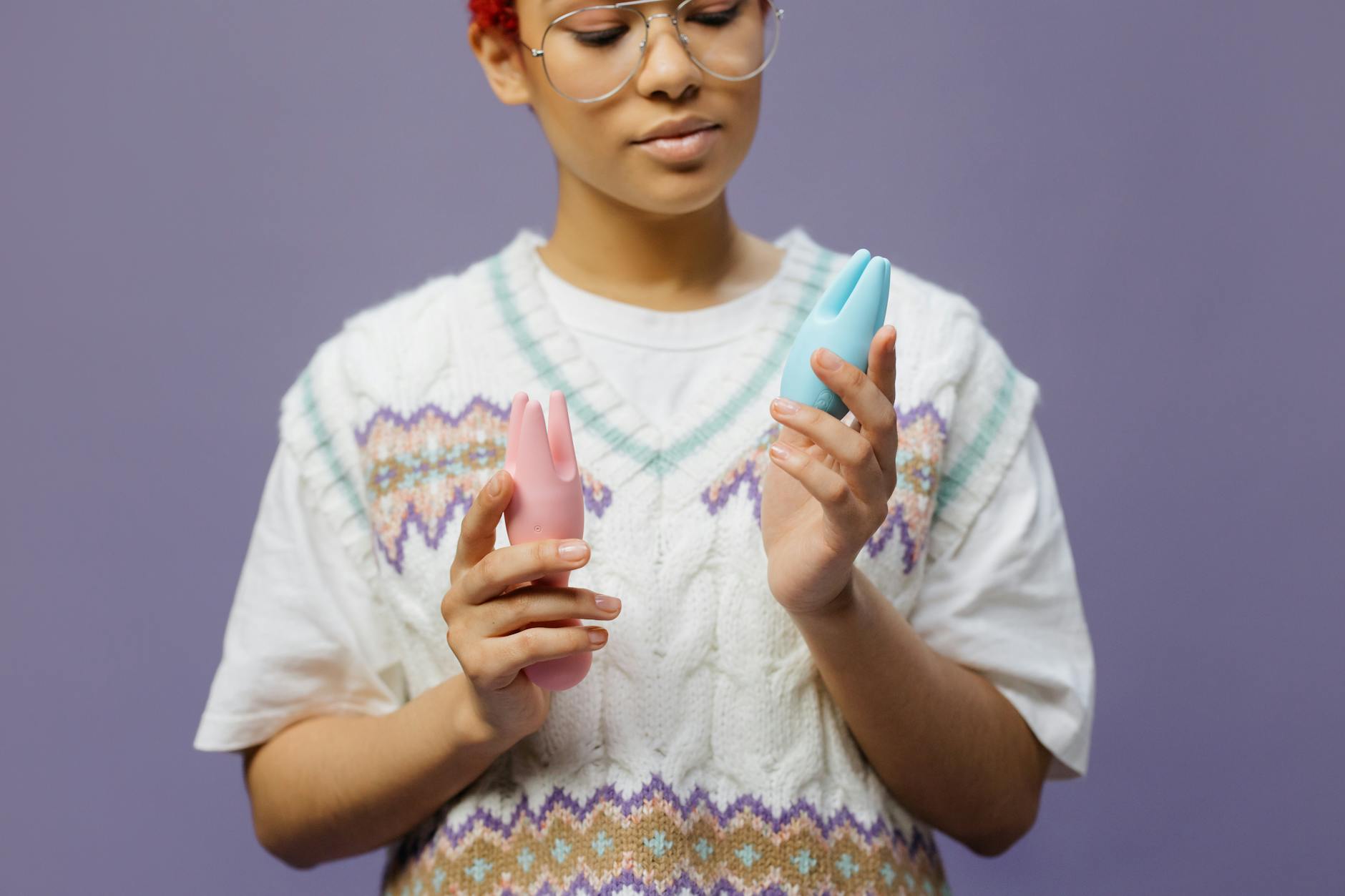
Let's be real. A lemon clitoral vibrator like the Lem is not intimidating. It's small, it looks kind of cute, and it's designed specifically for clitoral stimulation, which is straightforward and inclusive. You're not bringing in something that reads as a threat to their role. You're bringing in something that feels collaborative.
The design matters here. A partner looking at a small, elegant clitoral vibrator gets it immediately. It's not a giant dildo. It's not a toy that looks like it's designed to replace them. It's designed to enhance sensation. Most people feel relief when they see it.
The conversation after the first time
Asking for feedback is huge. "Did that feel good for you to watch?" or "What did you think?" gives them a chance to voice any lingering worries and also to say something positive. You want the lemon vibrator to become associated with good feelings on both sides, not with awkwardness or obligation.
Some partners will want to use it on you regularly. Some will use it sometimes. Some will take a while to be comfortable. All of that is okay. You're not asking them to be as enthusiastic as you are. You're asking them to be open.
The partners who thrive with this are usually the ones who ask you questions. "Does this feel better than that?" or "Should I do it differently?" Those questions mean they're curious about your pleasure and they're thinking of it as a team sport. That's the person you want anyway.
Red flags to notice
If someone responds to the conversation with "you won't need that if I'm good enough," that's a control issue, not a communication issue. If they shame you for masturbating or using toys solo, that's a boundary violation. If they refuse to hear you out at all, they're telling you they can't handle your sexuality. Believe them.
You deserve a partner who's curious about how you work. Not a partner you have to convince that your body is allowed to feel good.
Why this matters for the long game
Introducing toys early sets the tone for the entire relationship. You're establishing that you're open about sex, that you know what you like, and that you expect partnership around pleasure. People who can handle that conversation are people who can handle other conversations. Boundaries. Desires. Needs. The ability to talk about sexuality is actually a marker for overall emotional maturity and relationship health.
I've worked with couples where the person who introduced toys early reported higher relationship satisfaction long-term. Not because of the vibrator. Because of the communication. Because you started by being honest about who you are instead of pretending to be someone else and hoping they'd eventually figure it out.
FAQ
What if we've already had sex and I haven't mentioned it yet?
It's not too late. Bring it up the same way you would have at the beginning. "I realized I never told you this about me, and I want to be honest. I really like using a vibrator. I'd love to explore that with you." You're just starting the conversation a few weeks in instead of a few days in. It's fine.
Should I ask permission before bringing a vibrator into the bedroom?
Yes. You're not asking permission to use toys in your solo life. You're asking if they're open to exploring toys together. That's collaborative. "I have a vibrator I love. Would you be interested in using it together sometime?" gives them agency and shows respect.
What if they want to pick out the vibrator with me?
That's ideal, honestly. If your new partner wants to be involved in choosing a lemon vibrator or exploring what feels good together, you've found someone who's genuinely invested. Let them participate. This can actually be fun and bonding.
Is it weird to use a vibrator during partnered sex if we haven't talked about it much?
Yes. Use your words first. The vibrator should never be a surprise mid-intimacy. That's not mysterious. That's disrespectful of their autonomy.
Should I tell them I use a vibrator solo, or just that I want to use one together?
If you use one regularly, be honest about it. Honesty builds trust. You don't need to over-explain. "I use a vibrator when I'm solo, and I'd love to use one with you too." Simple. Clear.
What if they get insecure even after I explain it's not about them?
Insecurity often needs time and reassurance. Keep including them. Keep reassuring them. But also hold the boundary that your pleasure matters and you're allowed to know what you like. If the insecurity becomes a weapon to control your sexuality, that's a different problem that needs addressing, probably with a therapist or by reconsidering the relationship.