
Let's name what's actually happening
Hesitation about solo pleasure isn't laziness or prudishness. It's usually one of three things layered on top of each other: inherited messaging (what you were taught about your body), relationship patterns (the belief that pleasure is for sharing, not solo), or practical uncertainty (you don't know how to start and anxiety fills the gap). Sometimes all three at once.
Here's what I've noticed in two decades of working with couples: the people who struggle most with self-pleasure often have the richest sexual lives once they move through the hesitation. That's not accidental. Solo exploration teaches you what actually works for your body, which then transforms partnered sex.
The guilt piece is real and worth naming
I work with a lot of people who grew up hearing that masturbation was wrong, or that "good women" didn't touch themselves, or that your sexuality belonged to your future partner, not to you. Those messages don't just disappear because you're now an adult in a healthy relationship. They live in your nervous system. Your hand moves toward yourself and your brain says "stop" before you've even consciously decided anything.
That's not weakness. That's conditioning. And it's changeable.
The second version of guilt is different. Some people feel like using a lemon vibrator or any clitoral vibrator is somehow "taking away" from partnered sex, or that needing a tool means something is wrong with them or their relationship. It doesn't. A lemon clitoral vibrator is not a substitute for your partner. It's a translator between your body and your own nervous system. You're not replacing anyone. You're learning to talk to yourself.
Why hesitation often masks something else
Sometimes the hesitation isn't about shame at all. It's about control. Solo pleasure requires you to let yourself feel something without directing it toward someone else's satisfaction. That sounds simple until you realize how much of your sexual energy might be spent reading your partner's response, managing their pleasure, monitoring your own performance. Self-pleasure means you get to stop doing all that and just feel.
That's vulnerable. That's why some people keep putting it off.
Other times, hesitation comes from not knowing what to expect. You might imagine that using a lemon sexual toy will feel clinical, or that you'll do it "wrong," or that nothing will happen and you'll feel ridiculous. Uncertainty is a real friction point, and it deserves a real answer: the way a lemon sucker works is completely different from what you might imagine. It's not vibration in the traditional sense. It's suction and pulsing sensation that mimics oral sex. Most people feel the difference within seconds. No special technique needed.
The practical way to start
If hesitation is your pattern, here's what actually works:
First, separate your solo time from everything else. Don't try to add this to a partnered session. Don't multitask or treat it like you're checking a box. Set aside 20-30 minutes when you're alone, your phone is not nearby, and you have zero other demands. This isn't efficiency. This is respect for what you're teaching your nervous system: that your pleasure is worth time and attention.
Second, use the lemon vibrator on its lowest settings first. The Hello Nancy's Lemon (or any lemon clitoral vibrator) has multiple patterns and intensities. Start with pattern 1 or 2 and let your body adjust. Most people who feel hesitant benefit from a slower introduction. You're building trust with sensation, not chasing intensity.
Third, focus on what you notice instead of what you think should happen. This is the most important shift. Hesitation often comes paired with a silent expectation: "This should feel amazing instantly." Then when it doesn't match that fantasy, you decide it's not for you. Instead, stay curious. Does the sensation feel sharp or smooth? Does it build gradually or hit all at once? Is there a spot that feels more responsive? You're gathering data about your body, not auditioning for pleasure.
Working with shame specifically
If you grew up with messaging that made self-pleasure feel forbidden, you might notice your nervous system actively fighting you even when your brain wants to move forward. Your hand might freeze. You might feel embarrassed for no logical reason. You might find yourself about to start and then suddenly remember you "should" do laundry instead.
That's not you being broken. That's your nervous system protecting you from what it learned was unsafe. The way through is gentleness, not force.
Start by just holding a lemon vibrator in your hand. Don't turn it on. Let your body get used to the idea of it being there. Do that for a few days if you need to. Then hold it against your clothes. Then press it to bare skin somewhere neutral, like your inner arm. You're teaching your nervous system: this thing is safe. I'm choosing this.
When you actually use it, shame often wants you to rush or perform or get it done fast. Do the opposite. Set a timer for 10 minutes knowing you can stop anytime. Move slowly. If shame shows up as a voice saying "this is wrong," notice it without obeying it. "That's my old programming. I'm choosing something different now."
The difference between hesitation and something deeper
If you're consistently unable to access pleasure even when alone, or if solo exploration brings up severe anxiety or flashbacks, that's often worth talking to a therapist about. Hesitation is normal. Consistent numbness or panic is different. Both are real, neither is your fault, and both respond to support.
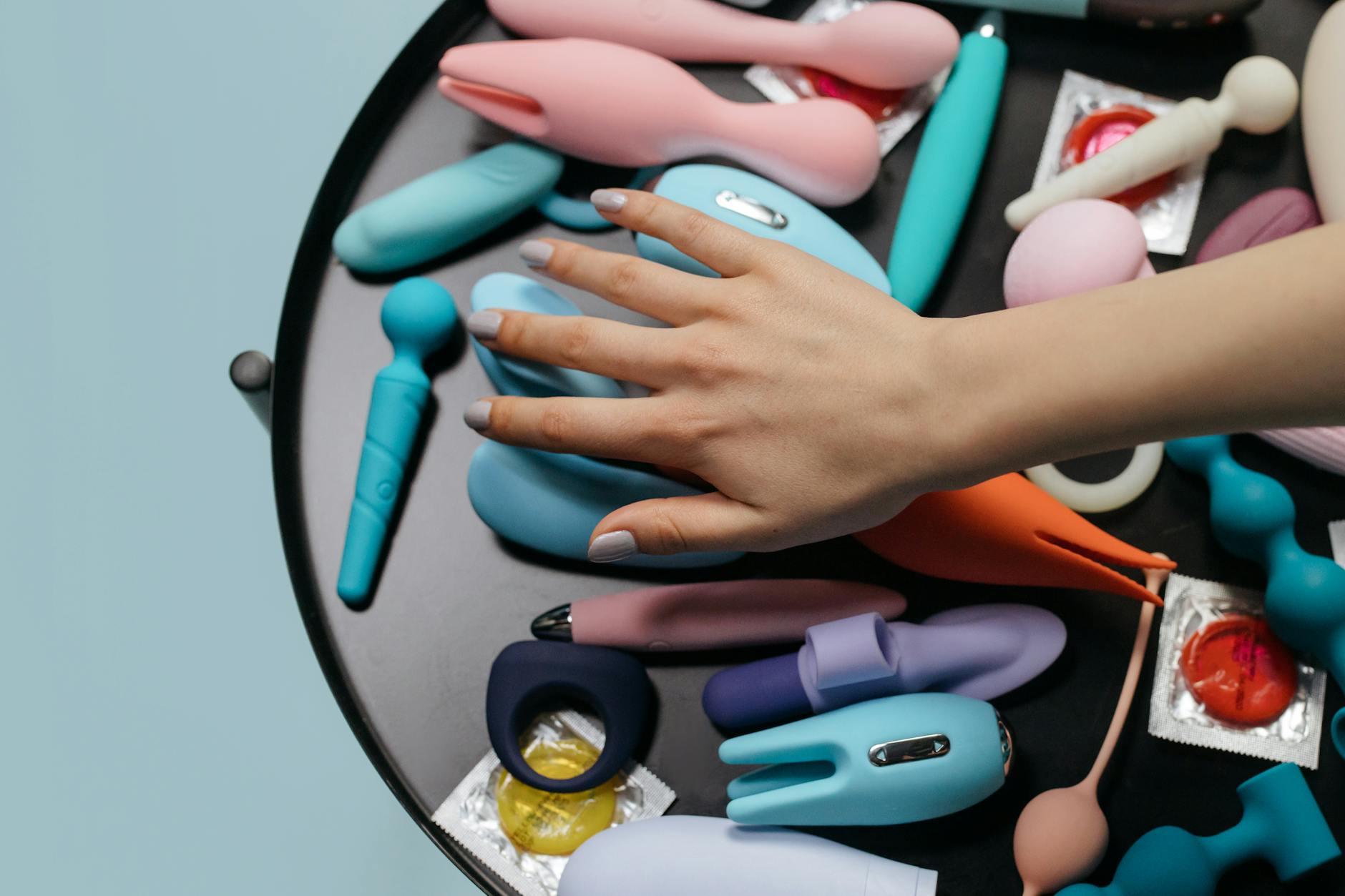
Photo by cottonbro studio on Pexels
What changes after you move through the hesitation
Most people report two shifts. First, they stop second-guessing their own pleasure. You learn what your body actually responds to, and that knowledge is sticky. You carry it forward. Second, partnered sex often improves dramatically because you're no longer performing or managing. You know what works. You can ask for it. You can guide your partner toward it. That confidence is magnetic.
You also break the pattern of treating your sexuality as something you're supposed to hide or defer. That's not just about sex. That's a statement about your own worth. Your pleasure matters. Your time alone matters. Your body's signals matter. Once you practice that in solo exploration, it changes how you show up everywhere.
Moving through the resistance
Honestly, the hardest part is the first time. You're going to second-guess yourself. You're going to feel a little ridiculous. You might feel nothing at all the first time (that happens). Keep going. Your body needs permission before it fully relaxes into sensation.
Many people find it helps to combine a lemon clitoral vibrator with something that feels safer first. Some start in the bath. Some use it over clothing. Some put on music that makes them feel confident. Whatever scaffolding helps your nervous system relax is the right choice.
Also, consider reading what others have experienced. Browse through the reviews on Hello Nancy's Lemon or similar resources. Knowing that other people felt awkward at first, or that sensation takes a few sessions to build, makes the experience less lonely.
Your hesitation isn't a character flaw. It's not a sign that pleasure isn't for you. It's your nervous system asking for reassurance. Give it that. Then give yourself permission to feel good.
People also ask
What if I feel guilty using a lemon vibrator when I'm in a relationship?
Your partner's pleasure and your solo pleasure are not competing for the same resource. Using a lemon clitoral vibrator when you're alone isn't taking away from your partner. It's actually deepening what you know about yourself, which then feeds back into partnered sex. Most partners report that they like knowing their person has explored solo because it means less pressure on them to be the only source of pleasure. Check in with your partner if you want to, but this is about you learning to trust your own body.
How long does it take to feel comfortable using a lemon vibrator if shame is involved?
It depends on how deep the messaging runs, but most people move through hesitation in 2-4 weeks of consistent solo time. Nervous systems are adaptive. You're not rewiring years of shame in one session. You're practicing a new pattern: pleasure is safe, my body is mine, I deserve this. That repetition is what changes things. Be patient with the timeline.
Can I use a lemon sucker if I'm not sure what sensations I like?
Absolutely. That's actually the best time to use one. A lemon sexual toy from Hello Nancy's Lemon works across a wide range of bodies and preferences because the suction-based sensation is so different from what people expect. You don't need to know what you like going in. You learn as you go. Start low, stay curious, notice what your body responds to.
What if nothing happens the first time I use it?
Nothing is completely normal. Your nervous system might be too activated by newness to fully relax. That's not failure. Try again in a few days. Some people need 3-5 sessions before their body trusts the sensation enough to fully respond. That's still success. You're building a pattern of permission.
Is a lemon vibrator better than other options if I'm hesitant?
The suction pattern in a lemon clitoral vibrator often feels more intuitive to people who are hesitant because it mimics something familiar and doesn't require active "technique." You're not wondering if you're using it right. The sensation either works or it doesn't, and most bodies find it works pretty quickly. That can reduce the performance anxiety that sometimes comes with other tools.
How do I know if my hesitation is normal versus something I should work through with a therapist?
Normal hesitation: you feel a bit awkward, maybe some residual guilt, uncertainty about how to start. You move through it with encouragement and practice. Deeper stuff: you feel panic, shame so intense it prevents you from trying, dissociation, or old trauma memories surfacing. If it's the second category, talking to a therapist makes sense. Both are valid. Hesitation alone is something you can move through yourself with patience and good information.
Your pleasure is waiting
Here's what I know after years of working with people in this exact place: hesitation is not permanent. It's just the gap between where you are now and where your body wants to go. You don't need to be fearless to start. You just need to be curious enough to try once. Then trust what happens next.
Your body knows how to feel good. It's been waiting for permission. A lemon vibrator is just the tool that helps you give it that permission out loud.
Ready to move through the hesitation? Start small, stay curious, and give yourself the time and space you deserve. If you have specific questions or want personalized guidance on moving past shame around solo pleasure, reach out.
References & Sources
Taormino, T. (2018). The Ultimate Guide to Solo Sex. Cleis Press.
Meston, C. M., & Frohlich, P. F. (2000). The neurobiology of sexual function. Archives of General Psychiatry, 57(11), 1012-1030.
Tiefer, L. (2004). Sex is Not a Natural Act and Other Essays. Westview Press.
Gottman, J. M. (2011). The Science of Trust: Emotional attunement for couples. W. W. Norton & Company.