
Here's the thing about mismatched libido
One of you wants sex three times a week. The other is content with once a month. Or one partner's desire has quietly evaporated while the other's hasn't budged. This isn't a character flaw in either person. It's not even always fixable. But it's one of the loneliest disconnects a couple can experience, because it sits right at the intersection of rejection and shame.
I've worked with hundreds of couples in this exact position. The lower-desire partner feels pressured and guilty. The higher-desire partner feels rejected and resentful. Both feel alone. What I've noticed over two decades of clinical practice is that introducing a tool like a clitoral vibrator doesn't solve the mismatch. But it can fundamentally shift how you both experience it.
Why libido gaps are so much harder than they look
It's not about the sex itself. It's about what the gap represents. Desire is wrapped up in attraction, safety, stress, hormones, medication, past trauma, resentment, and whether you feel genuinely seen by your partner. Two people can be deeply in love and still have wildly different sex drives. The problem isn't that one of you is broken. The problem is that the system was built on the assumption that you'd always want the same thing at the same time.
Here's what usually happens. The higher-desire partner starts initiating less, afraid of rejection. The lower-desire partner feels the cooling and becomes even more anxious, which tanks desire further. Within a year, you're sleeping in separate rooms emotionally if not physically. Resentment hardens into routine.
A clitoral vibrator like the Lem doesn't fix this by magic. What it does is create a third path that doesn't require either person to sacrifice or perform.
The architecture of a better conversation
Before you introduce a toy, you need a conversation that's separate from sex itself. Not in bed. Not during foreplay. On the couch, over coffee, with actual time.
The higher-desire partner goes first. Not "we need to have more sex," but "I've been feeling disconnected, and I don't want to resent you for something that's not your fault. I want to find a way we both feel okay." Ownership, not accusation.
The lower-desire partner's turn. "I know you're frustrated. I'm frustrated too, because I want to want this more. I don't know why I don't. And I hate that this is creating distance." Honesty without defensiveness.
Then, together: "What if there's a way I can meet my own needs without making you feel pressured or guilty? What would that look like?" That's when the Lem conversation becomes possible.
How a lemon vibrator changes the dynamic
The Lem is a clitoral suction vibrator that's effective alone and, crucially, effective in the presence of a partner without requiring penetration or performance from them. This matters.
When the higher-desire partner uses it solo while the lower-desire partner is present (watching, holding them, just lying next to them), something shifts. There's intimacy without obligation. There's pleasure without a timer. There's connection without the pressure to reciprocate with matching arousal.
I've had clients describe this as the first time they've felt close during sex in years, because the transaction dissolved. No one was keeping score. No one was performing. The lower-desire partner isn't being asked to want something they don't. The higher-desire partner isn't being rejected.
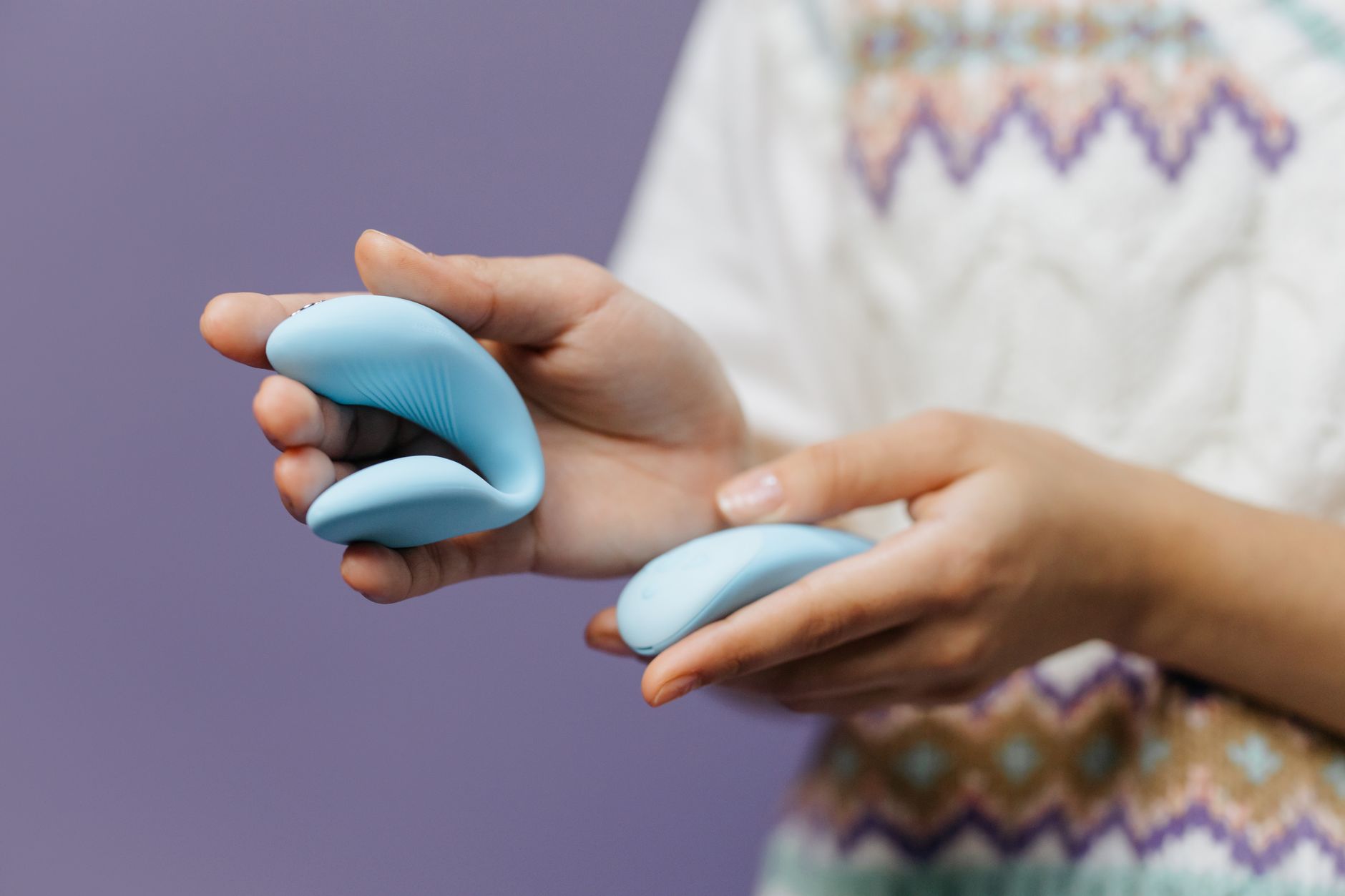
Photo by cottonbro studio on Pexels
The practical setup
Start small. One partner uses the clitoral vibrator while the other is present and engaged. "Engaged" doesn't mean participating sexually. It means making eye contact, touching elsewhere (arms, face, hair), being a witness to their partner's pleasure. This is not performance. This is presence.
The person using the Lem should choose the pattern and pace that feels good. Air-suction vibrators like the Lem are forgiving and responsive. If you've been avoiding your own pleasure out of relationship guilt, it might feel weird at first. That's normal. You're rewiring years of conditioning that said your desire was secondary.
Start with pattern 1 or 2. Build from there. The Lem's design means you're getting consistent, localized stimulation without the intensity that sometimes comes with traditional vibrators. For people whose desire has been dormant, gentleness first matters.
The watching partner's role is simple. Stay present. Don't check your phone. Don't comment on their body or technique. Just be there. That alone is often the missing piece.
What changes when you normalize this
After a few sessions, something unexpected often happens. The lower-desire partner, freed from the pressure to perform, sometimes finds their own desire creeping back up. Not because they're obligated to want more sex, but because the shame and resentment have lifted. Desire can't grow in soil poisoned by guilt.
The higher-desire partner stops feeling rejected because they're no longer asking their partner to want something they don't. They're meeting their own need, and their partner is choosing to be part of that. The difference is massive.
You might also find that this creates more openings for partnered sex. Not because the lower-desire partner has been pressured into it, but because the charged energy between you has softened. Sometimes, watching your partner orgasm with something you bought them, something that works, is genuinely erotic.
Other times, it remains separate. The Lem becomes the tool for one person's pleasure, and partnered sex stays on its own track. Both paths are fine.
When the gap is truly incompatible
Let's be honest. Sometimes libido differences are too wide to bridge, even with tools and conversations. One person wants sex weekly and feels deeply loved that way. The other has lost desire entirely due to depression, hormones, or a fundamental shift in what they need from partnership. No vibrator fixes that.
In those cases, the conversation you need isn't about the tool. It's about whether both people are willing to work with the gap or whether the gap is actually a signal that something bigger needs attention. That's when a couples therapist who specializes in desire and intimacy becomes essential. How to Use a Lemon Vibrator When Emotional Distance Has Built Up in Your Relationship covers some of those deeper rebuild moments.
The thing about desire and aging
Mismatched libido gets more common and more complex as couples age. Hormonal shifts, medication side effects, stress, and decades of relational patterns all collide at once. If you're navigating this in midlife, How to Use a Lemon Vibrator for Better Orgasms When You're Over 45 and Hormones Shift walks through some of those specific factors.
What I want you to know is this. The gap doesn't mean you failed. It means you're human, and humans change. A tool like the Lem doesn't erase the gap. But it can make the gap feel less like a wall between you and more like something you're both standing beside, looking at together.
FAQ: Mismatched libido and toys
What if my partner feels threatened by me using a vibrator?
That fear usually isn't about the toy. It's about what the toy represents. Does it mean you don't want them anymore? Are they not enough? These are real fears, and dismissing them as insecurity won't help. Instead, name the fear directly. "I'm hearing that you're worried this means I'm less attracted to you. That's not true. What's true is that I need an outlet for my own desire that doesn't depend on you wanting sex right now." Then ask what they need to hear to feel secure. Sometimes it's more affection outside the bedroom. Sometimes it's reassurance that you still want partnered sex. Sometimes it's just time.
Can using a lemon vibrator alone save a relationship with a huge libido gap?
No. A tool can't fix a broken foundation. What it can do is remove the friction enough that you can see what's actually underneath. Is the gap a symptom of unresolved resentment? Untreated depression? Hormonal shifts that need medical attention? Or is it just a genuine mismatch that you're both willing to live with in a new way? The vibrator gives you space to ask those questions without the immediate pressure of unmet desire in the room.
What if my lower-desire partner won't even try watching me use the Lem?
Then you're hitting something deeper than libido. Avoidance of all sexual content, even indirect, sometimes signals shame, past trauma, or a fundamental sexual avoidance pattern that needs clinical work. That's not a toy problem. That's a therapy conversation. Suggest it gently and without accusation.
How often should we be doing this if our libido is mismatched?
There's no formula. The higher-desire partner uses the Lem whenever they need to. The lower-desire partner's presence is a gift, not an obligation. Some couples do this weekly. Some do it monthly. The goal isn't frequency. It's removing the score-keeping.
Can the lower-desire partner use the Lem too, even if they don't want partnered sex?
Absolutely. Sometimes the lower-desire label masks other things. Maybe they want solo pleasure without performance pressure. Maybe they've never explored their own pleasure independently. A clitoral vibrator like the Lem is responsive and forgiving. If your partner wants to experiment with their own pleasure separately from partnered sex, that's a completely valid path. You might find, as they reconnect with their own desire, that some of it translates into the partnership. Or it might not. Both are okay.
What if introducing the Lem makes the libido gap feel even bigger?
That can happen temporarily. Sometimes seeing your partner use a tool that brings them real pleasure highlights the contrast between their satisfaction and yours. Sit with it for a few sessions before deciding it's made things worse. What often happens is that temporary spike of jealousy or sadness actually opens a conversation you needed to have. "I'm noticing I feel a little envious of how easily that works for you." That's real, and it matters. Name it. Then figure out what you both need.
The bridge you build together
Every couple with a libido mismatch is navigating something specific to them. Your gap might be biological, psychological, relational, or some combination. What matters is that you stop pretending it's not there and stop blaming each other for it.
A tool like a lemon clitoral vibrator isn't a fix. It's a path forward. It lets you meet your own needs without abandoning your partner. It lets them witness your pleasure without having to perform theirs. That shift. that's where real connection starts to rebuild.
If you want to talk through what this might look like in your specific situation, reach out. That's what I'm here for.