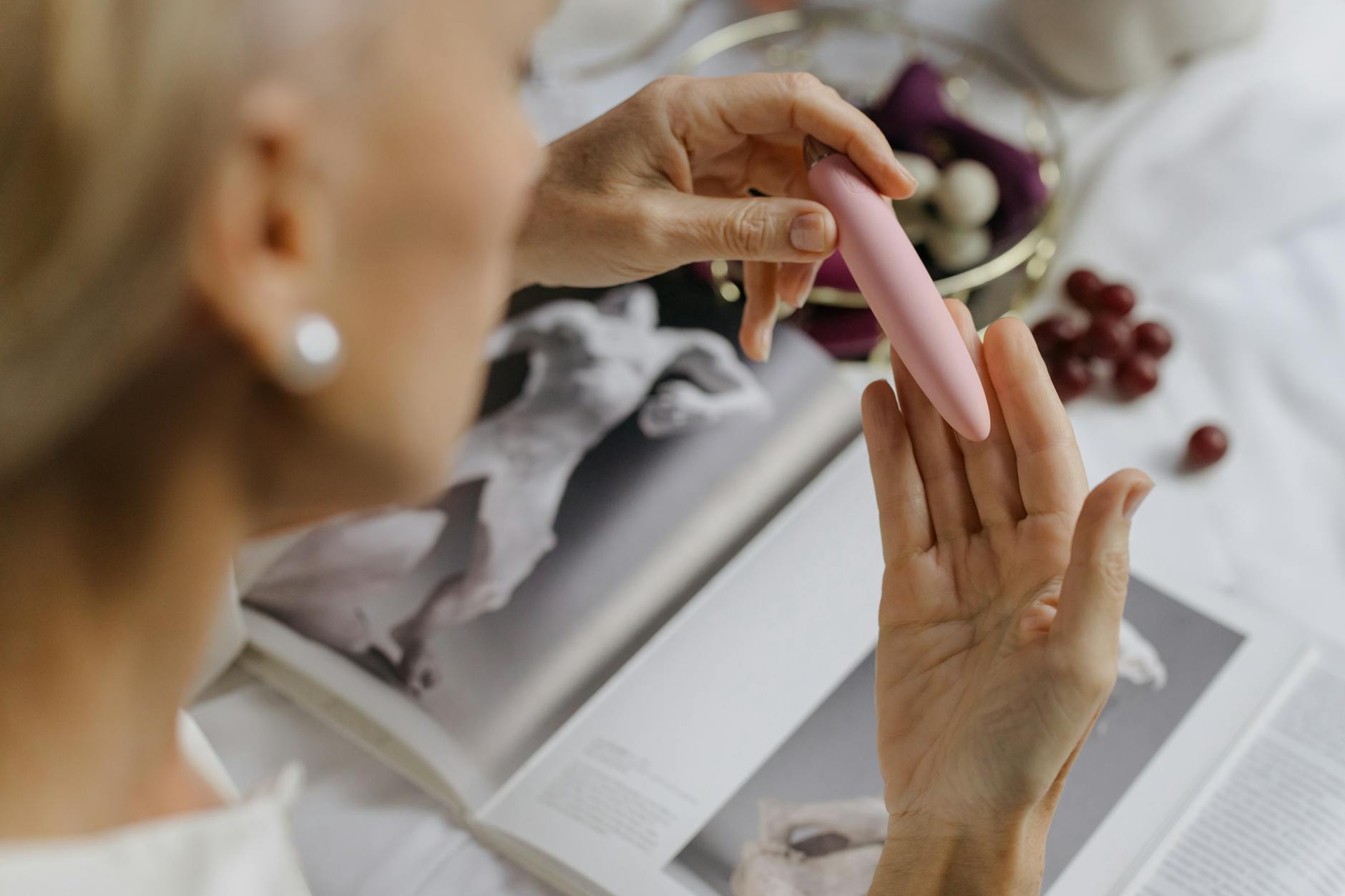
How to Use a Lemon Vibrator for Pleasure When Hormones Change After 35
Your body shifts after 35, but pleasure doesn't disappear. Here's what actually changes, what stays intact, and how a lemon clitoral vibrator works with your new baseline.
Around 35, your hormones don't change dramatically all at once. They shift. Subtly at first, then noticeably. Estrogen starts a slow decline. Progesterone becomes less stable. Testosterone, which drives desire in everyone, begins its own gentle descent. And suddenly sex feels different. Not worse. Just... different.
Most conversations about this age bracket land in one of two ditches. Either everything is "totally fine, nothing changes, you're being dramatic," or it's all doom and gloom about lost desire and dead bedrooms. Both are useless. Here's what I've observed in my practice over two decades: your pleasure capacity doesn't disappear at 35. It transforms. And understanding that transformation changes everything.
Estrogen supports vaginal tissue thickness, natural lubrication, and how quickly blood rushes to your genitals when you're aroused. As it drops, that tissue becomes thinner. Lubrication takes longer to build. Your body might need 20 minutes to warm up instead of 5.
But here's the critical part: your clitoral nerve density doesn't change. Your brain's capacity for pleasure doesn't dim. Your ability to orgasm is still entirely intact.
The suction-based design of a lemon clitoral vibrator works beautifully with these shifts because it doesn't rely on the same kind of direct friction that thinner tissue finds uncomfortable. Instead, it uses gentle air-pulse technology to stimulate the nerve endings without mechanical pressure.
Slower arousal isn't dysfunction. It's a normal response to shifting hormones. Your parasympathetic nervous system, the one responsible for relaxation and sexual response, needs more time to activate.
This actually opens a door most people miss. Longer warm-up isn't a setback. It's permission to actually enjoy foreplay instead of rushing through it. I coach couples to budget 20 to 30 minutes of touch, kissing, and mental engagement before introducing any toy. A lemon vibrator designed with air-suction technology pairs perfectly with this timeline because you can start at the lowest intensity setting while your arousal builds naturally.
After 35, direct vibration on sensitive tissue can feel too intense, jarring, or even slightly uncomfortable. The intensity that felt amazing at 28 might now feel like overstimulation. A lemon clitoral vibrator using air-pulse suction creates a gentler, more diffuse sensation that many find more comfortable and more pleasurable as hormones shift.
Water-based lubricant becomes genuinely helpful. Not because you're broken, but because thinner tissue benefits from it. Silicone lubes feel luxurious but can degrade silicone toys, so stick with water-based if you're using a silicone lemon toy.
Your body at 40 isn't trying to replicate your body at 25. It's asking you to work with its rhythm instead of against it.
Start with 15 to 20 minutes of non-toy touch. Kiss, massage, direct attention to your body without expectation of immediate arousal. Then move to your lemon vibrator at the lowest setting, usually pattern 1 or 2. Let arousal build gradually. You'll likely notice that sensation intensifies as you relax deeper into the experience.
Many of my clients report that this slower build actually creates more intense, longer-lasting orgasms than the quicker responses of their younger years. The nervous system has time to fully engage.
Hormones shift, yes. But your mind is doing heavy lifting too. If you're partnered, your relationship might be navigating new territory. Kids, work stress, aging parents. If you're single, dating after 35 carries its own mental weight. All of this affects arousal more than most people acknowledge.
When pleasure feels different, the temptation is to assume it's purely biological. Often it's something else wearing a biological disguise. Stress, disconnection, ambivalence about the relationship, or just the cumulative weight of life momentum.
A lemon clitoral vibrator is a useful tool, but it's not a bandage for these deeper patterns. If you and your partner are disconnected, the toy won't bridge that gap. If you're under chronic stress, arousal will remain sluggish no matter how good the vibrator is. Address the root. Use the tool to enhance what's already working.
After 35, many people discover their best solo sex life. You know your body better. You have less cultural pressure to perform. You're clearer about what actually feels good versus what you think should feel good.
This clarity is powerful. When you understand your own arousal timeline and what sensations work for you, you can communicate that to a partner with confidence. You can ask for what you need without apology.
If you're exploring with a lemon vibrator solo, pay attention to your body's responses. Which patterns feel best? How long does genuine arousal take to build? Do you prefer consistent stimulation or variety? These observations become valuable data you can share with a partner, reframing the conversation from "I'm having trouble" to "Here's what I actually like."
Some people notice that sensation feels inconsistent as hormones shift. One day your usual approach feels perfect. Two days later, the same intensity feels uncomfortable or numb. This is real and it's frustrating.
Hormonal fluctuations, stress levels, medications, and even sleep quality affect how your nervous system responds to stimulation. A lemon vibrator with multiple intensity patterns gives you flexibility to adjust based on what your body needs that day. If pattern 3 felt good yesterday but pattern 2 is better today, adjust. There's no "right" setting. There's only what works for you right now.
If numbness or unpredictability persists for months, check in with your doctor. Sometimes it's hormonal. Sometimes it's medication-related. Sometimes it's something else entirely. Either way, a good practitioner can help troubleshoot.
Water-based lubricant stops being optional after 35 for many people. It's just smart design for how your body works now. It also makes toy use more comfortable and often more pleasurable.
Patience matters too. Your body is not broken. It's asking you to slow down, pay attention, and work with its new rhythm instead of trying to override it. That's not a compromise. That's actually the foundation of better sex.
A lemon vibrator designed for clitoral pleasure works well in this context because you're not fighting against your body. You're working with it.
Completely normal. Estrogen supports blood flow to your genitals and vaginal lubrication, both of which naturally slow as hormones shift. This doesn't mean something is wrong. It means your body has different timing. Many people find that once arousal builds, it's actually more intense and stable than it was when arousal was faster.
Yes, often. Air-pulse suction stimulates nerves differently than traditional vibration, and the diffuse sensation can feel more noticeable on tissue that's become less responsive. Start at low intensity and gradually increase as arousal builds. If numbness persists despite trying multiple approaches, talk to your doctor to rule out medication or hormonal causes.
Not necessarily. Slower arousal is different from lower desire. You might still want sex deeply. Your body just needs more time or different stimulation to show up for it. Pay attention to the difference between "I don't want this" and "This is taking longer to feel good." They're not the same thing.
Directly and without apology. "My body is responding differently and I'm figuring out what feels best now" is a complete sentence. You don't need to explain or justify. If you're using a lemon vibrator, you can introduce it the same way: "I want to explore this together." The best partners want you to feel good. Period.
If it's just slower arousal or different sensation, this is normal physiology. If arousal has stopped entirely, if sex is painful, or if numbness doesn't improve with time and exploration, yes. Talk to your doctor. These can point to medication effects, hormonal changes that warrant adjustment, or other treatable issues.
Yes. Many medications affect arousal and sensation. A vibrator designed with air-pulse suction often works better than traditional vibrators if you're on medications that dull sensation because the diffuse stimulation is more noticeable. But if medication is the primary barrier to arousal, work with your prescriber about adjusting dose or timing. The tool helps, but you might also need to address the medication side.
Here's what I see happen in my practice when people accept their shifting physiology instead of resisting it. They stop treating sex as something to optimize. They start experiencing it as something to enjoy. They become more curious about their own bodies. They communicate more clearly with partners. Sex often becomes less fraught and more satisfying.
Your body at 35, 40, 45, and beyond isn't trying to disappoint you. It's evolving. A lemon clitoral vibrator is one tool that works well with your evolved baseline. But the real shift happens when you stop expecting your body to work like it did in your twenties and start learning how it actually works now.
Your pleasure matters. It's not something you should have to earn or earn back. It's something you deserve to explore with honesty, patience, and tools that actually fit how you're wired. That's what Hello Nancy's Lemon is built for. That's what you're actually worth.
Ready to explore? Check out our buying guide for guidance on finding the right lemon vibrator for your body, or reach out if you have specific questions about what might work best for you.