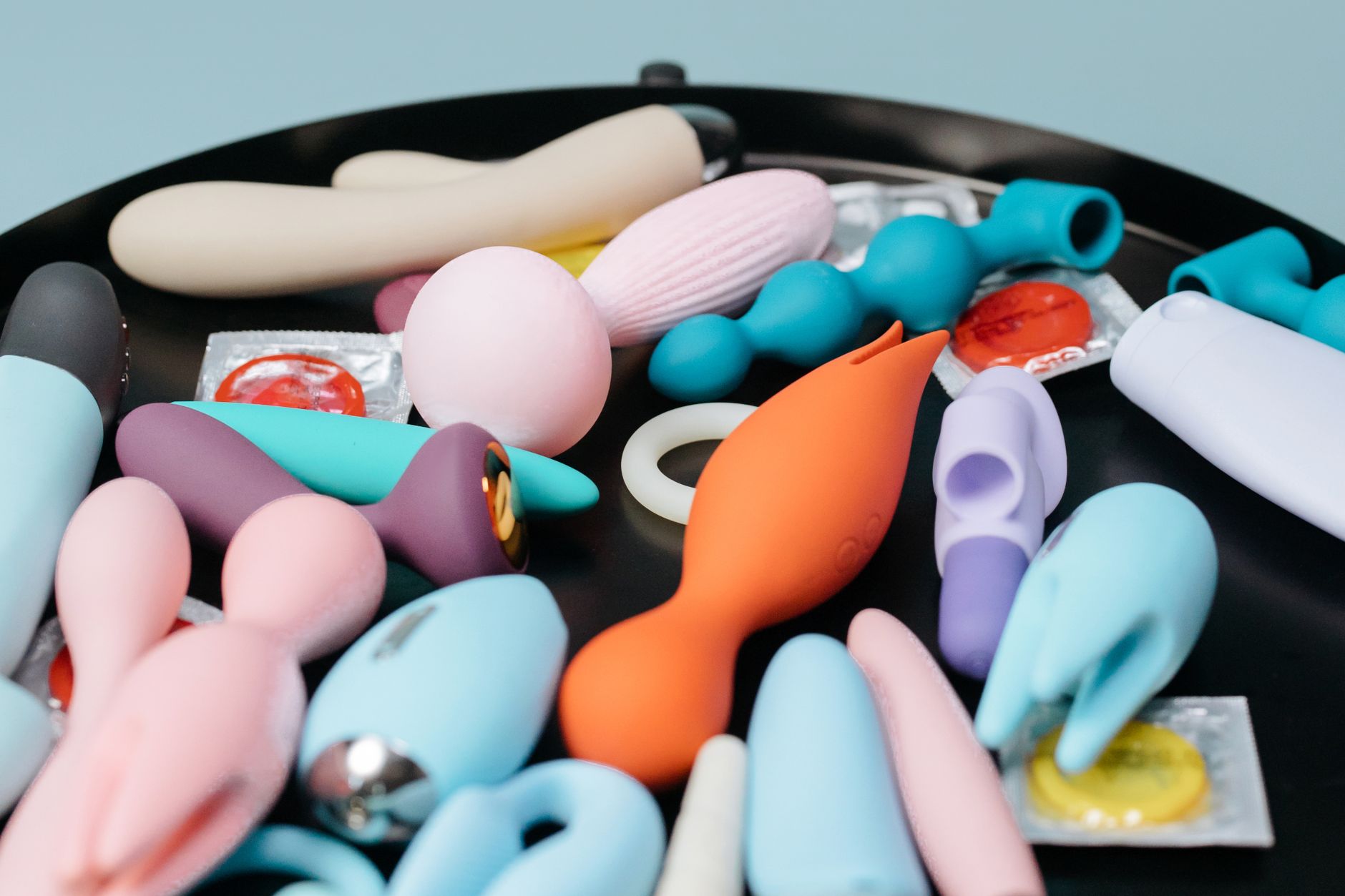
Here's what nobody tells you about sensation after birth
Your body has been through labour, healing, hormonal shifts, sleep deprivation, and probably touch overload from a newborn. Of course pleasure feels different. It's not broken. It's adjusted.
Most postpartum people wait months before even thinking about pleasure again. That's understandable. But when you do start exploring sensation again, the experience often feels muted, numb, or weirdly disconnected from your nervous system. That's the real thing we need to talk about. Not whether you should feel pleasure yet, but how to rebuild sensation when you're ready.
What actually happens to nerve sensitivity after birth
During pregnancy and delivery, your pelvic floor gets stretched, bruised, sometimes torn. The nerves in that area go haywire. Swelling, scar tissue, and inflammation all muffle sensation in the weeks and months after birth. Add in the fact that your hormones are nosediving after the placenta leaves, and estrogen drops dramatically. Less estrogen means thinner, more fragile tissue. That tissue gets irritated more easily and sends fewer pleasure signals to your brain.
Hormonal shifts also affect your entire nervous system. You're running on cortisol and adrenaline if you're sleep-deprived. Your body is in survival mode, not pleasure mode. This is not a personal failure. It's physiology.
Here's what might return on its own: general sensation. What often needs help: focused pleasure and orgasm. That's where tools like a lemon clitoral vibrator come in. The suction-based technology bypasses some of the inflammation and desensitization because it doesn't rely on friction against already-irritated tissue.
When to wait versus when to start exploring
Most healthcare providers say six weeks before intercourse. But sensation exploration is different. You can start gentle external sensation work around four to six weeks postpartum if your bleeding has mostly stopped and you feel emotionally ready. Solo exploration, no pressure, no agenda beyond curiosity.
If you had severe tearing, episiotomy, or complications, wait until your physio therapist or doctor gives clearance. That's the honest version. If your six-week checkup was clear and you're not in pain, you can begin.
The key word is begin gently. Most people rush. They expect their body to respond like it did before. It won't. That's not sadness. That's just the timeline.
Why lemon vibrators work better than other toys postpartum
Traditional vibrators rely on friction and direct pressure. After birth, that can feel too intense, too sharp, or downright painful on healing tissue. Lemon sexual toys use gentle suction technology instead. The sensation is more distributed, less aggressive, and easier to pause if something hurts.
The suction approach also triggers a different kind of nerve response. Instead of intense localized pressure, you get a gentle drawing sensation that gradually builds arousal. Many postpartum people find this feels more natural and less jarring than traditional vibration.
Lemon adult toys also tend to be smaller and easier to control, which matters when you're relearning your body. You're not managing a large device while also managing postpartum exhaustion and touched-out feelings. Smaller means more agency.
The timing and setting piece that changes everything
Don't try this when the baby is due to wake up in fifteen minutes. Don't try this when you're touched out from hours of holding a newborn. Your nervous system needs space.
The best time is after the baby is asleep for the night, after you've showered (seriously, water helps), and when your partner or support person is handling things so you have genuine peace. Even twenty minutes of mental quiet resets your entire capacity for sensation.
Temperature matters too. You're going to feel more sensation when you're warm. A warm shower beforehand genuinely helps. Your pelvic floor relaxes. Your blood flow improves. The tissue becomes more responsive.
Environment: low light, no pressure to orgasm, ideally some separation from the room where you sleep with the baby. I know this is wild to ask someone in a one-bedroom with a newborn. Do what you can. Even psychological distance helps.
How to actually start using a lemon vibrator postpartum
First session: just hold it. Don't turn it on. Let your body get used to the feeling of something there. You're reintroducing touch to a part of you that's been through trauma, even if it was planned trauma.
Second session: turn it on the lowest setting for thirty seconds. Highest will be way too much. Your nervous system is still healing. Start at pattern one on a lemon clitoral vibrator and stay there. Notice what happens. Does it feel good, neutral, or painful? Only you know.
If it feels good: great, you can stay there for five minutes max. If it feels neutral or slightly uncomfortable: turn it off, you're done, come back tomorrow. If it hurts: stop, and mention it at your next checkup.
Third session and beyond: very slowly increase time and intensity. Five minutes at pattern one. Then five minutes at pattern two if one felt good. Then combine patterns. The goal is not orgasm. The goal is sensation.
Many people won't orgasm for months. That's completely normal. Your brain is wired for vigilance, not pleasure. Pleasure will come back, but it takes patience.
The stuff that gets in the way and how to move through it
Guilt. You might feel guilty taking time for yourself when your baby needs you. You might feel unfaithful to your partner or like you're selfish. Those feelings are real and they're also not uncommon. Postpartum depression and anxiety amplify these thoughts. If you're struggling with intrusive guilt or feeling disconnected from pleasure entirely, talk to your doctor. That's not a personal failing. That's your brain asking for support.
Physical pain. If you're experiencing pain, don't push through it. Pain is data. It's telling you something isn't healed yet. Sharp pain, burning, or persistent soreness means wait longer or see a pelvic floor physio. That's not weakness. That's listening to your body.
Touch aversion. Many postpartum people feel completely touched out. You're being touched all day by the baby. The idea of more touch feels suffocating. That's real. In that case, solo play with a lemon sucker vibrator is actually helpful because you control every second of it. No one else's timing, no one else's needs. That agency itself can be healing.
How to talk to your partner about this if you're in a relationship
Don't frame it as "I'm exploring solo play instead of us." Frame it as "My body is healing and I'm relearning how to feel pleasure. This is for both of us eventually, but right now I need to do this alone."
If your partner is curious, you can involve them. But that's optional. Many couples find that the postpartum person exploring solo first makes partnered sex easier later because there's less pressure and more information about what feels good.
If your partner has strong feelings about toys, this is actually a great time to talk about it. You're rebuilding intimacy anyway. Might as well build it the way you actually want it.
Let's be honest: sex after childbirth is a process, not an endpoint. You're not trying to get back to "normal." Normal is gone. You're building something new that fits your postpartum life. A lemon clitoral vibrator is just a tool for that process.
FAQ
Can I use a lemon vibrator if I'm exclusively breastfeeding?
Yes. The lemon sexual toy doesn't affect milk supply or hormone levels in any meaningful way. If you're concerned, talk to your healthcare provider, but it's not a thing. The bigger issue is usually just fatigue and overstimulation. Use it when you feel least touched out.
What if I'm having trouble with pain during sensation exploration?
Stop and mention it to your GP or pelvic floor physio. Pain can signal healing in progress, but it can also mean scar tissue is being irritated or infection is present. Don't assume it's normal. There's a difference between "this feels weird" and "this hurts." Sharp pain means stop.
How long before sensation comes back to normal?
Normal takes three to six months for many people, longer for others. The first twelve weeks postpartum are the toughest. By six months, most people report significant improvement in sensation and arousal. This assumes uncomplicated recovery. Complications change the timeline, and that's okay.
Can I use a lemon vibrator while I'm still bleeding postpartum?
Not for the first two weeks. After that, if bleeding is light and you're not soaking pads, gentle external exploration is usually fine. But ask your midwife or doctor. Some people bleed longer or heavier than others. There's no shame in waiting until you're fully healed.
Is it normal to feel disconnected from pleasure even when sensation returns?
Completely normal. Your brain and body are separate right now. The physical sensitivity might be back, but your mental and emotional capacity for pleasure takes longer. This is where it helps to have your partner take the baby for an hour, take a bath, or do something that feels luxurious to you. Pleasure is both physical and psychological. You're rebuilding both.
What's the difference between using a lemon clitoral vibrator and regular vibrators postpartum?
Lemon vibrators use suction instead of traditional vibration. That means gentler sensation, less direct pressure, and easier to control intensity. For postpartum bodies especially, that difference can be enormous. You're not being jabbed. You're being drawn. It feels less intense and more sustainable.
You're not behind
If you're three months postpartum and haven't felt pleasure in months, you're not behind. If you're six months in and still exploring gently, you're not behind. Your body has done something extraordinary. It needs time.
When you're ready to explore sensation again with a lemon vibrator or any tool, start small, go slow, and listen to what feels good. That's not just smart practice. That's honoring what your body has been through.
If you want to talk through your specific situation or have questions about rebuilding intimacy in your relationship after birth, reach out to us. We're here.