Here's the thing about low sex drive and orgasms
They're not the same problem. You can have no desire whatsoever and still experience a powerful orgasm. You can feel genuinely interested in your partner and struggle to come. And you can have zero libido while your body responds beautifully to the right touch. Most conversations about low sex drive ignore this distinction entirely, which is why so many people end up thinking they're broken when really they just need to separate two different wires.
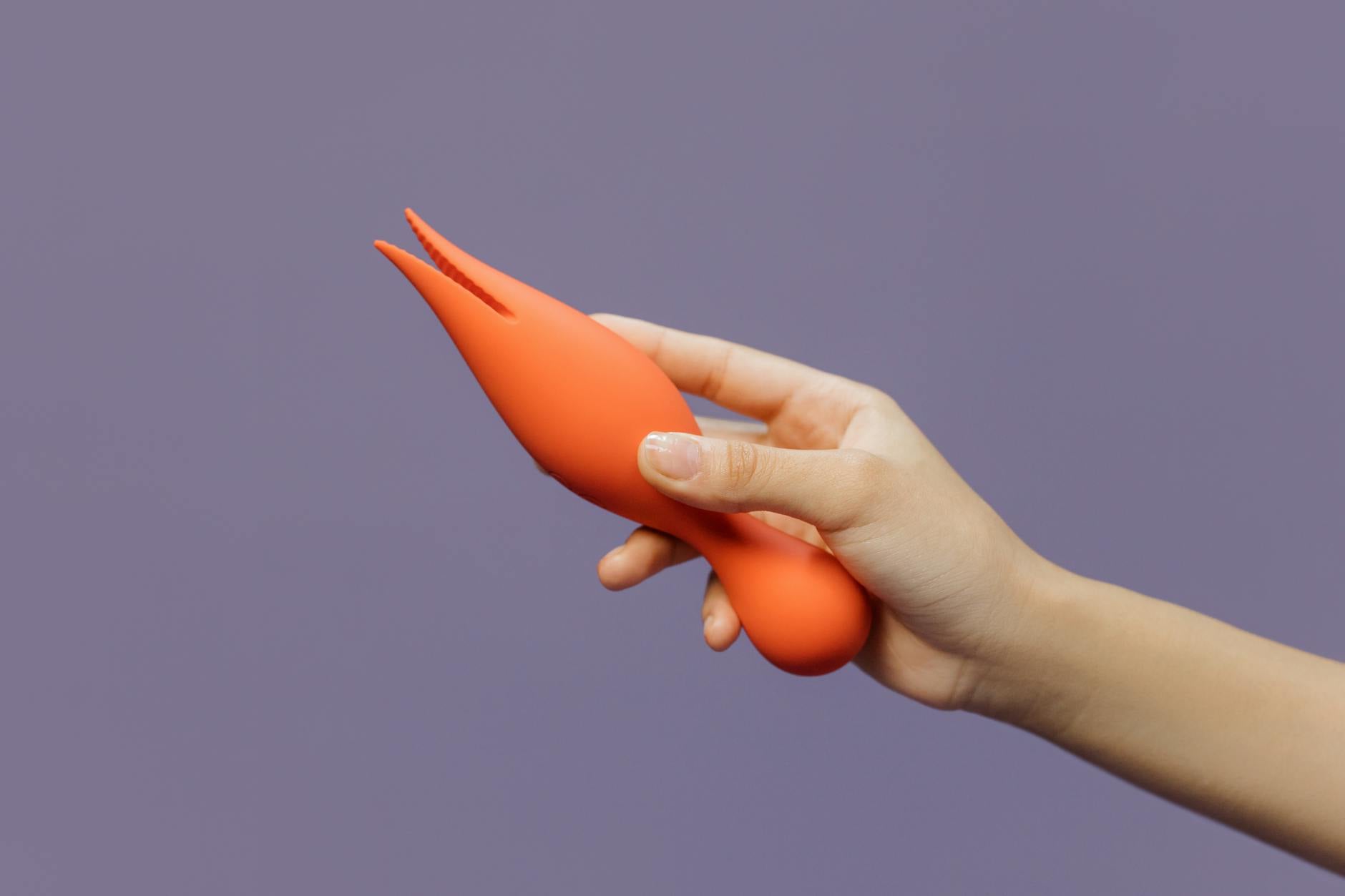
Low libido is about desire, motivation, and wanting. Orgasm is about physical response and nerve stimulation. A lemon vibrator addresses the second one so effectively that it can actually help you rebuild interest in the first.
Why low sex drive doesn't kill your capacity for pleasure
When desire tanks, your brain isn't sending the usual signals down to your genitals. But your clitoris still has the same nerve density it always did. The neural pathways for orgasm are intact. What's missing isn't the plumbing. It's usually one of three things: stress hormones shutting down arousal, relationship friction, or a medication side effect blocking that initial spark. None of those things prevent your body from responding to direct, sustained stimulation once you get past that initial friction.
This is why air-suction lemon clitoral vibrators are particularly useful when desire feels stuck. They bypass the need for that traditional arousal buildup. You don't have to wait for desire to show up. You don't have to feel guilty that your partner turned you on and your body didn't catch up. You can apply direct stimulation and let your nervous system remember what pleasure feels like.
That memory matters. A lot of people with low libido report that the first orgasm they have after a dry spell reignites something. Not always desire for their partner. Sometimes just desire for sensation. But that's the door opening again.
The difference between low desire and sexual anhedonia
There's a threshold here worth naming. If you have no desire and no pleasure from any source, even solo, that's anhedonia. It's often tied to depression, hormone imbalances, or medication side effects. That's a medical conversation, not a toy conversation. See your doctor first.
But if you have low desire for partnered sex while solo sensation still works, or if you've lost interest in sex but your body can still respond to direct stimulation, that's different. That's often emotional or relational, not neurological. A lemon vibrator can help you separate your feelings about sex from your body's actual capacity.
Many of my clients describe it as resetting their baseline. After weeks of "I don't want to, but my body does," something shifts. The disconnect between desire and response becomes less shame-inducing and more like useful information.
Starting with a lemon vibrator when you're not feeling it
The first rule: remove the performance expectation entirely. You're not trying to have an orgasm. You're not trying to prove you're still interested. You're testing whether your body can respond to sensation when desire isn't doing the heavy lifting.
Set aside 20 minutes when you're alone and not stressed. You're not building toward anything. This is pure experimentation. Start with the lowest setting on the Lem or whichever lemon clitoral vibrator you're using. Honestly, most people with low libido are surprised by how quickly they respond when they stop waiting to feel desire first.
If nothing happens for 10 minutes, stop. That's not failure. It tells you something. Maybe you need to be less alone with your thoughts. Maybe you need a different kind of touch first. Maybe your nervous system is too activated by stress to respond to anything. These are all useful data points, not signs that you're broken.
The role of context when sex drive is low
Desire lives in the brain before it hits the body. If your brain is running a loop of "I should want this, why don't I want this, I'm letting my partner down," your nervous system is flooded with cortisol. No vibrator works well in that environment. You need to interrupt the thought loop first.
Some people need to be outside, in sunlight. Some need their phone across the room. Some need to spend time with their partner but not having sex, just reconnecting. Some need to grieve what sex used to feel like before they can rebuild it. A tool like the Lem can help, but only if the context supports it.
If your low libido is tied to your relationship, using a vibrator solo won't fix that. It might help you remember pleasure exists. But addressing the actual relationship friction has to happen too. That's a partnership conversation, not a toy conversation.
How to use a lemon sexual toy without turning it into pressure
Here's where a lot of people go wrong. They add the vibrator but keep the same mental framing. "I need to orgasm to prove I'm still interested." That defeats the whole point.
Instead, reframe it: "I'm experimenting with sensation because pleasure is worth exploring, independent of desire." Huge difference. One is performance. One is curiosity.
With that framing, a lemon vibrator becomes permission to feel good without justifying it. You don't owe anyone an orgasm. You don't owe anyone desire. But if your body can experience pleasure, that's information worth having. And sometimes, that pleasure is the gateway back to desire, weeks or months later.
Start with patterns 1 to 3 on the Lem. If you're numb, stay there for a few minutes before escalating. If sensation builds, let it. If it plateaus, that's fine too. You're not chasing an outcome.
What to do if sensation doesn't improve
If you're using the Lem or another lemon clitoral vibrator consistently for two weeks and feeling nothing, something else is probably running the show. Low libido can be a symptom of depression, hypothyroidism, hormonal imbalance, medication side effects, relationship dysfunction, or trauma. A vibrator can't fix any of those. A doctor can help with most of them.
The same applies if you feel sensation but no pleasure. That's anhedonia, and it needs professional support. Don't assume your body is broken. Assume something medical or psychological is in the way, and that's solvable.
Talking to your partner about this approach
If you're in a relationship, your partner might interpret solo vibrator use as a sign you're not interested in them. That's a reasonable thing to clear up beforehand. Something like: "I've noticed my desire for sex has dropped, and I'm trying to figure out what's going on with my body. I'm going to spend some time exploring sensation alone, and it has nothing to do with how I feel about you." That's honest and clear.
Some partners want to be involved. That's fine too. Using the Lem together, with no expectation of sex, can be a way to reconnect without the pressure of traditional sex. But that's a separate conversation from what you're doing alone to rebuild your own baseline.
The long view on low libido and pleasure
Low sex drive rarely disappears overnight. But it also usually isn't permanent. Stress goes down. Medications change. Relationships repair. Hormones rebalance. Or you just get older and your relationship to desire shifts into something that works better for you.
What a lemon vibrator does in the meantime is keep your nervous system aware that pleasure is possible. It's a form of self-care that's grounded in sensation, not aspiration. You're not trying to want something. You're remembering that your body can feel good.
That's enough to start with. Everything else follows.
People also ask
How long does it take for a clitoral vibrator to help with low libido?
There's no universal timeline. Some people notice a shift in sensation within days of using a lemon clitoral vibrator. Others take weeks to feel anything at all. The key is consistency without pressure. If you use the Lem three times a week for two weeks and feel nothing, that's information. It might mean you need a different approach, medical support, or more time. It doesn't mean you're failing.
Can a lemon vibrator make low sex drive worse?
Not directly. But if you're using it as another form of performance pressure, it can reinforce shame. "I should be turned on by now." "Why isn't this working?" Those thoughts activate stress, which makes arousal harder. The vibrator is neutral. Your relationship to using it is where the problem can hide. Use it as exploration, not as a test.
What if my partner thinks I'm replacing them with a toy?
That's a real conversation to have. Most partners feel threatened when they don't understand what's happening. Be clear: "I'm struggling with desire, and I'm trying to figure out what my body needs. This isn't about you. It's about me rebuilding connection with pleasure." If they're secure, they'll get it. If they aren't, that's the actual issue, and it deserves couples work, not a vibrator fix.
Is low sex drive permanent?
Almost never. The causes are usually temporary, treatable, or both. Stress goes away. Medications change. Relationships improve. Hormones stabilize. Your desire might not return to what it was before, but it almost always returns to something functional. In the meantime, a tool like the Lem keeps sensation alive.
Should I try penetrative toys if the lemon vibrator doesn't work?
Not necessarily. If you're struggling with desire, adding more sensations might just feel like more pressure. Stick with the clitoral vibrator. The clitoris has more nerve endings and often responds better when desire is low. If that doesn't work after consistent use, the issue is probably not about the toy. It's about stress, medicine, or relationship dynamics.
How do I know if low libido is a relationship problem or a body problem?
Test it. If you feel zero desire for partnered sex but still experience pleasure solo, it's probably relational or emotional. If you feel zero desire for anyone or anything, including solo sensation, it's probably medical. If you feel desire for your partner but your body doesn't respond, it might be physical or it might be disconnection. The lemon vibrator helps you answer the body question. The relationship answer requires honest conversation.
What comes next
Low sex drive is one of the most common things I hear about in my practice, and it's also one of the most fixable. But it requires patience, honesty, and separation of the different pieces. Your desire is valid. Your body's response is valid. Your need for professional support if this doesn't shift is valid. All of these can exist at the same time.
Start with sensation. Let your body tell you what it needs. And if you get stuck, reach out for help. That's what we're here for.