
Here's the thing about partnered vibrator play
Using a lemon vibrator with a partner is genuinely different than using one alone. It's not just "the same sensation, but someone else is in the room." The presence of another body, another pair of hands, another person who's invested in your pleasure actually changes the neurochemistry of the experience. But that upside only lands if you get past the weirdness first.
And there will be weirdness. Not because vibrators are weird, but because most of us were raised with the idea that if your partner can't get you there alone, something's wrong. Spoiler: nothing's wrong. Something's just different. And different, when you're ready for it, is better.
The actual science of partnered stimulation
When you're alone with a lemon clitoral vibrator, your brain is focused. Single-task mode. You know exactly what's happening, you control the rhythm, the pressure, the moment. When a partner is involved, your nervous system has to manage two things at once: external sensation and emotional connection.
That sounds like it would be distracting. Often it is, at first. But here's where it gets interesting. Couples who've worked through the initial awkwardness report that their orgasms with a partner using a lemon vibrator together feel more intense, last longer, and involve more of the body. The clitoral suction of a device like the Lem combined with penetration or other manual stimulation creates what researchers call "bimodal stimulation." Your brain isn't choosing between sensations. It's processing both. That's a chain reaction.
Why couples actually avoid talking about it
I see this pattern constantly in my practice. One partner (usually the person with the vulva) wants to introduce a lemon vibrator or other adult toy into the relationship. The other partner doesn't explicitly refuse. Instead, what happens is a kind of frozen negotiation. Enthusiasm dies. The conversation doesn't happen. The toy never gets used. Six months later, resentment shows up wearing a different mask.
The stalling usually comes from one of three fears. One: "If I bring this up, my partner will think I'm not satisfied." Two: "If my partner uses this on me, they'll feel replaced." Three: "This feels like a criticism of what we already do."
All three are solvable with one conversation. Not multiple conversations. One honest one.
How to actually bring it up
Don't lead with the toy. Lead with desire. Say something like: "I've been thinking about what turns me on, and I want to explore something new. I want to do this with you."
Notice what's not in that sentence. No "I need this because you're not enough." No "I read something about it." No indirect. Just clarity.
If your partner is hesitant, the question to ask is not "Why don't you want to?" The question is "What are you worried about?" Those are different conversations. The first one puts them on the defensive. The second one opens the actual concern.
Often they're worried they'll do it wrong. Or that once you've felt it, you won't want them anymore. Or that it means the relationship is in trouble. Clarify those things directly. "I want this because I want to feel more with you, not less." "I'm curious about it. You don't have to do anything except be here." "This has nothing to do with us being in trouble. It's about us being curious together."
Positions and logistics that actually work
Forgot everything you think you know about positioning. Most couples try the most complicated setup first and then give up when it doesn't work.
Start simple. Start with positions where your partner can easily reach your clitoris with their hands or mouth while you or they hold the lemon vibrator. The easiest ones are: you on your back, them between your legs or beside you; you lying on your side facing each other; you sitting while they kneel in front of you.
Think about what role your partner is playing. Are they using the lemon suction device on you? Are they entering you while you use it? Are you directing them or are they deciding the rhythm? These matter because they change where hands need to be, how much coordination is required, and whether anyone's arm is going to fall asleep.
If penetration is part of what you want, a lemon clitoral vibrator works incredibly well alongside it because you're not competing for the same nerve endings. The vibrator is stimulating the clitoris. Penetration is a different sensation entirely. Together they're not "too much." They're complete.
One practical note: have lube within arm's reach. A lot of lube. Water-based is essential if your toy is silicone. You'll need more than you think, especially if you're switching between penetration and external stimulation.
What to do if it's awkward (it probably will be)
The first time will almost certainly feel weird. Not because there's anything wrong, but because you're both learning. Your partner doesn't know the right pressure. You're worried about your facial expression. Someone's shoulder is in an uncomfortable position. All of this is normal.
Here's what helps: laugh. Seriously. If something feels silly, say so. "Okay, this angle is not working, let's try something else." "That tickles, go a little lower." "More pressure." These small corrections, said in a normal tone, make it a conversation instead of a performance.
Also: don't expect an orgasm the first time. The first time you're learning logistics. The second time you can start learning pleasure. Those are different events. If you go in expecting to come and your brain is too busy figuring out where everyone's limbs are, you'll feel like you failed. You didn't. You just learned.
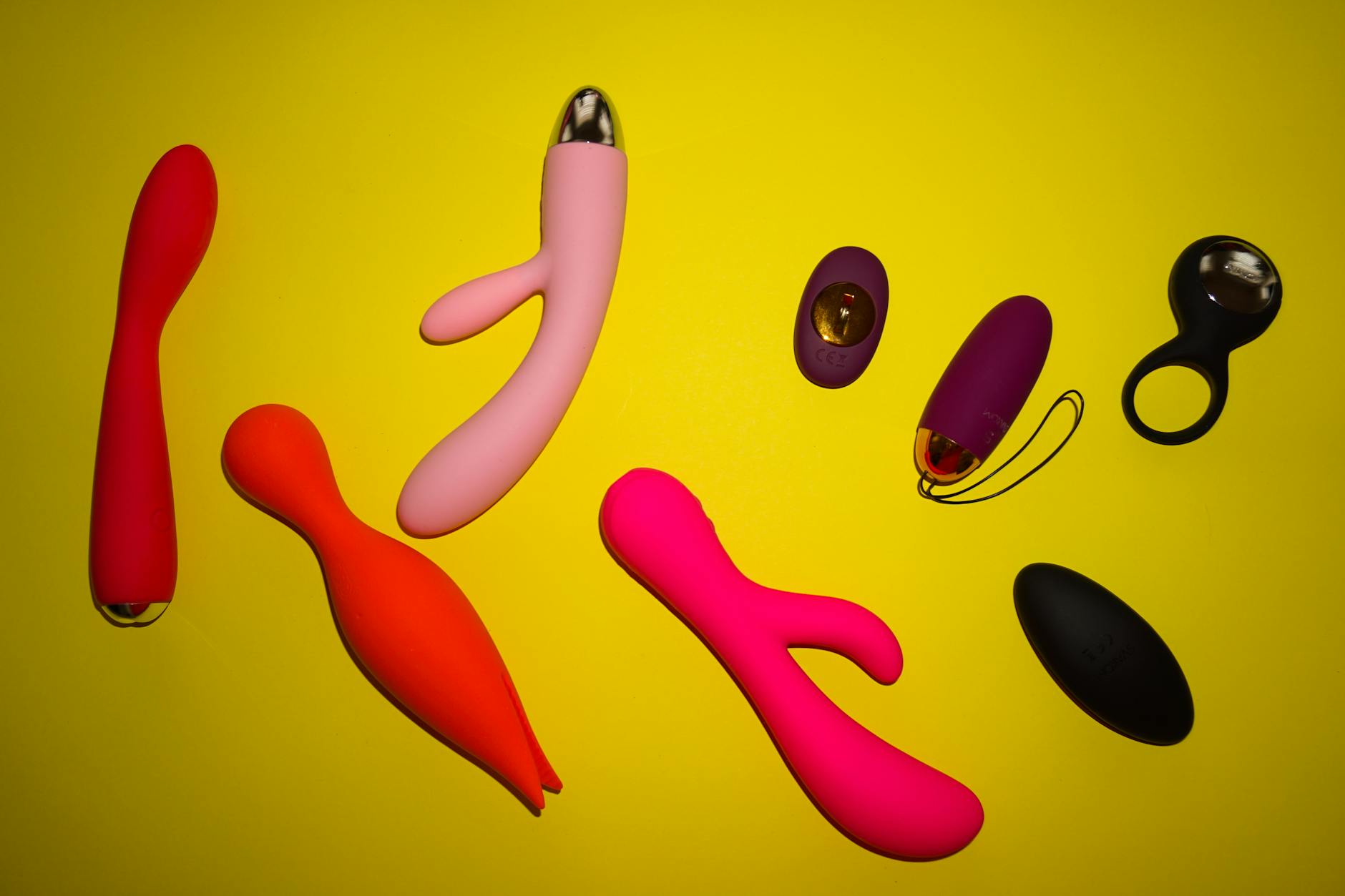
Photo by FounderTips on Pexels
The emotional part nobody talks about
Here's what often surprises couples: using a lemon vibrator together can actually deepen the emotional connection. Not despite the fact that you're introducing an object, but because of the conversation that has to happen first.
You've had to say what you want. Your partner has had to listen without getting defensive. You've had to trust them with something vulnerable. You've had to ask for help. You've had to say what feels good in a direct way instead of hoping they guess.
These are intimacy skills. They transfer. After you've had a conversation honest enough to introduce a vibrator, other conversations feel less risky.
Some couples report that their sex life, overall, gets better. Not because the vibrator is magic. Because they started actually talking.
How using a lemon vibrator together changes what you know about each other
When you use a toy with a partner, you learn how they respond to your pleasure. You see them focusing on you. You feel them paying attention. That attention is different from the attention they pay when they're also trying to come.
A lot of people, especially women, have spent years in sex that wasn't quite right because no one explicitly said "here's what feels good." We hinted. We adjusted. We hoped they'd figure it out. A vibrator gives you permission to be direct. "This angle works better. Hold it right there. Slower. More."
Your partner gets to learn what actually works instead of guessing. And they get to experience you the way you actually experience pleasure, not the way you've been managing it for their sake.
For some couples, that's transformative.
When to consider getting professional support
If you've tried talking about it and one partner is completely unwilling to even consider it, that's worth exploring. Not "I'll convince them eventually," but actual exploration. Why is that boundary there? Is it shame? Fear? A different sexual value system?
Sometimes these conversations need a mediator. A therapist who specializes in couples sexuality can help you both get underneath the surface resistance. You might discover it has nothing to do with vibrators and everything to do with feeling disconnected. That's useful information.
If you both want to explore but you're unsure about the logistics or you want guidance on how to communicate during play, that's also something a sex-positive therapist can help with. There's no shame in getting expert input.
FAQ
Will using a vibrator with my partner make them feel replaced?
Only if you frame it that way. If you introduce it as "I want more sensation during our time together" instead of "You're not doing it right," the context is different. A lemon clitoral vibrator is an addition, not a replacement. Most partners feel more connected, not less, once they get over the initial weirdness.
Is it normal to orgasm faster with a partner using a vibrator than alone?
Completely normal. Emotional connection plus physical stimulation is a different equation than physical stimulation alone. Your nervous system is in a different state. You're not comparing an orgasm with a partner to an orgasm alone as if one should match the other. They're different events.
Can we use a lemon vibrator during penetrative sex?
Yes. A lemon clitoral vibrator, because it uses suction rather than traditional vibration, works exceptionally well alongside penetration because you're stimulating different nerve endings simultaneously. It's not "too much" for most people. It's actually the full picture.
What if my partner wants to use it but I'm nervous about sensation?
Start with lower settings. Most lemon vibrators, like the Lem, have adjustable intensity patterns. Begin at pattern one. You control the rhythm. You can say "stop" or "hold it right there" at any moment. Your partner isn't in charge. You are. Once you trust the sensation, you can let go more.
If we use a vibrator together, does that mean we're missing something in our regular sex?
No. It means you're adding something. Regular sex doesn't need to be "fixing" anything for vibrators to be valuable. They're just another thing you can explore together. Some couples use them sometimes. Some never do. Both are fine.
How do we clean a lemon vibrator after use with a partner?
Wash with warm water and a tiny drop of unscented soap, rinse thoroughly, pat dry. If your toy is silicone, avoid oil-based lubes and silicone-based products. Store it somewhere cool and away from direct sunlight. That's it. Not complicated.
The bottom line
A lemon vibrator used alone is one experience. A lemon vibrator used with a partner is genuinely different, and for most couples who actually talk about it first, it's better. Not because the device is magic. Because you've had to communicate. Because you're both present. Because you're exploring something together that matters to one of you.
That's intimacy. And intimacy doesn't happen by accident. It happens when someone is brave enough to say "Here's what I want," and the other person is present enough to listen.
If you and your partner want to explore this but you're stuck on how to start the conversation, get in touch. Sometimes talking to a neutral third party makes it easier to say the vulnerable thing.
Your pleasure matters. And your partner deserves to know what that looks like.